
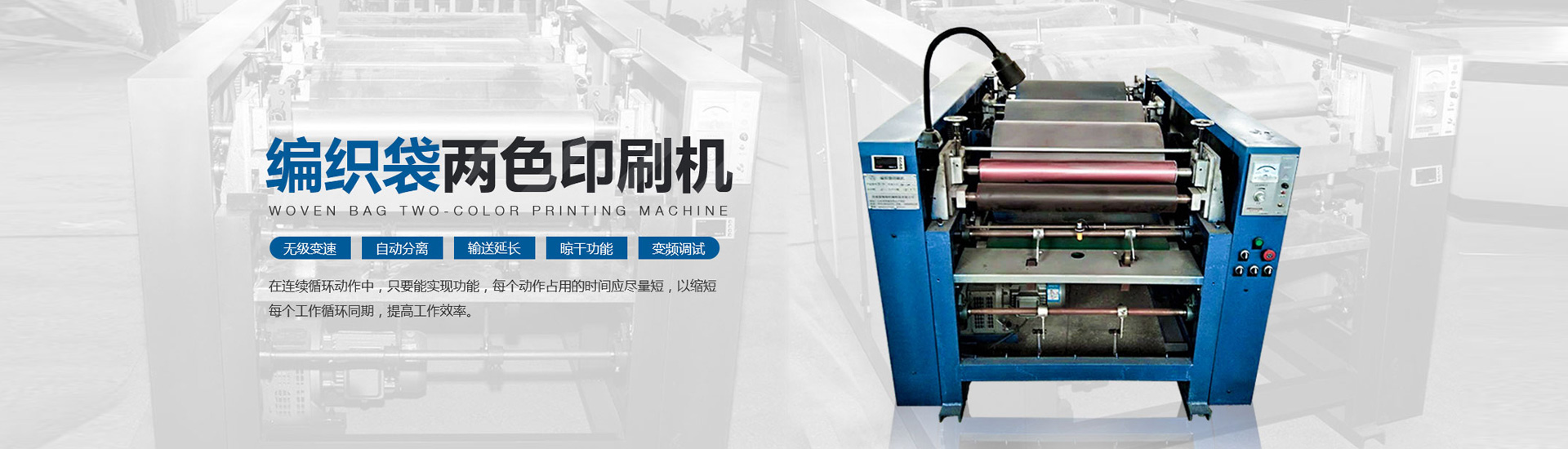

With the development and application of flexible jute bags, woven plastic packaging bags are widely used for sea transportation and packaging of agricultural and industrial products, including common products such as feed bags, chemical bags, plaster powder bags, urea bags, vegetable mesh bags, and fruit mesh bags, etc. As an industry with a promising future, the plastic packaging market deserves attention. For the plastic packaging market, the country should lower the entry threshold to allow for a broader development prospect.
As a common machine used in factory packaging, the woven bag cutting and stitching printer is opened and closed almost every day. The manufacturing requirements for the shaft are extremely high, necessitating excellent design and durable materials to ensure the product's long-term use. The design of the nail installation allows the machine to withstand repeated use. Due to the high quality of stainless steel, if a factory requires a large number of packaging devices that are not easy to transport, it's advisable to purchase a woven bag cutting and stitching printer. The introduction of the cutting and stitching printer has made our daily lives more convenient. However, sometimes, due to improper operation, the machine may experience a jump needle phenomenon. In such cases, we should immediately stop the machine and inspect it. Here's an introduction to the reasons for the jump needle in the cutting and stitching printer.
One: Over-early Stylus Time
Solution: The needle should be raised 2.5-3mm from the lower point, with the loopers' thread tip higher than the needle hole by 0.5-1mm.
Part two: The die hole is too large.
Solution: Replace the small needle plate.
Three: Excessive Foot Pressure Height
Solution: The presser foot height should be about 0.5mm higher than the fabric thickness.
Four: The needle gap and the position of the spool hook line tip are too large
Solution: The needle gap and the position of the spinner hook line tip are 0~0.1mm left and right.
