
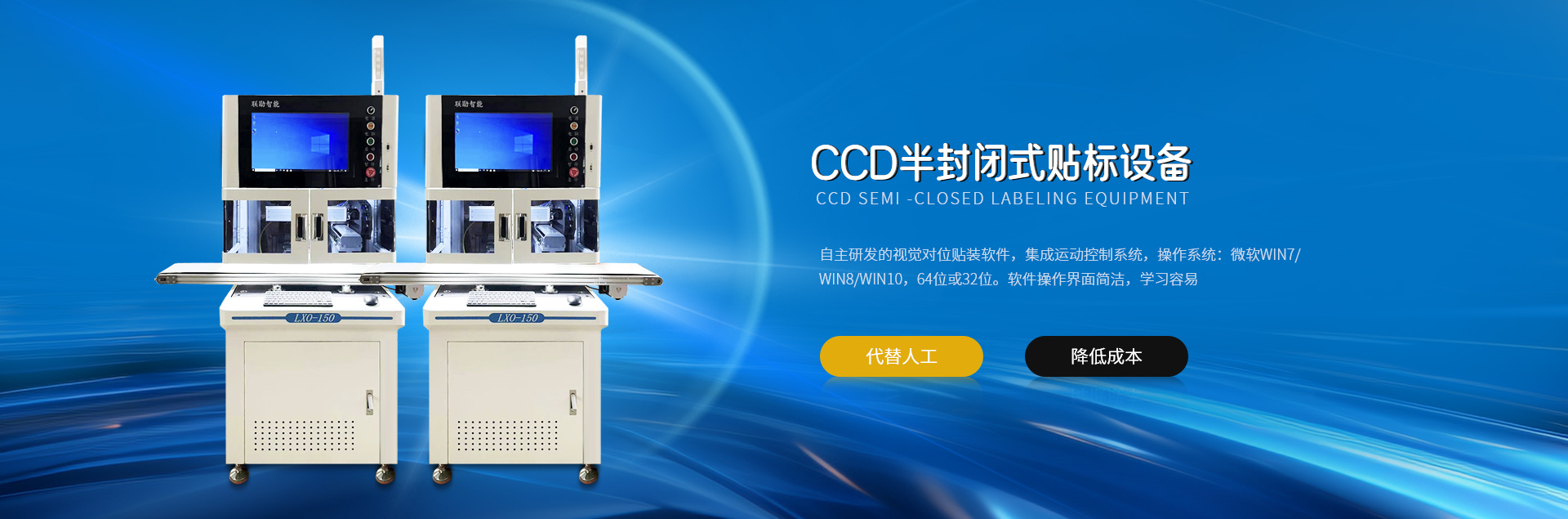
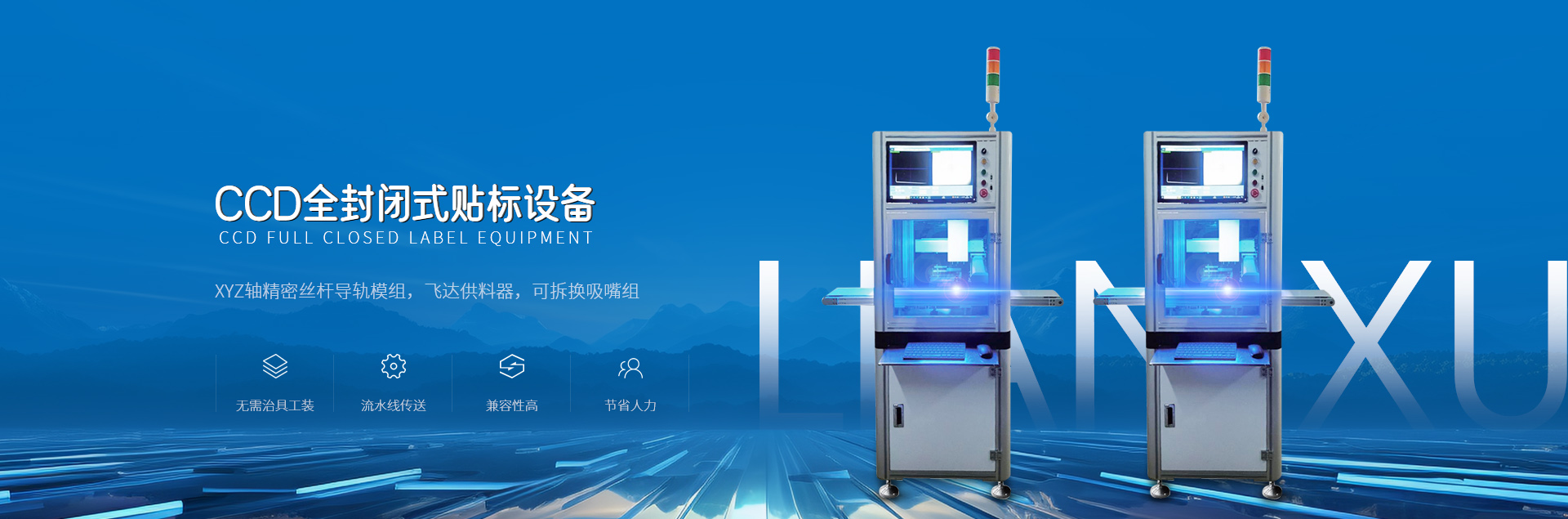


The principle of the visual film applicator mainly relies on the visual system and mechanical control to achieve an automatic and efficient film application process. Below is a detailed explanation of the working principle of the visual film applicator:
Image Capture and Processing: The visual film applicator first captures images of the surface of the product to be film-applied using a specialized CCD camera or other image capture equipment. These images are then transmitted to a computer for processing. Through image processing technology, the system can identify specific markings or features on the product to determine the precise location and angle for the film application.
2. Positioning and Calculation: Based on the results of image processing, the visual system can calculate the precise location where the film should be placed. This process typically involves complex algorithms and computations to ensure the film aligns with the predetermined position on the product.
3. Mechanical Control: Once the position for the film is determined, the visual film applicator executes the film application through its mechanical system. This involves controlling the movement of the applicator head to ensure the film is smoothly and bubble-free applied to the product surface. The mechanical system is typically equipped with high-precision servo motors and transmission mechanisms for rapid response and precise positioning.
4. Feedback and Adjustment: During the film application process, the visual system continuously monitors and adjusts the position and status of the film. Should any deviation or issue be detected, the system promptly provides feedback and makes necessary adjustments through mechanical control to ensure the accuracy and stability of the film application.
In summary, the visual film laminator achieves automatic and efficient film lamination by integrating technologies such as visual recognition, image processing, and mechanical control. This equipment plays a crucial role in industrial automation and production line manufacturing, enhancing production efficiency and product quality.
