

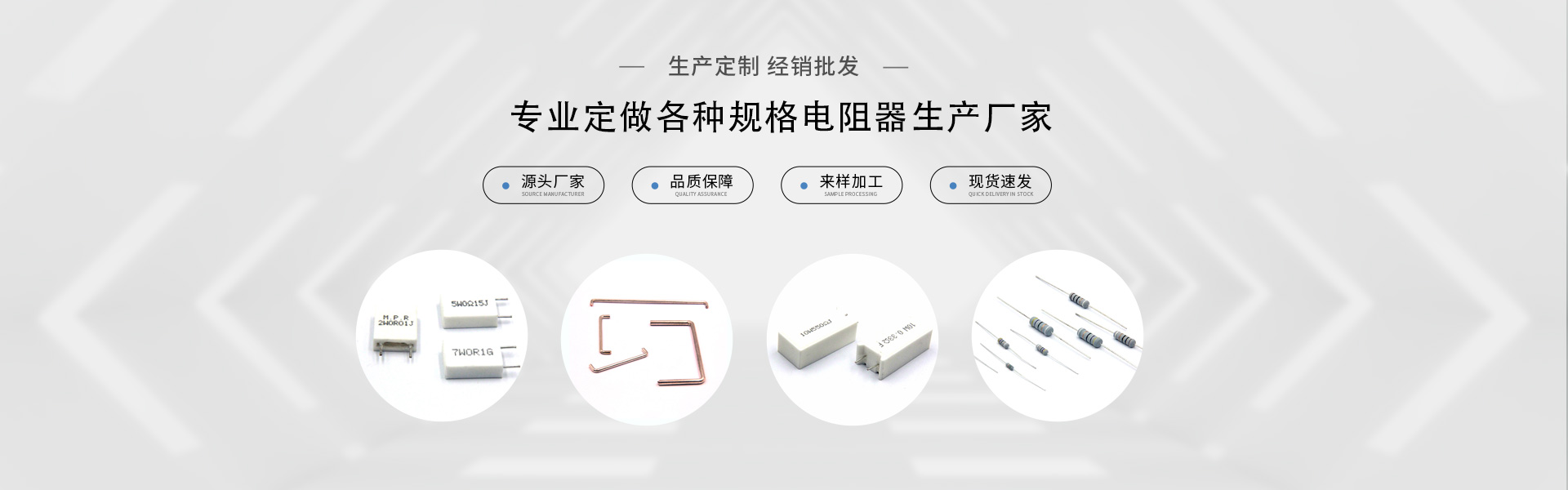

Resistance impedance generates a flow of current, leading to voltage drop. Resistors are widely used in electrical and electronic circuit design.
Resistors can be categorized into fixed resistors, variable resistors, slide resistors, adjustable resistors, sliding resistors, or potentiometers. A variable resistor is typically referred to as a potentiometer. The resistance value is expressed in ohms (Ω).
In electrical or electronic circuit design, resistors can establish a known voltage drop or current-voltage relationship. If the current in the circuit is known (measured in amperes, A), resistors can be used to create a known potential difference (voltage difference), which is directly proportional to the current. Conversely, if the voltage drop (potential difference) between two nodes in the circuit is known, resistors can be used to generate a known current, which is directly proportional to the potential difference.
An attenuator is a network of resistors, typically consisting of two or more resistors, also known as a voltage divider.
Line Terminators are specialized resistor packages or blocks, commonly used to ensure the stability of overall circuit signals.
The terminal resistor functions like a filter, eliminating electrical noise generated by numerous cables and equipment.
