

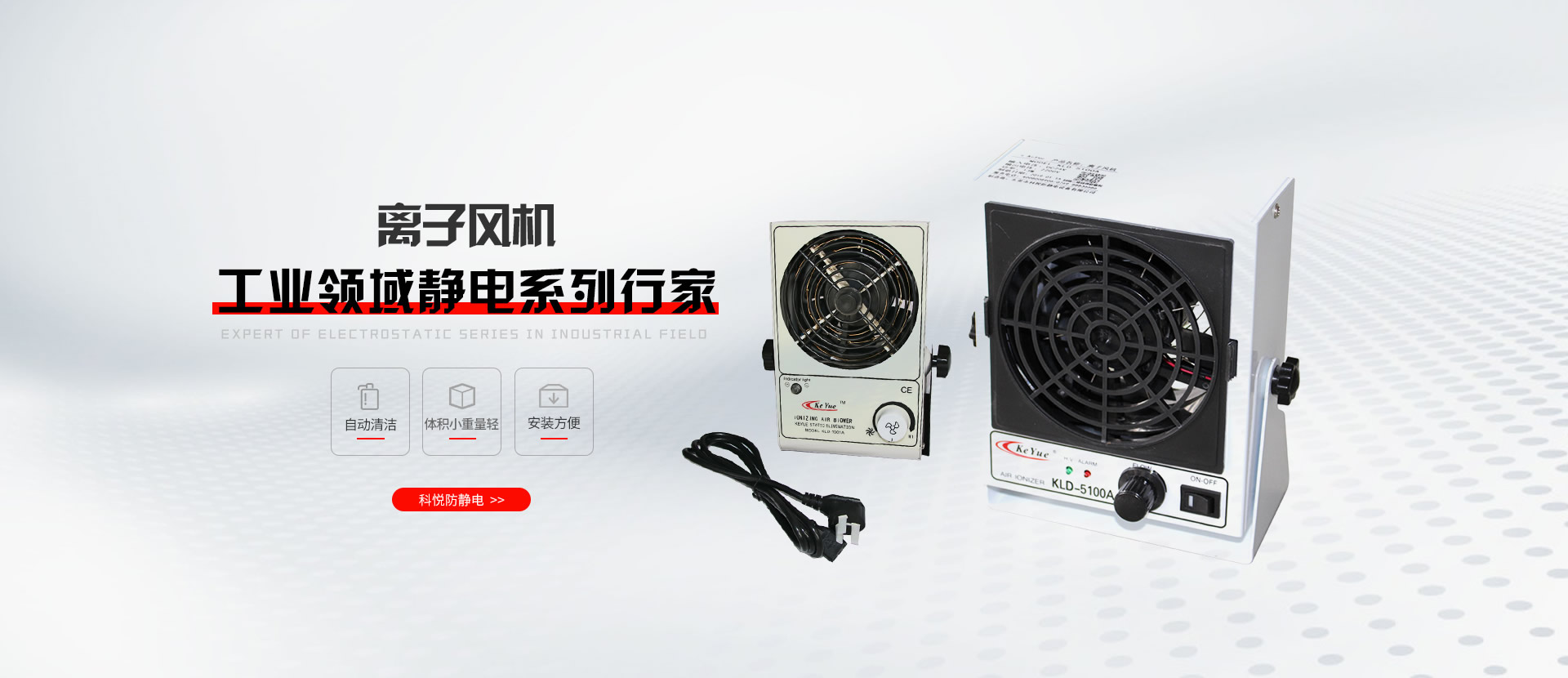

Ion winders are common static elimination devices in electrostatic fields, requiring regular cleaning and maintenance; however, most users overlook this, thereby reducing the lifespan of the ion winder. How should ion winders be properly and correctly grounded for use?
The grounding main conductor of the ion blower should have an area not less than 100 square millimeters; the branch conductor area should not be less than 6 square millimeters; the grounding wire for equipment and workstations should be made of multi-strand insulated wire with an area not less than 1.25 square millimeters, and yellow-green wire is preferable for grounding wire color.
(2) The connection method for the grounding main line of the ion blower should be soldered.
(3) The anti-static system of the ion blower must have an independent and reliable grounding device, with the grounding resistance generally less than 10 ohms, meeting the requirements of GBJ97.
(4) The ionized air fan utilizes a three-phase five-wire power supply system, with the ground wire serving as an antistatic grounding wire (however, the neutral and ground wires must not be mixed).
Static Dissipative Equipment Terminal Connections Should Ensure a Secure Contact, Be Easy to Install and Remove, and Be Compatible with Various Clamp-Type Connectors, Such as Fish Tape Clamps, Plug Sockets, and the Like.
(6) Static-dissipative grounding wires must not be connected to the neutral line of the power supply and should not be shared with lightning protection grounding wires. This is because phenomena such as lightning strikes can pass through the circuit, affecting product functionality and personal safety.
(7) Workplaces with high requirements for grounding resistance of ion wind machines should install grounding system monitoring and alarm devices.
