

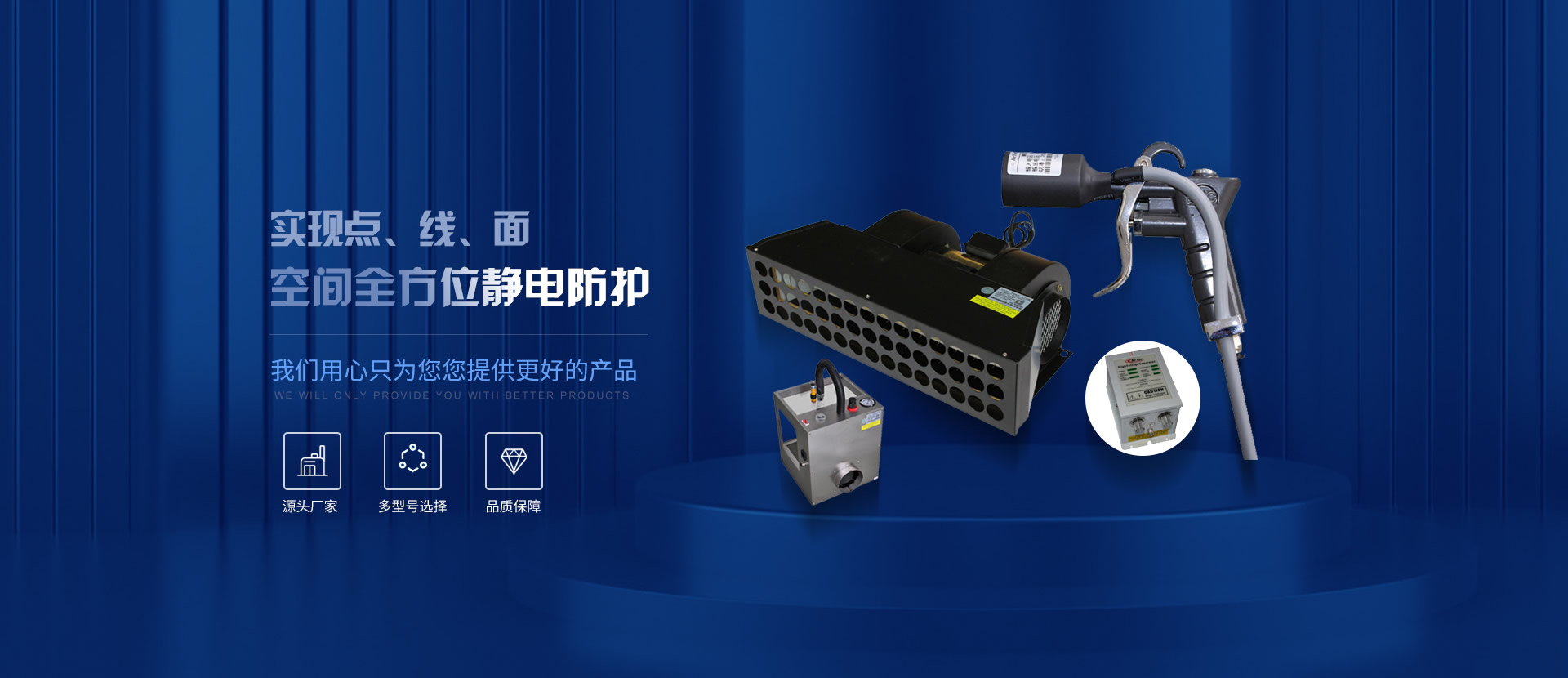
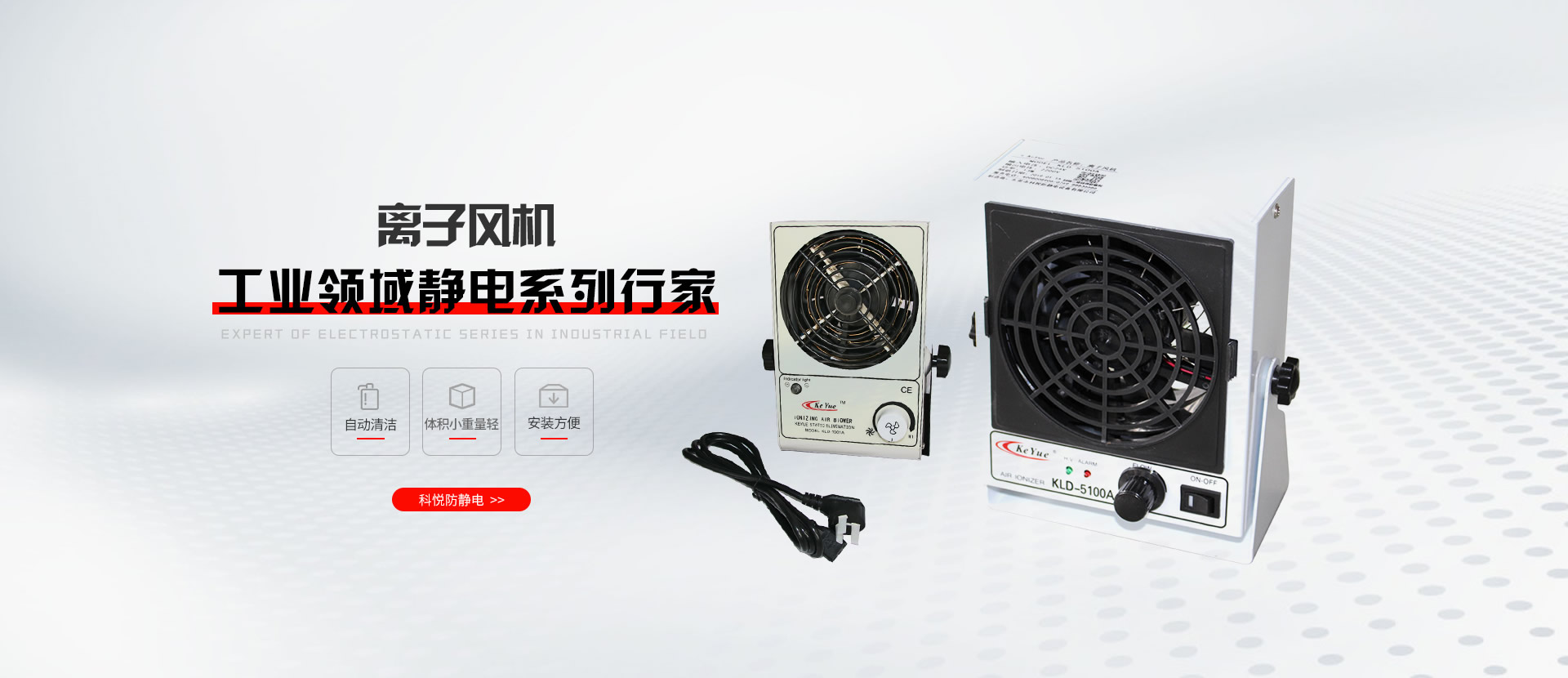

In the development of modern society, industrial manufacturing production has become an important indicator of economic growth, leading to the emergence of numerous control environments and auxiliary equipment for industrial production, such as ion winders. As a static electricity prevention device, ion winders are widely used in many industrial production processes. Why do we use ion winders in industrial production? Let's introduce it below:
Static electricity possesses three fundamental physical properties: the generation of discharge current, repulsion or attraction, and a potential difference with the ground. These properties have four impacts on electronic components:
Static adhesion to dust reduces insulation resistance, thereby shortening the lifespan of electronic components.
2. Electrostatic discharge can completely destroy electronic components, rendering them inoperable.
3. Heat generated by electrostatic discharge fields or currents can cause damage to electronic components.
4. The electromagnetic field generated by electrostatic discharge is extremely large (reaching hundreds of volts per meter), with an extremely wide spectrum (ranging from dozens to thousands of megahertz), which can interfere with electronic components and may lead to severe damage.
If electronic components are completely destroyed, the production or inspection process can often be detected and addressed promptly, resulting in minimal impact. However, if the damage is only slight, it may be difficult to detect even with testing. In such cases, damage might not be discovered until later stages of processing or during the product's use, which can lead to significant losses for the company.
In the industrial production of the electronics, film, plastic, and chemical industries, strict static control is essential. Otherwise, product quality will be directly affected. Therefore, ion winders and other static elimination equipment are invaluable to industrial production.
