
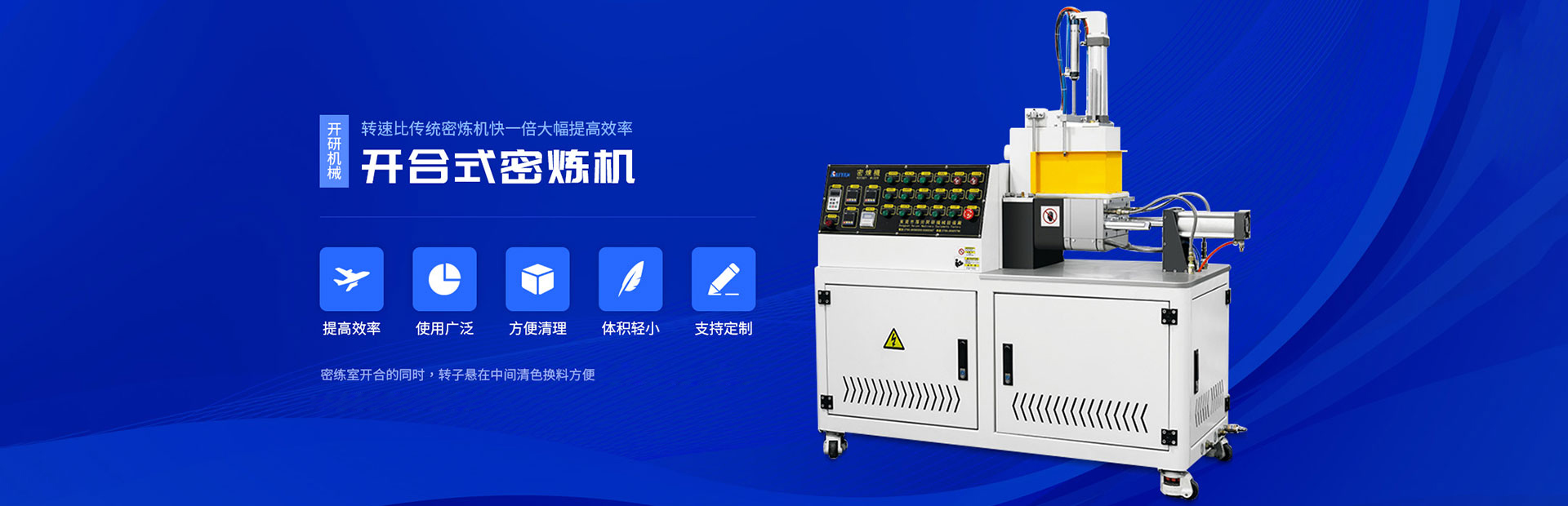
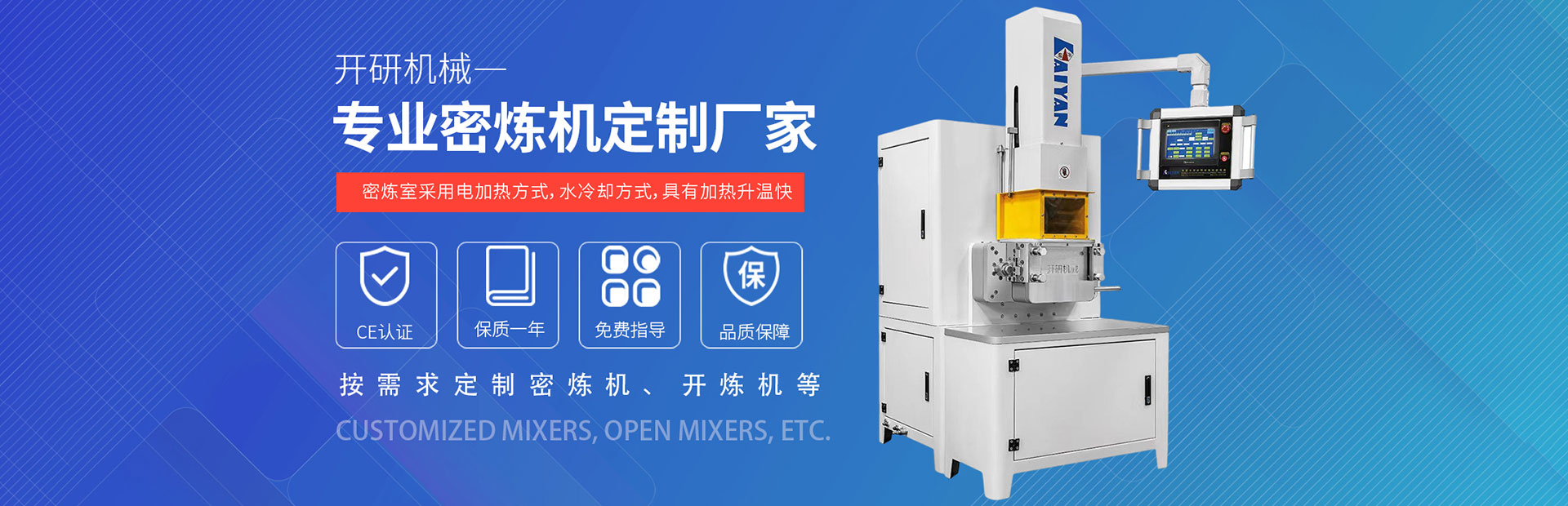

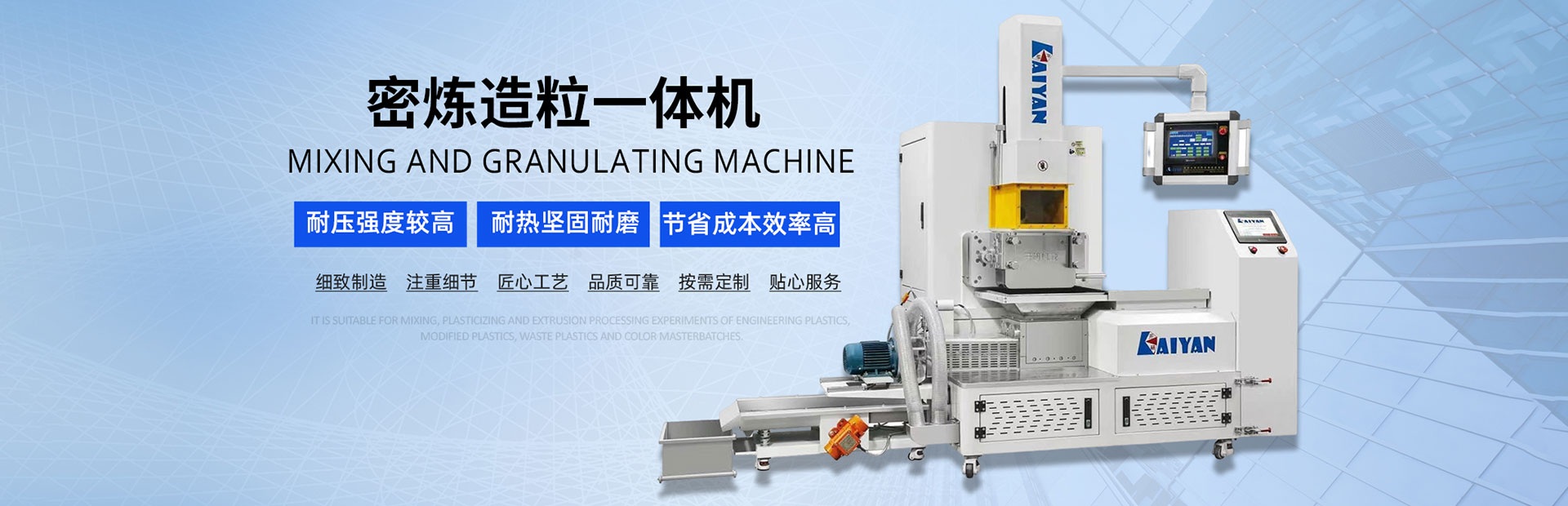
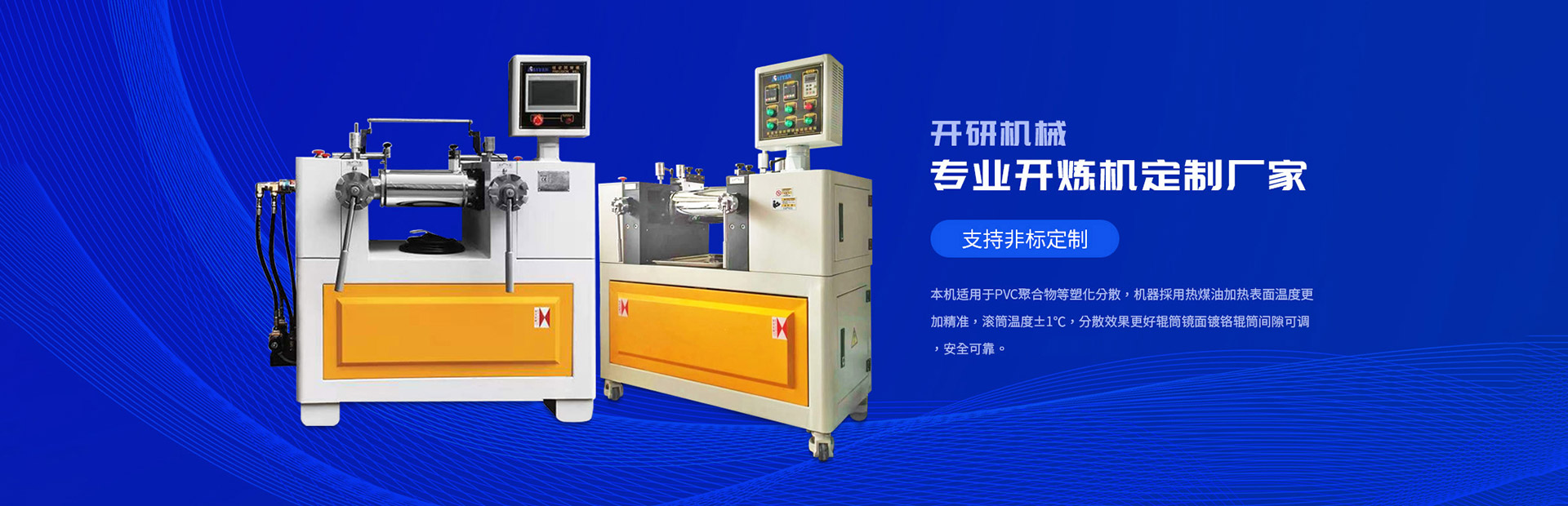

The extruder typically consists of a compaction chamber, two counter-rotating rotors, upper and lower plug screws, a temperature measurement system, heating and cooling systems, exhaust systems, safety installation, discharge installation, and recording installation. The surface of the rotors features spiral ridges, available in two, four, or six ridges. The cross-sectional geometric shapes of the rotors come in three types: triangular, cylindrical, or elliptical, and are categorized into tangential and meshing designs. The temperature measurement system is composed of thermocouples, primarily used to monitor the temperature changes within the compaction chamber during the blending process; the heating and cooling systems are mainly for controlling the surface temperature of the rotors and the inner wall of the blending chamber.
1. Rotor Speed: The faster the sub-speed, the greater the heat generation, the quicker the oxidation and cracking, resulting in better plasticization effects and a shorter plasticization time.
2. Temperature: As the temperature increases, thermal oxidation cracking accelerates, and the plasticization effect is improved. However, excessively high temperatures can lead to excessive cracking of the rubber molecules, resulting in a decrease in physical and mechanical properties. The natural rubber discharge temperature is generally controlled between 140°C to 160°C, while styrene butadiene rubber is controlled at 140°C. Excessively high temperatures can cause cross-linking or branching reactions, which反而 decrease plasticity. It is generally not recommended to use a密炼机 for plasticization, as at the compounding temperature, not only can the desired plasticization effect not be achieved, but it can also lead to the formation of gel.
3. The time: Unlike the plasticization of the kneader and the open mill, the plasticity of the raw rubber increases continuously as the plasticization time in the kneader increases. Therefore, determining the rubber-curing conditions primarily relies on the required plasticity to ensure the appropriate plasticization time.
4. Viscosity Loading and Top Plunger Pressure: Insufficient viscosity loading results in low plasticization effectiveness. Excessive loading causes uneven plasticization of the raw rubber, leading to overly high discharge temperatures and can also overload the equipment, making it prone to damage. During the plasticization process in the internal mixer, the top plunger must apply pressure to the rubber material to ensure good plasticization results. Within a certain range, the plasticization effectiveness increases with the increase of the top plunger pressure.
