
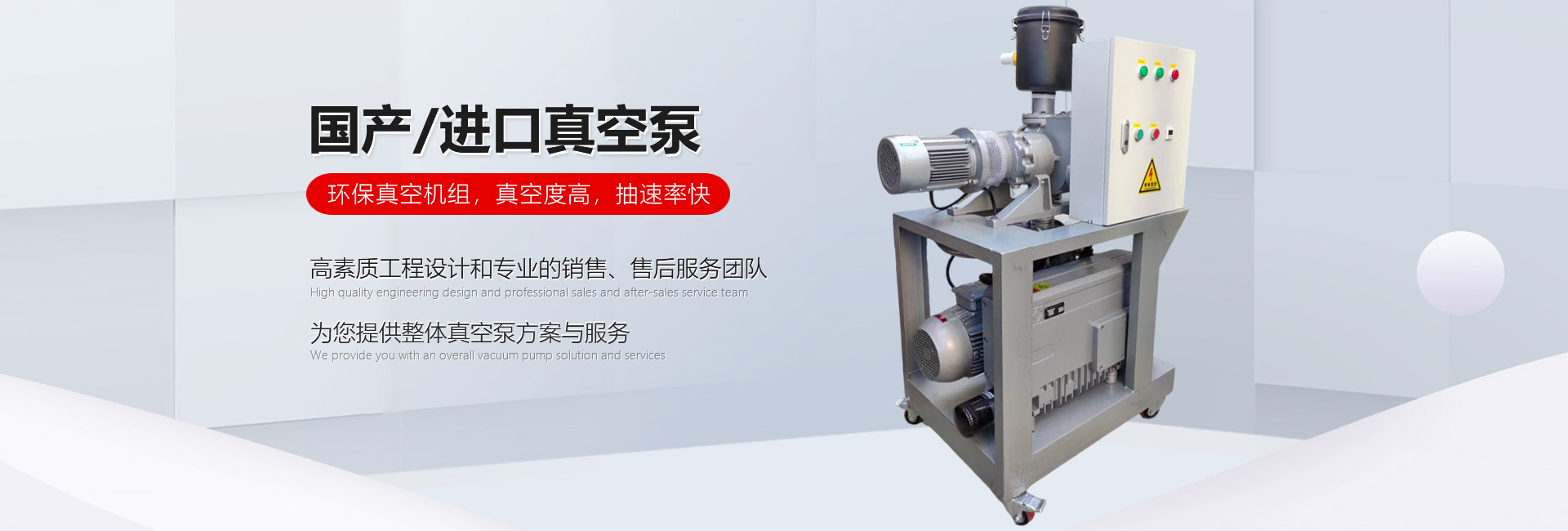
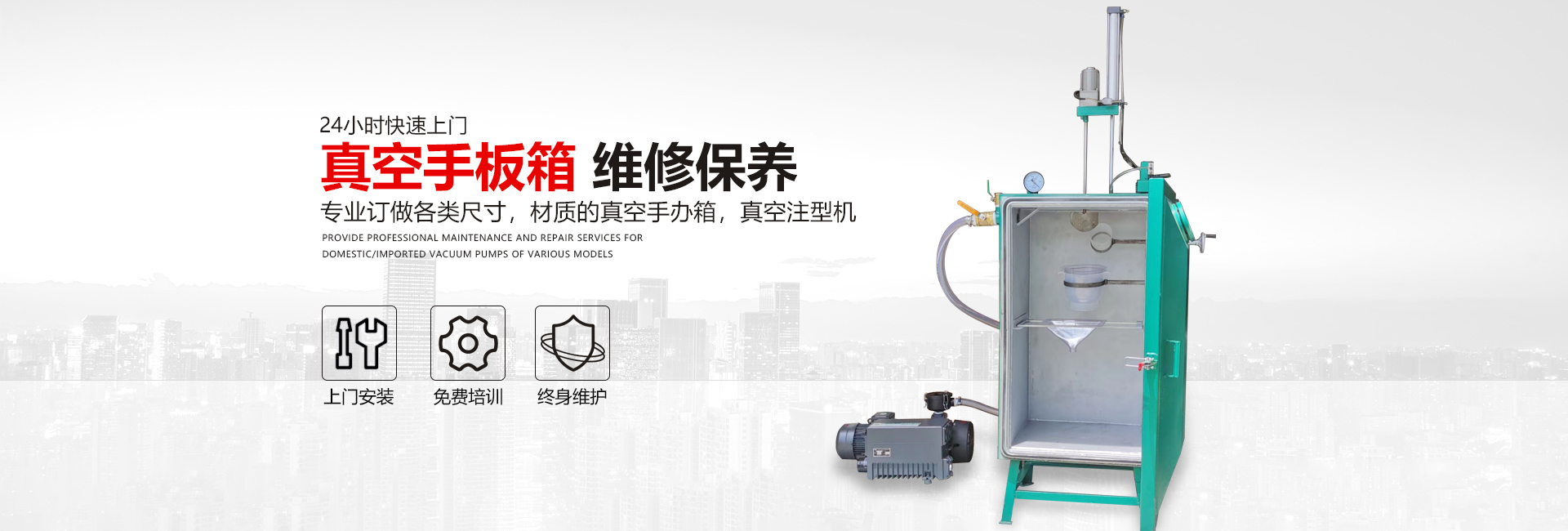
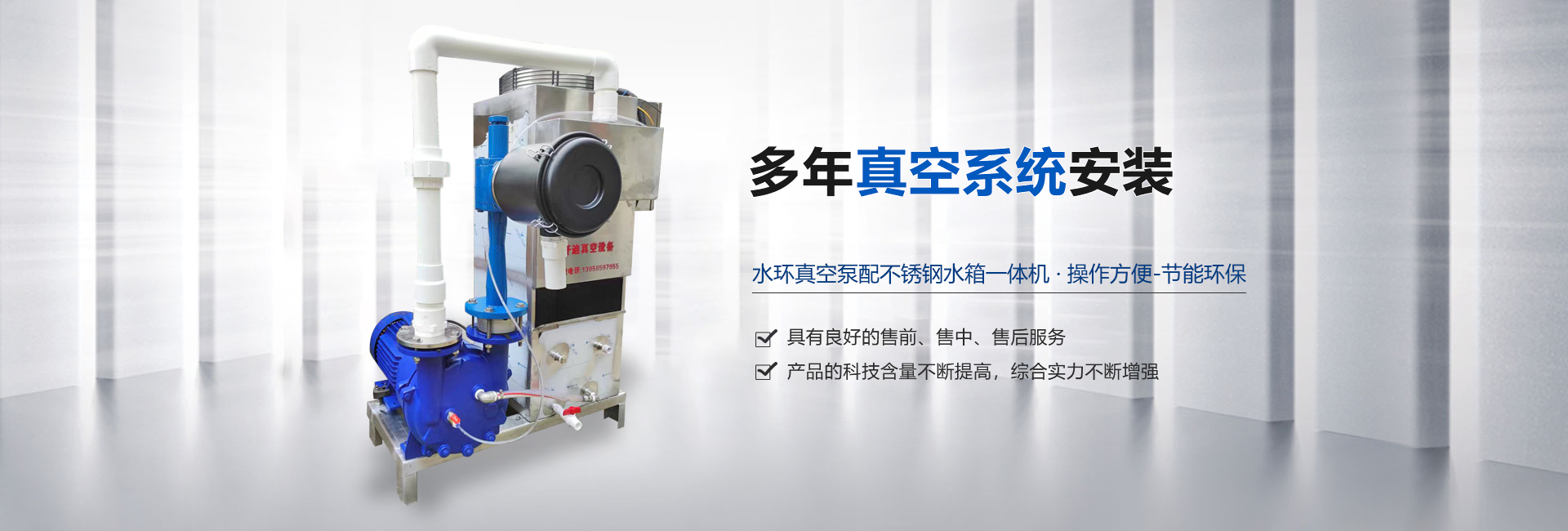
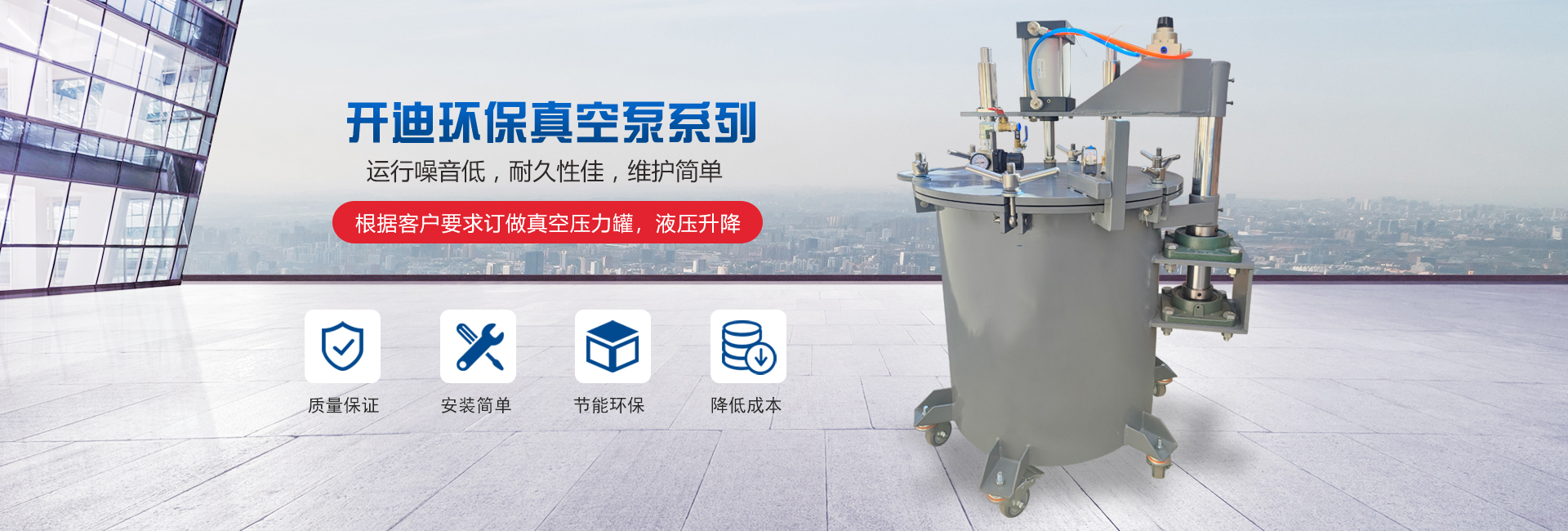


Cadey focuses on the research, development, production, and sales of vacuum equipment.
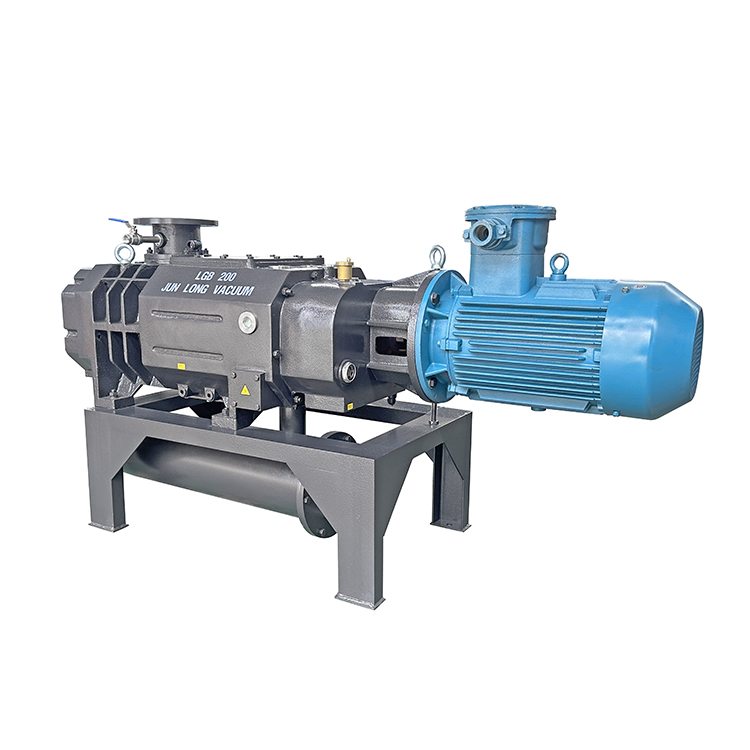
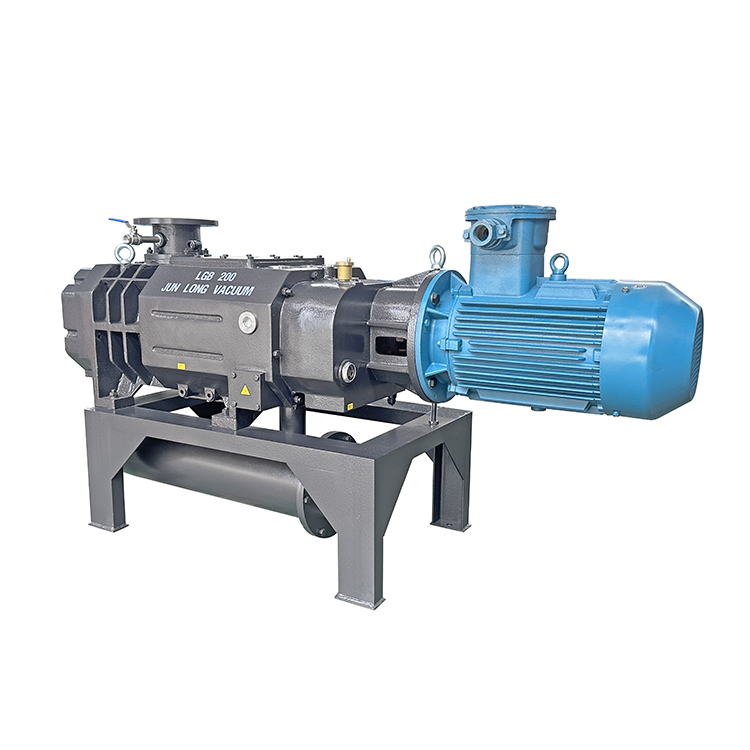
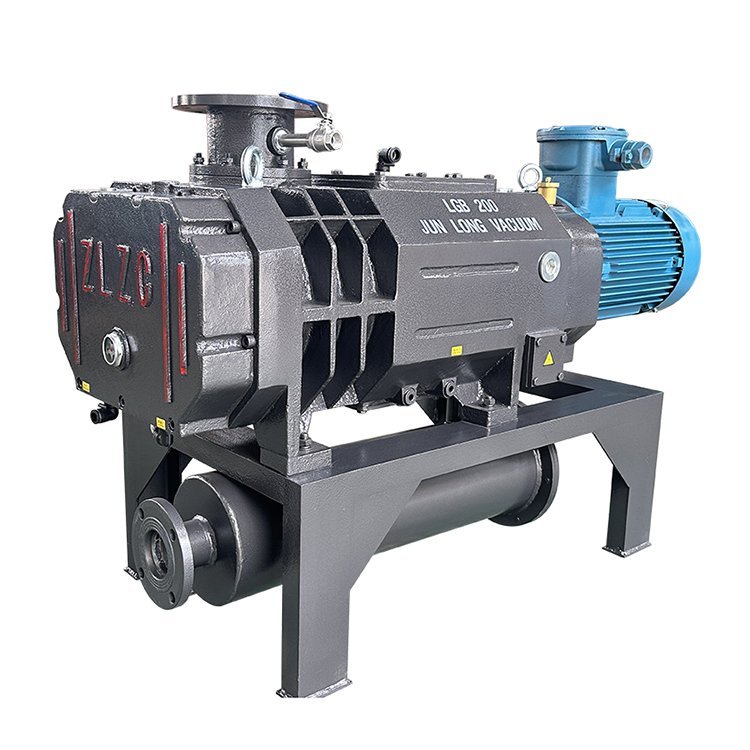
Standard vacuum systems are unable to meet the requirements for clean, oil-free, and corrosion-resistant operations. Many oil-filled vacuum systems have been replaced by oil-free, clean vacuum systems. Dry, oil-free, and environmentally friendly vacuum systems are poised to accelerate the replacement of water ring pumps, water jet vacuum pumps, reciprocating pumps, and oil-sealed mechanical pumps. Screw vacuum pumps are a type of non-contact dry pump, which emerged as an ideal vacuum pump in the early 1990s. They are praised for their wide vacuum speed range, simple and compact structure, frictionless pump chamber components, long service life, low energy consumption, and oil-free contamination.
The screw vacuum pump consists of a working chamber formed by a pair of parallel spiral rotors and a pump housing, with no friction between the rotors and the housing and maintaining a certain clearance. The two rotors and the housing form a sealed cavity, and as the rotors rotate, they continuously compress and carry the gas in the sealed cavity to the exhaust port. Since the screw vacuum pump does not require oil lubrication or water sealing, the pump chamber is oil-free, making it an oil-free dry vacuum pump. It offers unparalleled advantages in applications requiring oil-free and clean environments, such as solvent recovery processes in the semiconductor and electronics industries. It is an upgrade replacement for reciprocating pumps, water ring pumps, water jet vacuum pumps, oil-sealed sliding valve vacuum pumps, diaphragm vacuum pumps, and Roots blower units.
A single stroke of a screw vacuum pump is equivalent to one stage of a pump, while a multi-stroke screw vacuum pump is akin to a multi-stage pump in series. Compared to dry vacuum pumps with multi-stage series configurations like claw vacuum pumps and multi-stage Roots vacuum pumps, the screw vacuum pump, with no internal channels between stages, directly pushes gas from the suction side to the discharge side. This makes it less prone to clogging and easier to clean when handling condensable gases and dusty, particulate-laden gases. The pressure of the inhaled gas is smoothly increased over the pressure at the discharge point. This design ensures that the discharged gas does not contain any oily substances. The motor's power is transmitted to the drive shaft via a coupling device, which then transmits it to the driven shaft through a gear ratio.
Application Scope
① Power: Transformers, Current Transformers, Epoxy Resin Vacuum Impregnation, Capacitor Vacuum Oil Immersion, Vacuum Pressure Impregnation.
Chemical: Distillation, drying, degassing, concentration, material conveying.
③ Industrial Furnaces: vacuum brazing, vacuum sintering, vacuum annealing, vacuum pressure quenching, vacuum dehydroxylation, etc.
④ Vacuum Coating: Vacuum Evaporation Coating, Vacuum Magnetron Sputtering Coating, Continuous Coating on Film Rolls, Ion Plating, etc.
⑤ Metallurgy: Special Steel Smelting, Vacuum Induction Furnace, Vacuum Desulfurization, Degassing.
⑥ Aviation & Space: Vacuum simulation tests including spacecraft orbital module, re-entry module, rocket attitude adjustment module, astronaut suits, spacewalks by astronauts, and aircraft takeoff.
⑦ Vacuum Drying: Vacuum drying by pressure reduction, gas-oil tank drying, wood drying, vegetable freeze-drying, etc.
8. Electronics industry, semiconductor industry.
