

Printhead Working Principle
1. Fixed oil pot and oil cup
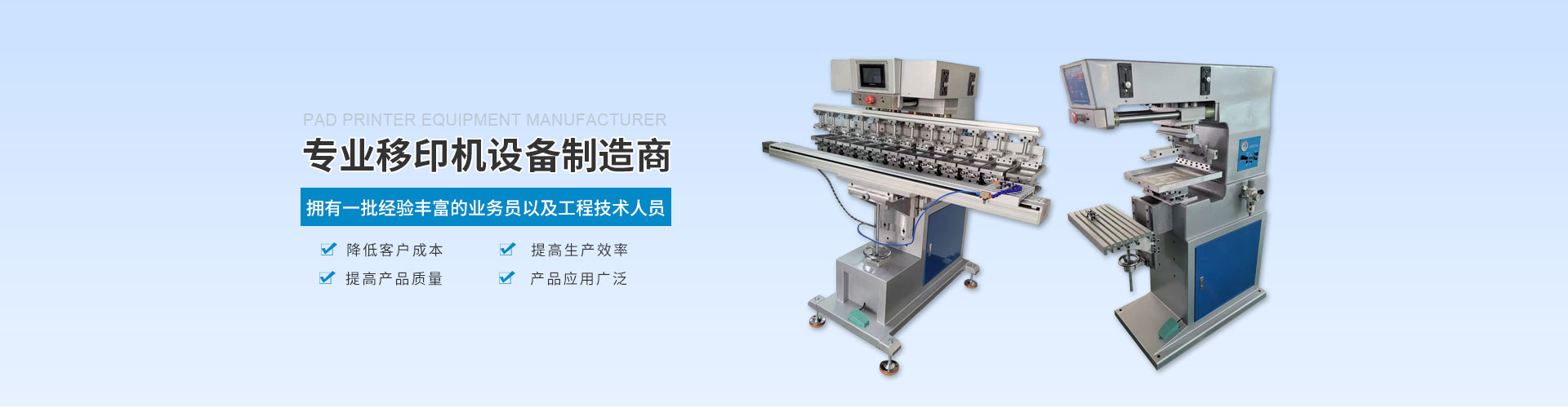
Most pad printing machines, especially larger models, typically utilize fixed oil basins and cups. These machines have a relatively simple yet robust mechanical structure. The movement of the pad printing head is driven by sliding components, which inevitably result in vibrations due to the impact of the sliding components, thereby limiting the machine's printing speed.
2. Activity Oil Basin and Oil Cup
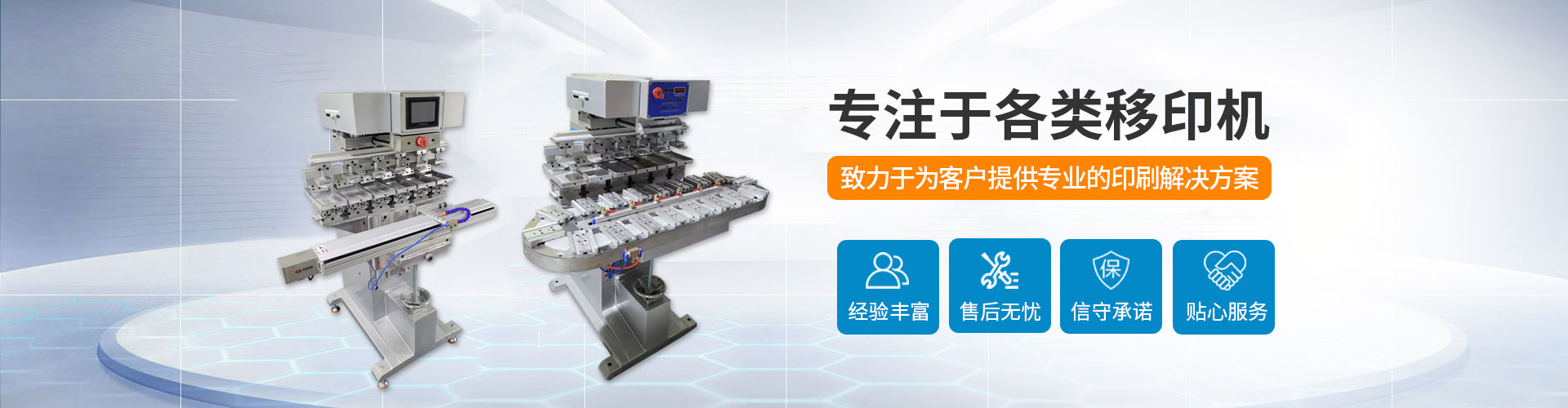
The printing heads of the mobile oil pans and pots only move vertically, eliminating mechanical impacts, and reduce vibration as well. Therefore, most high-speed stamping machines utilize mobile oil pans and pots.
Printing Process
The pad printing machine can be categorized into open oil pan and sealed oil cup systems, with the rubber head stroke action operating identically in both systems.
1. Open oil pan
As the screen printing head moves forward, the squeegee rod fills the etched printing plate with ink.
(2) As the print head moves backward, the blade scrapes off the excess ink from the steel plate, leaving only the ink on the etched pattern area.
2. Sealed Oil Cup System
As the ink cup is pushed forward, the ink inside is delivered to the etching position on the printing plate, filling it completely.
(2) Upon the oil cup's return, the ceramic ring functions similarly to a scraper in pad printing, akin to gravure printing. The tools include a silicone pad printing head, a patterned printing plate (steel or fiber), and ink, capable of printing extremely fine lines, fonts, and patterns, including four-color screen images. Regardless of the surface being concave, convex, or irregular, the ideal printing results are achievable, such as printing four-color logos on golf balls, which is one of the specialties of pad printing machines. Any excess ink is usually thoroughly scraped off.
