
Dry Ice Cleaning Machine
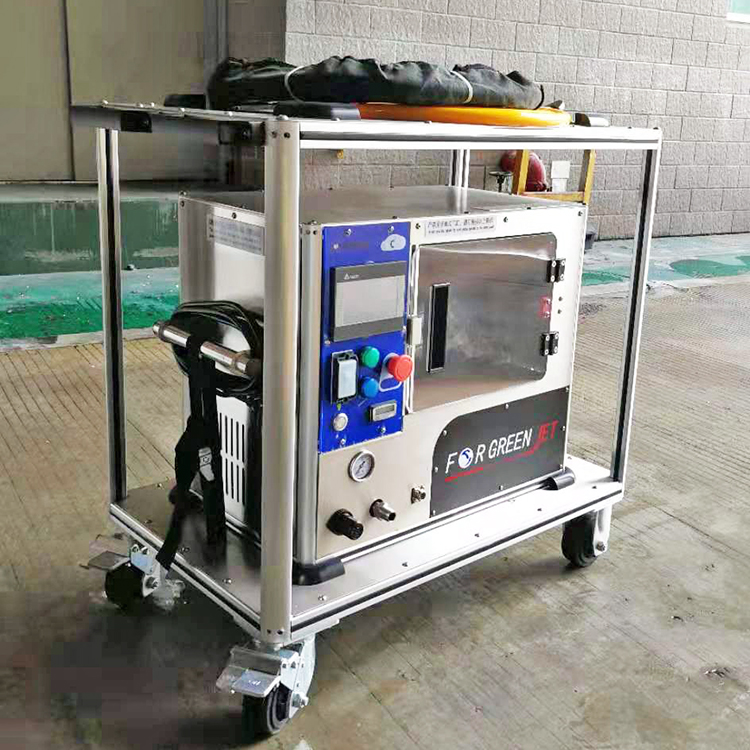
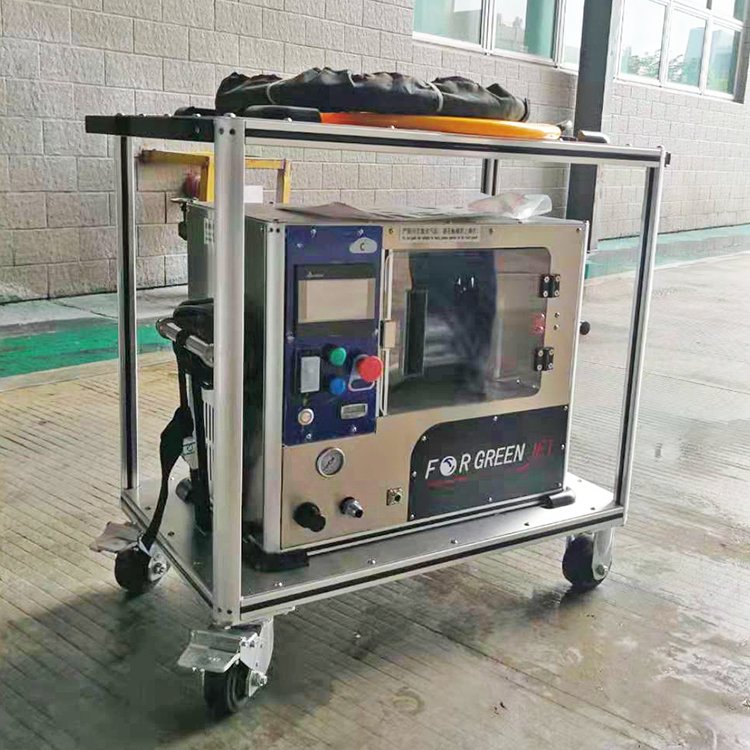
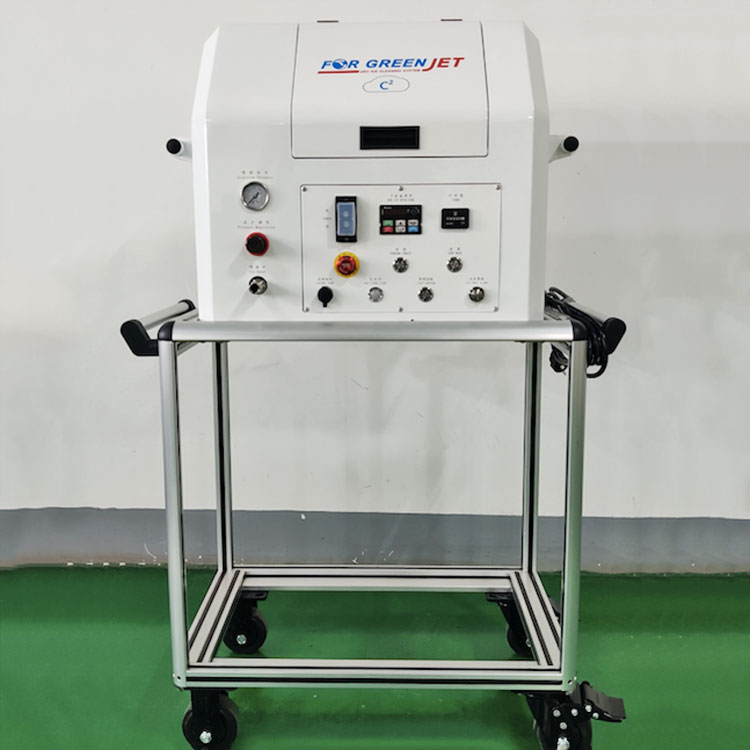
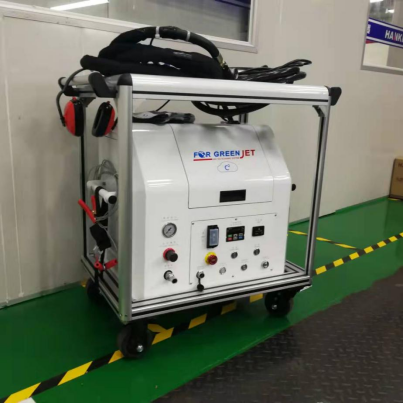
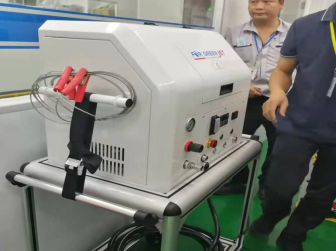
The dry ice cleaning machine achieves high-level polishing effects. All components used are of high quality. The meticulously developed metering technology ensures reliable sandblasting without any ice residue on the machine. The dry ice cleaning machine is designed for continuous operation. Its reliability has been verified through numerous tests, including field trials and durability tests. The airflow beneath the base has been optimized to guide the available compressed air through the machine to the nozzle, achieving low loss. Through the IB base, even with lower pressure and gas consumption (3.5 m³/min), a satisfactory cleaning effect is achieved. Another advantage of this low resource consumption is low noise. For instance, at a sandblasting pressure of 5 bar, the noise level is approximately 80 dB(A). The base is equipped with an ice residue removal device. This allows for the easy removal of any remaining dry ice from the container with just a button press after operation, preventing the machine from freezing. The new dry ice cleaning machine also features an integrated oil-water separator for reliable operation. The sandblasting pressure and ice feed speed can be adjusted via buttons, with the set values displayed on the screen. Additionally, statistics such as operating time, average ice consumption per hour, and total ice consumption can be accessed. The adjustment of ice feed speed and sandblasting pressure can be locked using a push-button switch.
■Technical Description
■Technical Data
Brand | Blue Ice |
Model | C2 |
Dry Ice Capacity: | 10kg |
Dry Ice Cube Dimensions: | 140mm×125mm×300mm |
Flow rate of dry ice adjustable | 0~2.0kg/min |
Supply Pressure Range: | ≥1.0m3/min |
Compressed air flow range: | 1- 1.15m3/min |
Jet pressure range | 1.0-9.7bar |
Voltage (Volts) | 220V |
Dimensions (L×W×H): | 695mm×425mm×525mm |
Equipment Weight: | 61kg |
■ Principle of Cleaning
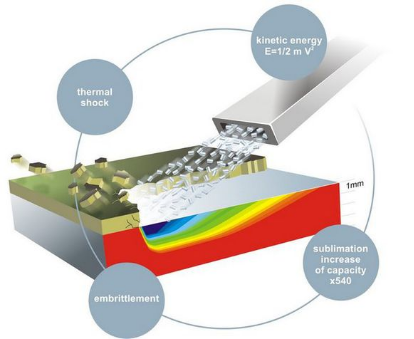
By combining the thermodynamic principle of thermal expansion and contraction with the kinetic effect of air compression, the mold surface experiences a micro-explosion phenomenon, thereby allowing the dirt to be quickly stripped off after it becomes brittle.
■ Cleaning Effect
Dirty molds, parts, or equipment are often difficult to clean. Issue: Sandblasting leaves sand or glass particles, and spraying agents. This usually means additional cleaning work is required after washing. High-performance dry ice cleaning machines eliminate this problem. After sandblasting, dry ice particles completely sublime into CO2, achieving the cleaning effect.
Advantages of Dry Ice Blast Cleaning Technology
·No preparation required before cleaning
Cleaning does not require disassembly of the equipment. Dry ice pellets can easily enter into corners and crevices.
Reduce equipment downtime due to malfunctions
Quickly and effectively clean using dry ice.
· Eco-friendly Cleaning
No additional chemicals or sprays required
· No surface damage
· No residues
Dry ice sublimates to CO2. No abrasive or wastewater residue remains.
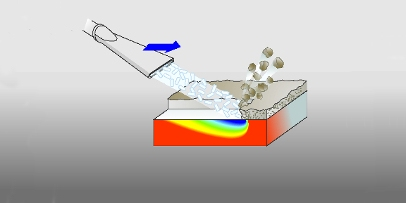
Dry ice cleaning machines propel dry ice particles at speeds exceeding 150 m/s using compressed air. The low temperature of -79°C condenses dirt and makes it brittle. The high-speed喷射 dry ice particles can then easily remove the dirt. This is a particularly effective and gentle method for cleaning almost any type of dirt.
Clean = Low Temperature x Speed
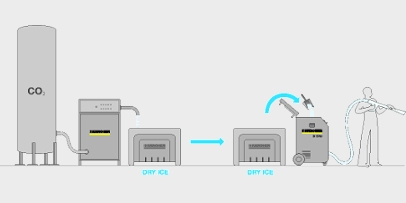
During the manufacturing process, liquid CO2 is first introduced into the granulator's compression cylinder, where it is then crystallized into dry ice snowflakes through pressure reduction. These snowflakes are then compressed through an extrusion plate using a hydraulic cylinder, forming cylindrical dry ice. Subsequently, the cylindrical dry ice is crushed into dry ice granules.
From CO2 to Dry Ice
Washing methods suitable for all industries
Dry ice cleaning machines do not use any cleaning agents or chemicals. They are suitable for all areas where it is legally prohibited to use water or sand for cleaning. Since dry ice pellets can sublimate into gas, there are no residues or wastewater.
Steel, metals, and machinery manufacturing
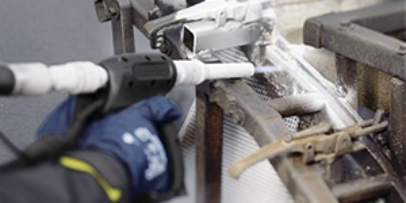
Using dry ice cleaning machines, it's very easy to perform deep cleaning and maintenance cleaning on production equipment, welding robots, conveyor belts, and spray booths.
Printing Factory
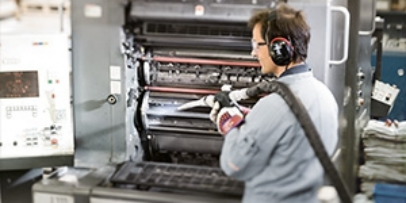
After being treated with dry ice blasting, all printing equipment, cylinders, and tools look like new.
Wood and electrical industries
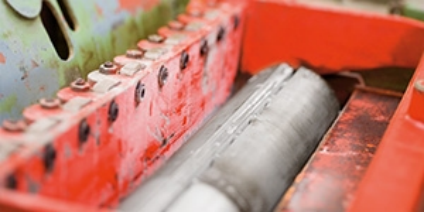
Dry ice blasting is also ideal for cleaning woodworking equipment, generators, turbines, and control cabinets.
Plastic and Packaging Industry
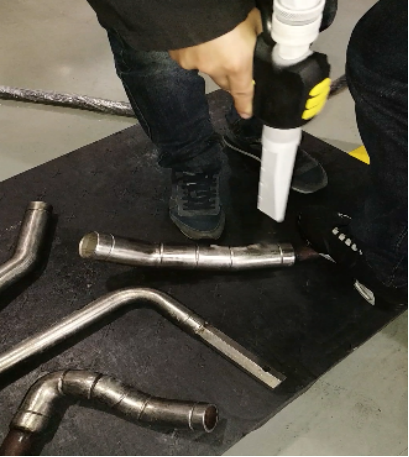
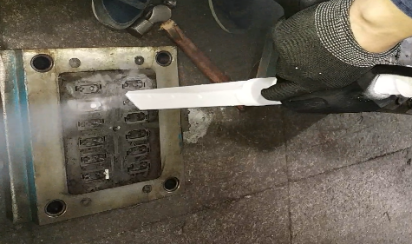
Dry ice cleaning machines can remove silicone, rubber, dyes, paints, and other contaminants from injection moldings and production lines.
Automotive industry, casting workshops, and injection molding factories
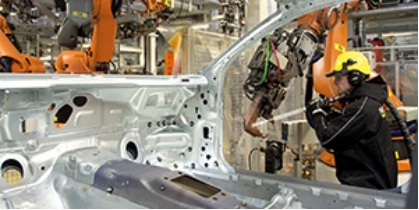
The dry ice cleaning machine can remove adhesives and release agents from all types of parts and workpieces. Residues such as silicone resin, rubber, dyes, paints, and release agents can be easily removed from injection molds, tools, and the entire production line. The cleaning results are impeccable, with no residues left behind.
Food Industry
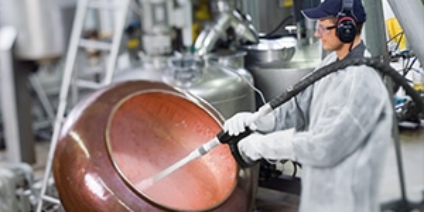
Dry ice cleaning machines are ideal for removing carbonization, aging deposits, crusts, grease, and starch from filling and mixing equipment, production lines, conveying systems, tanks, and heating furnaces.
Papermaking Industry
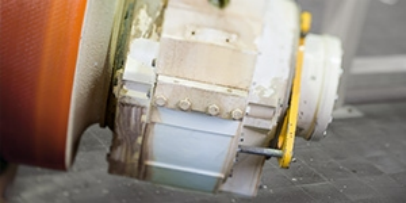
In the paper industry, gels, lime, dust, and porous materials can accumulate within the system. This can lead to equipment downtime and a decrease in paper product quality. Utilizing dry ice blasting technology can clean the system more quickly, allowing it to be immediately reused.
Local authorities and municipal

Graffiti and gum: problems many cities and municipalities face. This calls for a cleaning method that can thoroughly but gently wash walls and floors, such as dry ice cleaning machines. They can remove dirt without damaging the surfaces.
■Compatibility of dry ice blast cleaning environment
Harmless material
Dry ice blasting cleaning does not use any toxic or environmentally harmful chemicals or solvents. This means it does not release any toxic or harmful vapors, thus eliminating the risk of harmful substances harming employee health.
Easier to process after assembly
After dry ice blasting cleaning, no abrasive residue is left behind. Deposited dirt falls to the ground and can be easily swept up. Only the dirt generated during the cleaning process requires post-treatment. In contrast, chemicals and solvents used for cleaning produce difficult-to-handle hazardous waste.
No secondary waste
In sandblasting, soda blasting, and water jet cleaning, the jetting materials used to remove harmful dirt themselves generate hazardous waste. These cleaning processes produce a large amount of secondary waste, in
In certain cases, these waste materials must be handled meticulously, and the cost of waste treatment is also very high.
Generate CO2
CO2 is a byproduct of other industrial production processes. For example, CO2 is produced during the combustion process in power plants and fermentation processes.
That's why there's no longer a need for specialized CO2 manufacturing in industrialized countries; the production of CO2 from fossil fuel combustion is now a thing of the past.
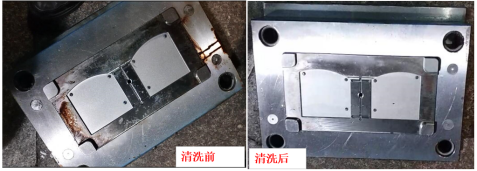
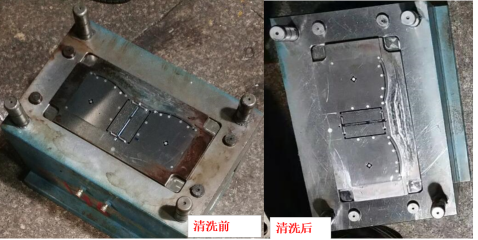
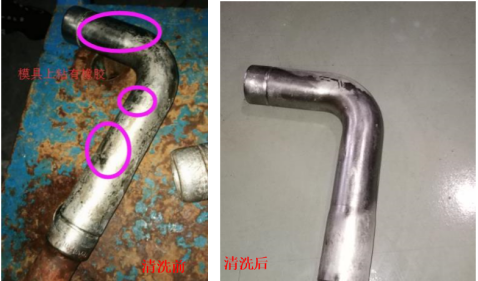
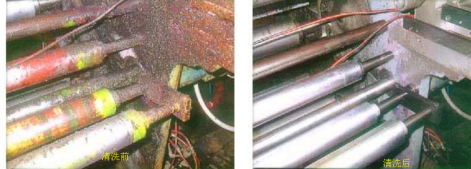
Dry Ice Cleaning Molding Actual Effect