

When selecting bentonite pneumatic conveying, it's crucial to understand the material's properties. Bentonite has strong hygroscopic and expansive characteristics, capable of adsorbing 8 to 15 times its own volume of water, with its volume expanding up to several times or even 30 times. It possesses a strong cation exchange capacity and has certain adsorption abilities for various gases, liquids, and organic substances, with a maximum adsorption capacity reaching up to 5 times its own weight. Acidic activated clay (active white clay, natural bleaching clay - acidic bleaching clay), with its surface activity, can adsorb colored ions. It has a hardness of 1 to 2 and a density of 2 to 3 g/cm3. Calcium-based bentonite includes calcium-sodium and calcium-magnesium types, among others. Due to its strong adsorption capability, a sealed conveying method is ideal to isolate it from the external environment, preventing expansion and making pneumatic conveying a good choice.
The bentonite pneumatic conveying system can be designed in two modes: dense phase pneumatic conveying and dilute phase pneumatic conveying. The choice of method depends on the on-site conditions.

The rarefied phase pneumatic conveying system typically has a conveying distance of up to 300 meters, with materials moving quickly through the pipeline at a pressure of 196 kPa or less. In contrast, the dense phase pneumatic conveying system can achieve a conveying distance of up to 1,500 meters, with a pressure of 500 kPa or less.
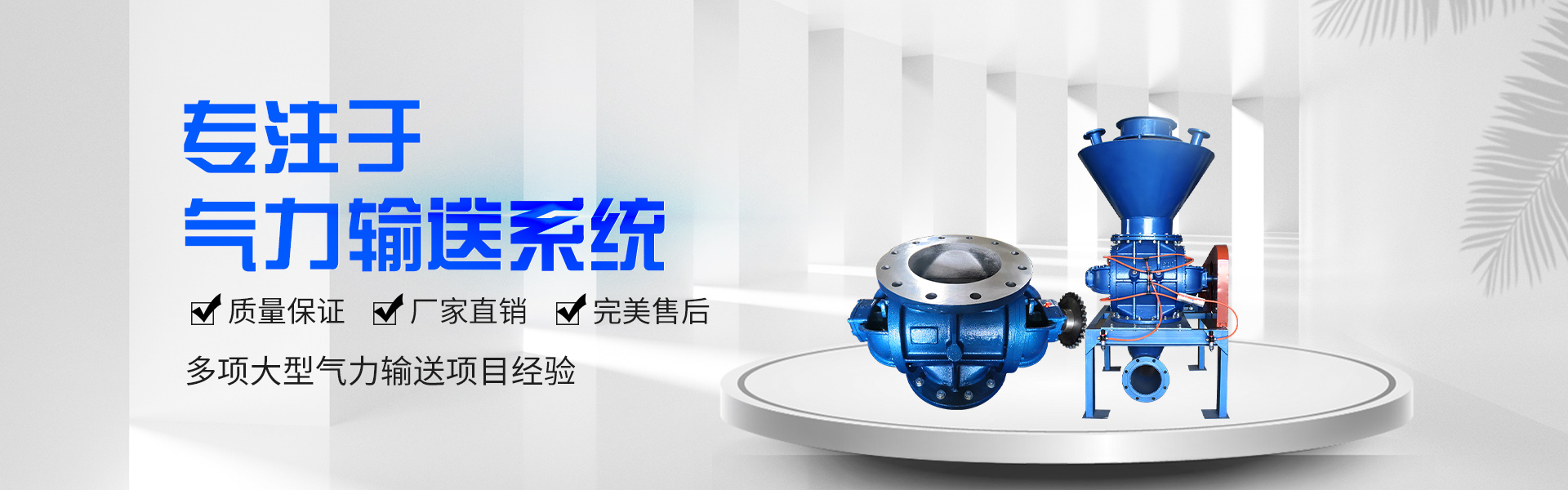
The rarefied gas conveying system utilizes a Roots blower as the gas source equipment and a rotary feeder as the feeding equipment. Materials are continuously conveyed through the impeller of the rotary feeder into the pipeline, where a high-speed airflow transports them to the receiving bin at the end. After passing through a dust collector, the purified gas is returned to the atmosphere.
The dense phase gas conveying system utilizes an air compressor as the gas source equipment and a storage pump as the feeding equipment. The material is pressurized and fluidized by the storage pump before being discharged through the discharge outlet. The discharged material is then transported to a buffer storage and the dust-laden gas is returned to the atmosphere.
The selection of its air source equipment and feeding equipment can be determined based on the conveying volume, conveying distance, and the number of bends. If you need a pneumatic conveying system, please contact us.
