
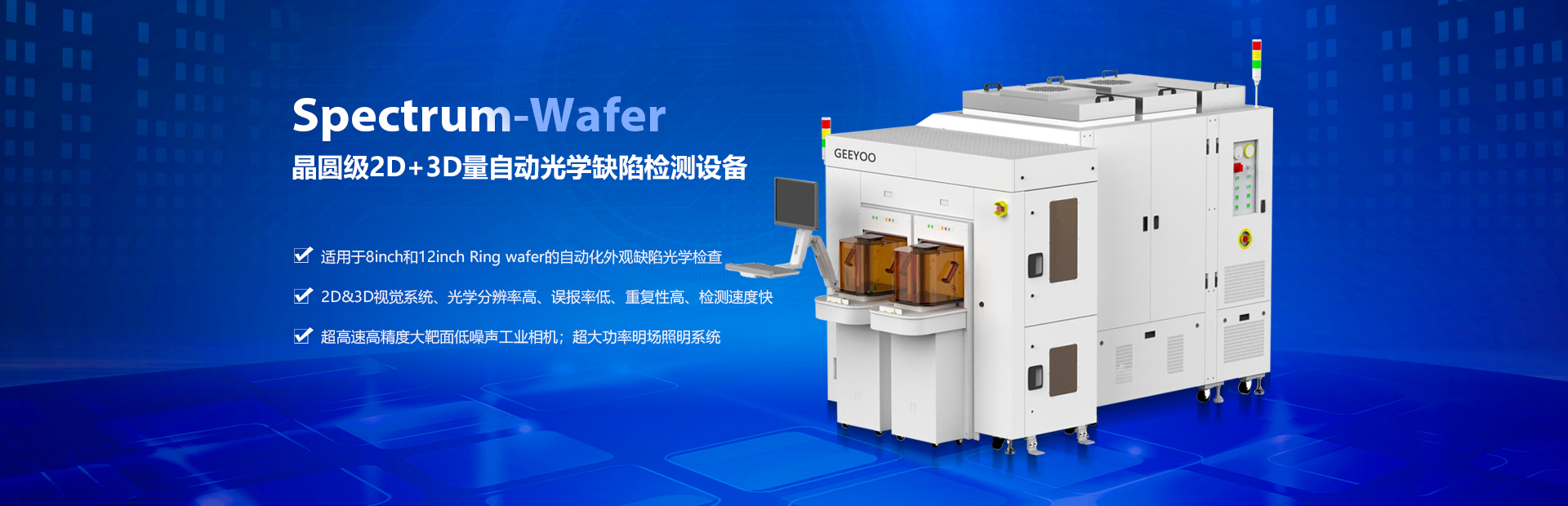
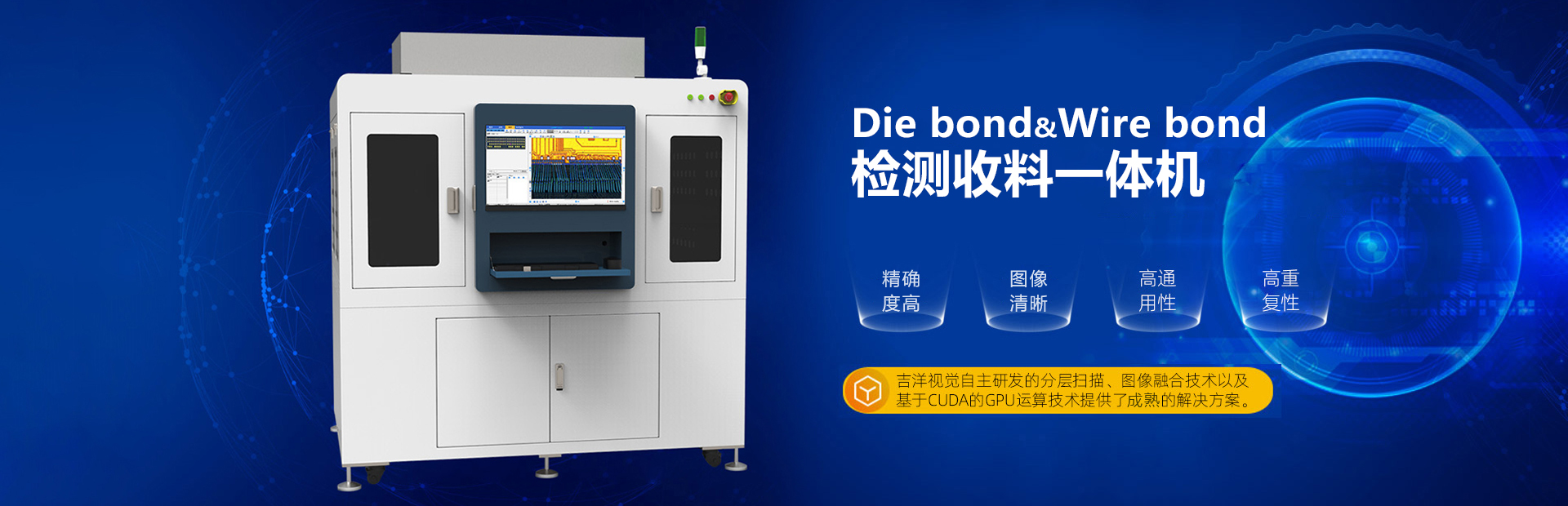
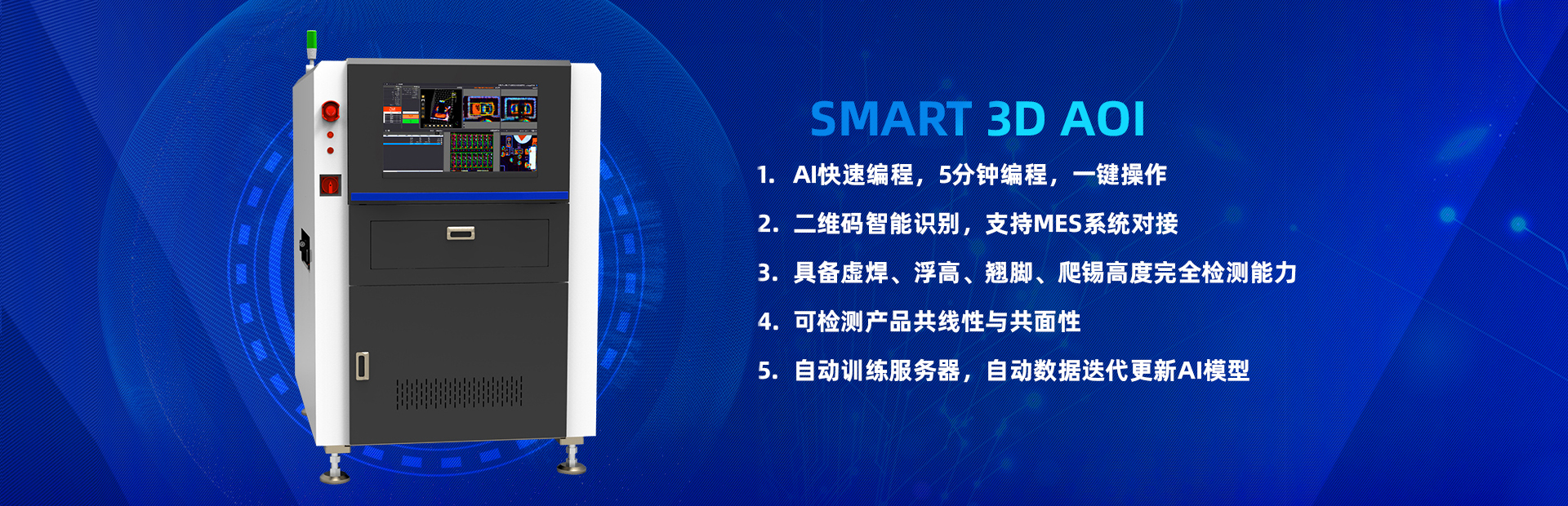

From simple camera systems to complex 3-D X-ray inspection systems, numerous suppliers can now almost provide AOI equipment suitable for all automatic production lines.
Over the past decade, the performance of solder paste printers and SMT placement machines has been enhanced, resulting in increased speed, accuracy, and reliability in product assembly. This has consequently raised the yield rates for major manufacturers. The growing availability of SMT packaged components from component producers has also spurred the development of PCB assembly line automation. The automated placement of SMT components nearly eliminates errors that could arise from manual assembly on the production line.
In the PCB manufacturing industry, the miniaturization and densification of components have been a consistent trend. This has prompted manufacturers to install AOI equipment on their production lines. As manual inspection is no longer feasible for reliably and consistently detecting closely spaced components, and preserving precision is crucial.Please provide the Chinese content to be translated.The company's testing records. While AOI can be repeatedly and preciselyPlease provide the Chinese content that you would like translated into American English.The testing, storage, and publication of test results can also be achieved electronically.
In many cases, process engineers' inspections and adjustments of the solder paste printer and assembly process can ensure that the solder paste contamination rate (solder splatter rate) on the production line is only a few ppm. For a high-volume/low-mix production line, a typical solder paste contamination number ranges from 20 ppm to 150 ppm. Experience has shown that relying solely on sampling inspections of printed circuit board samples is difficult to uncover every instance and type of solder paste contamination. Only by inspecting all circuit boards can a higher level of detection coverage be achieved, thereby implementing Statistical Process Control (SPC).
Significant amounts of solder paste contamination are often attributed to specific types of equipment, with only a small portion actually existing. In many cases, the contamination can be traced back to a particular machine. However, certain variables, such as component offset (due to self-correcting effects during the reflow process), cannot be linked to a specific production step. Therefore, to uncover all forms of solder paste contamination, it is necessary to inspect every production step on the line. In reality, due to economic considerations, PCB manufacturers cannot afford to test every circuit board after each process. As a result, process engineers and quality control managers must carefully weigh the balance between investment in detection and the benefits of increased production.
Generally speaking, as shown in Figure 1, AOI can be effectively applied after any step of the four production stages in a production line. The following paragraphs will separately introduce the application of AOI after four different production stages in the SMT PCB production line. AOI can be roughly categorized into two types: preventing issues and identifying issues. In the following description, the inspections after solder paste printing, after (surface mount) component placement, and after component placement can be classified as preventing issues, as these inspections cannot stop defects from occurring. However, the inspection after the reflow soldering step can be categorized as identifying issues, as it does not prevent defects from arising in this stage.
After solder paste printing: Many defective welds are largely due to defective solder paste printing. At this stage, it's easy and cost-effective to remove welding defects from the PCB. Most 2-D inspection systems can monitor solder paste offset and tilt, insufficient paste areas, and solder splashes and shorts. 3-D systems can also measure the amount of solder.
Post-(Chip) Device Placement: This stage of inspection can detect missing (chip) devices, misalignments, tilts, and orientation issues with (chip) devices. The inspection system can also check the solder paste on pads used for connecting close-tolerance and ball grid array (BGA) components.
After component placement: Following the equipment's placement of components onto the PCB, the detection system can identify missing, misaligned, and tilted components, as well as detect errors in component polarity.
Post Reflow Soldering: At the end of the production line, the detection system checks for missing components, misalignments, tilts, and any defects related to polarity. The system must also inspect the accuracy of solder joints, as well as defects such as insufficient solder paste, solder shorts, and lifted legs.
Should the need arise, you can also incorporate Optical Character Recognition (OCR) and Optical Character Verification (OCV) methods into steps 2, 3, and 4 for detection.
Engineers and manufacturers often endlessly debate the pros and cons of different testing methods. However, the main criterion for selection should focus on the type of components and processes, the spectrum of faults, and the reliability requirements for the product. If many BGA, chip-scale packaging (CSP), or flip-chip components are used, the testing system should be applied in the first and second steps to maximize its effectiveness. Additionally, performing inspections after the fourth stage can effectively identify defects in low-end consumer products. For PCBs used in aerospace and safety products (such as automotive airbags), due to the strict quality requirements, testing may be required at many points along the production line, especially after the second and fourth steps. For such PCBs, X-ray inspection can be a suitable option.
When evaluating AOI systems in use on the production line, it's important to differentiate between systems that can only perform inspections and those that can also conduct measurements.
Defect detection systems that can only identify issues such as missing components or misplaced placements cannot provide tools for process control, therefore, they cannot be used to improve PCB production processes. Engineers still need to manually adjust the production process. However, these detection systems are both quick and cost-effective.
On the other hand, the measurement systems provide accurate data for each component, which is crucial for the measurement of production process parameters. These systems are more expensive than detection systems, but when integrated with SPC software, they can offer the necessary information to improve production processes.
Overall, relying solely on the accuracy rate of the detection system, i.e., the ratio of true errors (correctly reported errors) to false alarms (incorrectly reported errors), to evaluate its performance is not mature. To assess a measurement system, it is also necessary to consider its precision within a smaller tolerance range.Please provide the Chinese content that needs to be translated into American English.Sexual assessment results.
If you want to leverage data from the AOI system to effectively manage your production process and achieve higher output and profit for your company, you must be aware of the following information:
◆Accurate measurement data
◆ Repeatability and reproducibility in measurements
◆ Measuring Events in Proximity of Time and Space
◆ Real-time measurement processes and all relevant production process information
By installing an AOI system during the printing or assembly process, you can help eliminate other process variables accumulated during production. Assuming you measure whether components have shifted after reflow soldering, the data you collect does not reflect the accuracy of the assembly process. You should measure the results after both assembly and reflow soldering. However, this information is almost useless for controlling component assembly. Considering the trend of monitoring development, installing an AOI system near the process you need to monitor can quickly correct a parameter about to move to the next step, and close proximity detection can also reduce the number of non-compliant PCBs before the inspection process.
Although most AOI users in the electronics industry still prioritize post-welding inspections, the trend towards miniaturization of components and PCBs will necessitate more effective closed-loop process control. AOI systems that provide effective inspection and measurement solutions will attract an increasing number of users, and engineers will also find the investment in such systems to be more worthwhile. AOI will continue to play a significant role for all customers in improving production lines and product yield.
News Center Co., Ltd.
