

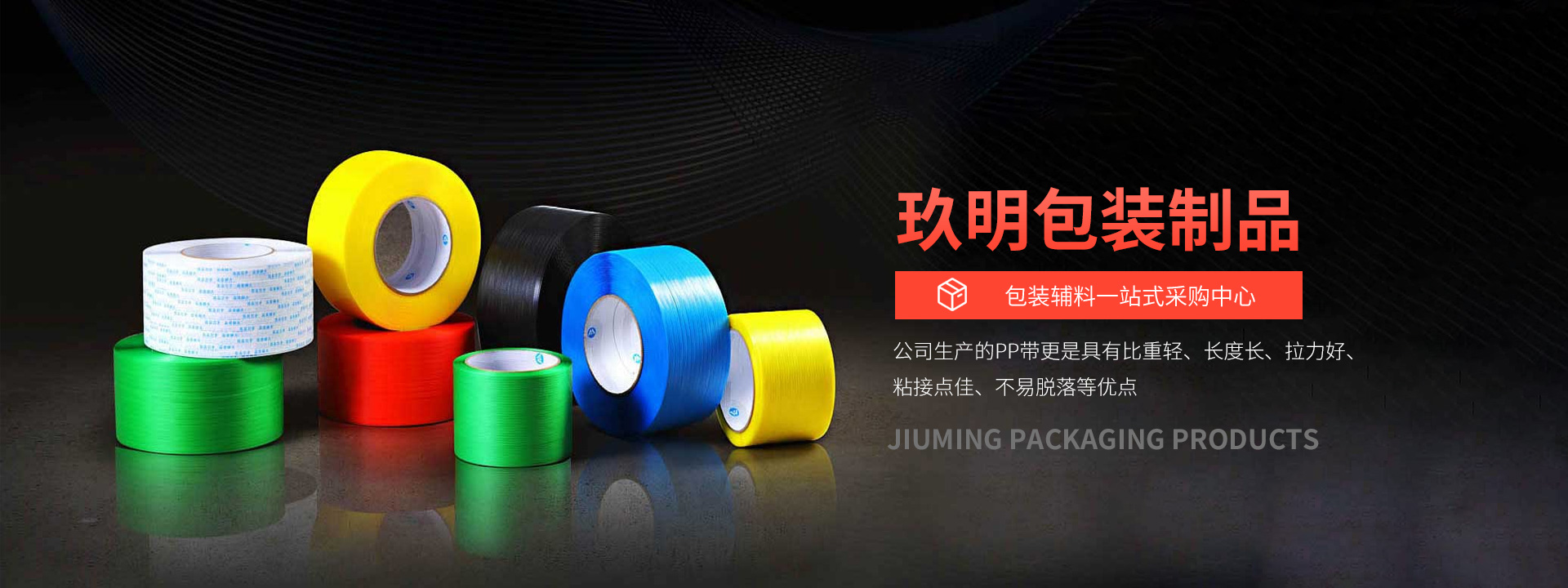

The main material of the polypropylene strapping is polypropylene fiber-grade resin, which is one of the lighter plastics commonly used. Due to its good plasticity, strong tensile strength, resistance to bending, light weight, and ease of use, the strapping produced has been widely used in various fields. It has a semi-transparent to opaque appearance and a transparent film texture. It is flammable in flames, extinguishes slowly or continues to burn after the flame is removed, with a yellow flame at the top and a blue flame at the bottom, accompanied by melting and dripping, emitting a paraffin-like smell. It is commonly used for packaging cardboard boxes.
Polyester strapping, also known as PET strapping, is a high-strength alternative to steel strapping, widely used in industries such as ceramics, papermaking, chemical fibers, cotton spinning, and forestry. It offers both the tensile strength of steel and the impact-resistant extensibility. PET strapping provides the same tensile strength as steel, maintaining a 5% tension over time without relaxing, and can absorb an additional 5% elongation upon impact, ensuring product safety. It is flexible, easy to handle, and safe. Unlike steel strapping, PET does not have sharp edges that can scratch packaging or harm hands, even when tightly wrapped, cutting it won't cause injury. It's attractive, eco-friendly, and recyclable.
