

High Flexibility Cable Harness
Model and Specifications: TRVV3*0.3 0.5 0.75 1.0 1.5mm2
Conductor Material: Ultra-fine Flexible Oxygen-Free Copper
Rated Voltage: 300/500V
Insulating Material: High Elasticity Mixed PVC New Plastic (wear-resistant, tear-resistant, bend-resistant, oil-resistant)
【Packaging Length】: 200 meters per roll, 100 meters per roll; product marked with rice prints, guaranteed full length
【Standard of Implementation】: GB/T5023.5-2008 National Standard Production
Application: Suitable for robot chain cable, high-speed machinery cable
Conveyor cables are primarily used in: industrial electronic systems, automatic assembly lines, storage equipment, robots, fire protection systems, cranes, CNC machine tools, and metallurgical industries.
In situations where the equipment unit needs to move back and forth, cables are often placed in cable conduits to prevent tangling, wear, pulling out, hanging, and becoming disordered. This not only protects the cables but also allows them to move back and forth with the conduit. High-flexibility specialty cables that can move back and forth with the conduit without wearing easily are known as conduit cables, and are also commonly referred to as drag cables.
Tensile Center
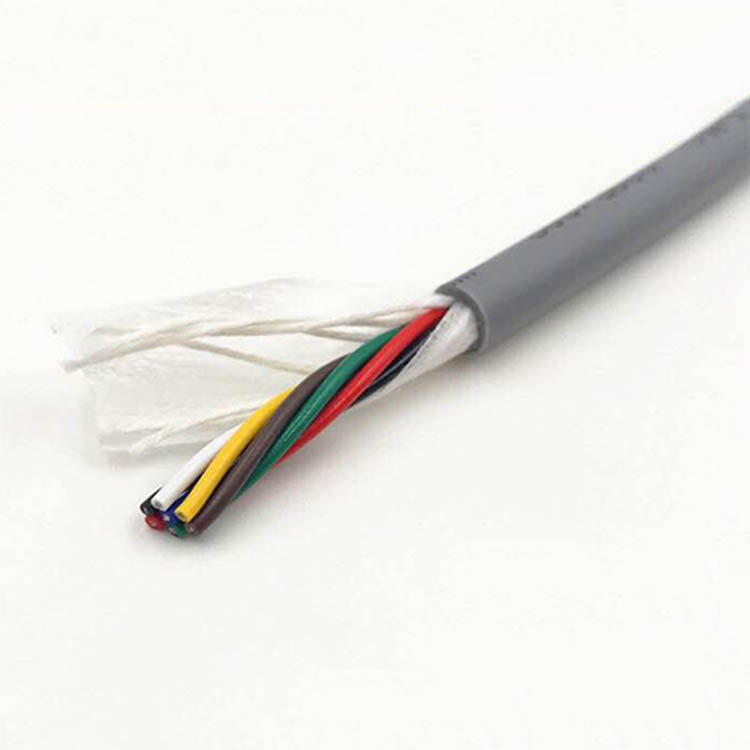
At the core of the cable, where the number of cores and the space between them intersect, there should be an actual central line filling as much as possible (instead of, as is commonly done, using some filling material or waste plastic to make trashy core fillings). This method effectively protects the stranded structure and prevents the strands from floating to the center of the cable.
Conductor Structure
Cables should be selected with flexible conductors. Generally, the finer the conductor, the better the flexibility of the cable, but excessively fine conductors can lead to cable winding. A series of long-term experiments have provided a combination of diameter, length, and direction of a single wire's shielding, which exhibits tensile resistance.
3. Core Wire Insulation
The insulating materials within the cable must not stick to each other. Moreover, the insulation layer must support each individual wire strand. Therefore, it is only through the application process of millions of meters of cable in high-pressure molded PVC or TPE materials that its reliability is confirmed.
4. Twisted wire
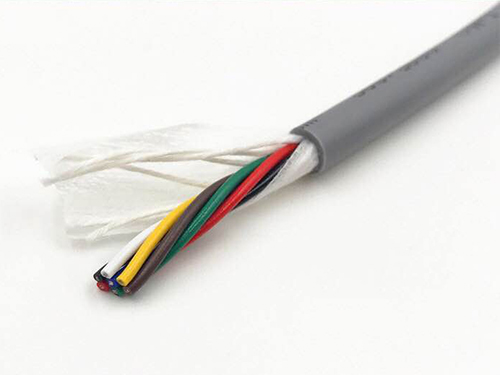
The stranded construction must be wrapped around a stable tensile center at a constant pitch. However, due to the application of insulating materials, the stranded construction should be designed for motion, starting from 12 core wires, and should utilize bundled stranded construction.
5. Armor-style, compression-molded inner sleeve replaces inexpensive wool materials, fillings, or auxiliary fillings. This method ensures the wire structure remains tangle-free.
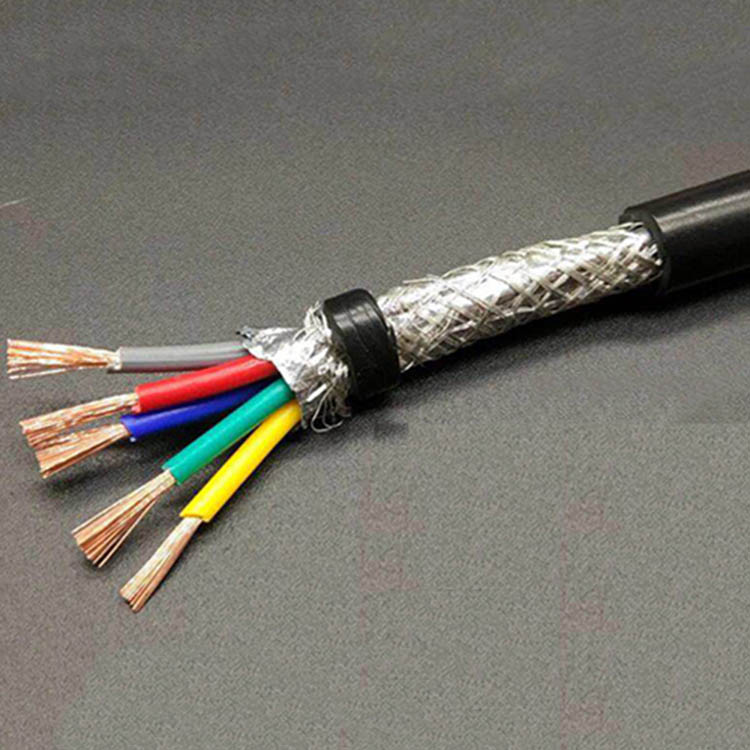
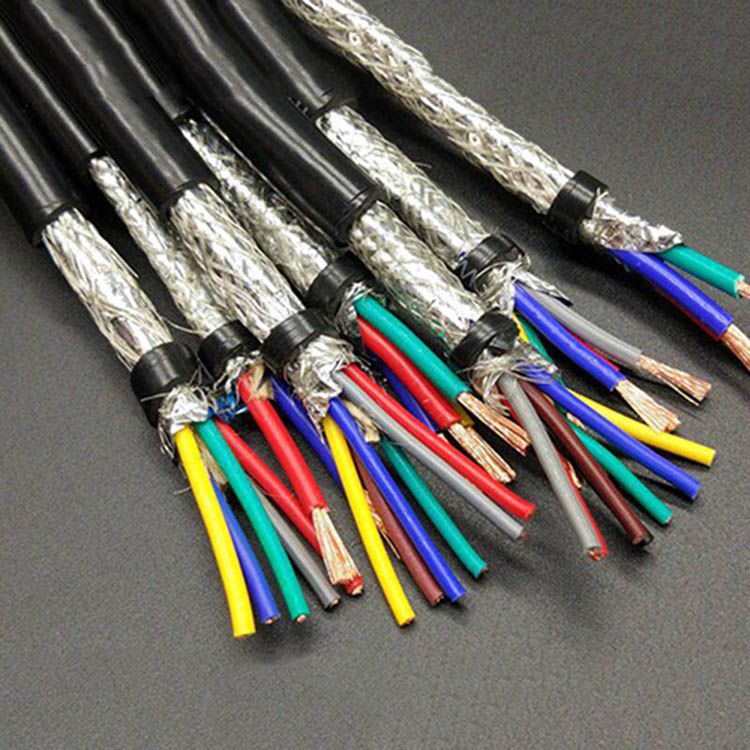
6. Shielding is tightly woven into the outer sheath using an optimized weaving angle, while loose weaving strips reduce the EMC protection capability and the shielding layer quickly becomes ineffective due to the breakage of the shielding. The tightly woven shielding layer also serves as a torsion-resistant function.
7. Outer sheaths made from various improved materials offer different functionalities, including UV resistance, low-temperature resistance, oil resistance, and cost optimization. However, all these outer sheaths share a common feature: high wear resistance and no adhesion to any substances. The outer sheaths must be highly flexible yet supportive, ideally formed under high pressure.
Since the 1980s, industrial automation has frequently caused the energy supply system to operate at overcapacity, leading to cables malfunctioning. In some severe cases, cables "twisting" and breaking have halted entire production lines, resulting in significant economic losses.
General requirements for drag chain cables:
1. The laying of chain cable must not be twisted; it is not allowed to unwind the cable from one end of the cable drum or reel. Instead, the drum or reel should be rotated to unwind the cable first, and it can be spread out or hung up if necessary. The cables for this purpose can only be obtained directly from the cable drum.
2. Pay close attention to the bend radius of the cables (information can be found in the flexible drag chain cable selection table).
3. Cables must be loosely laid side by side within the conduit, as evenly spaced as possible. Separate them using spacers or insert them into the hollows of the mounting brackets. The gap between cables within the conduit should be at least 10% of the cable diameter.
4. The cables within the conduit must not touch each other or become tangled.
5. Both ends of the cable must be secured, or at least the moving end of the cable must be anchored. Generally, the distance from the moving point of the cable to the end of the drag chain should be 20-30 times the diameter of the cable.
6. Ensure the cable moves completely within the bend radius, without forced movement. This allows relative movement between the cables or between the cables and the guiding device. After a period of operation, check the cable position. This inspection must be conducted after pulling and pushing movements.
7. If the chain is broken, the cable needs to be replaced as well, as damage caused by overstretching is unavoidable.
TRVV: Copper-core Nitrile Chlorinated Polyvinyl Chloride (PVC) insulated and sheathed cables with Nitrile Chlorinated Polyvinyl Chloride (PVC) jacket.
Conductor: Multi-strand ultra-fine drawn oxygen-free copper wire, diameter 0.1 ± 0.004 mm. Special requirements can be accommodated by selecting other copper wire types based on the customer's technical specifications.
Insulation: Insulated with special blended nitrile chloroprene material.
Color: Customized according to customer's request.
Shielding: Tin-plated copper wire mesh with weaving density over 85%
Protective Sheath: Specialized Nitrile Chloroprene blend sheath, designed for flexibility, oil resistance, wear resistance, and water resistance.
A wide variety of chain cables are available, ranging from single-core to 60 cores, with the single-core area covering all models from 2 to 60 cores.
