

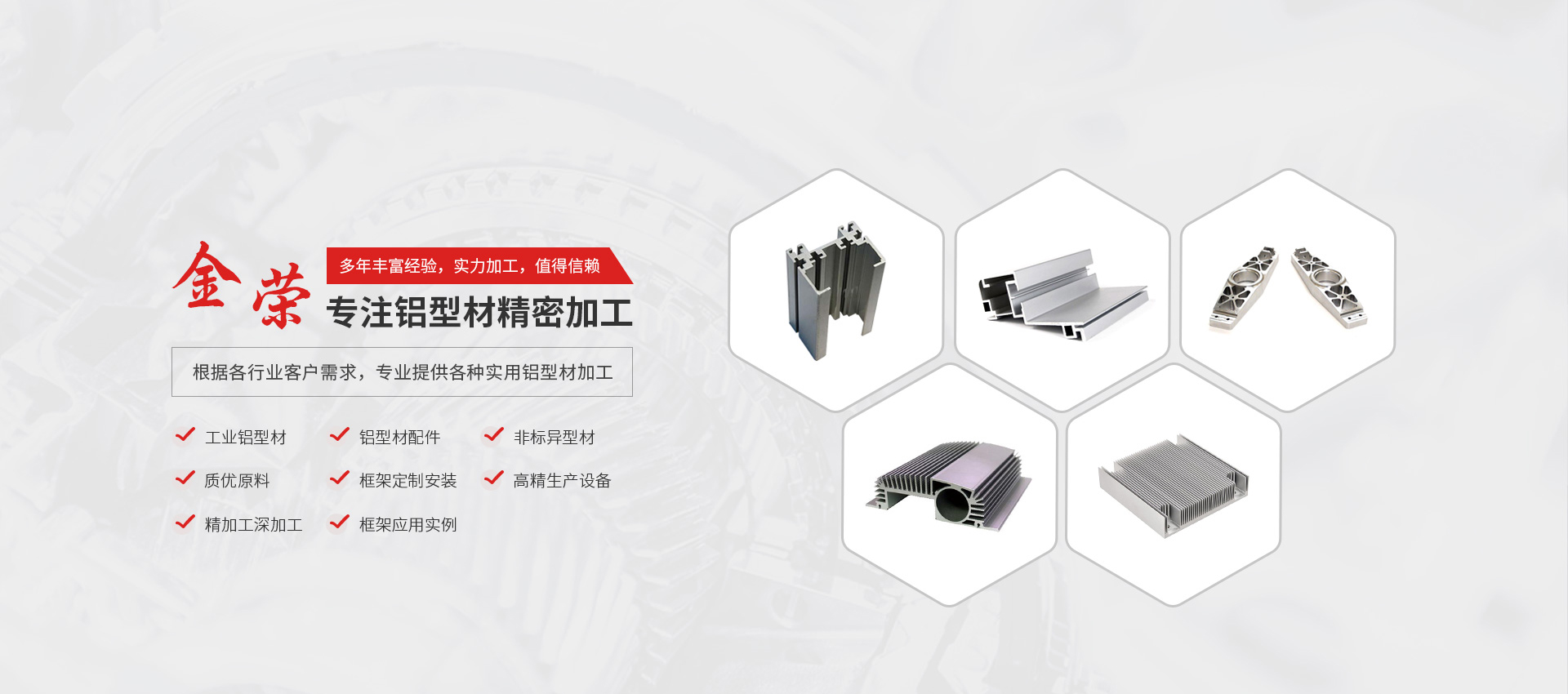


Industrial aluminum profiles are alloy materials primarily composed of aluminum. Aluminum rods are melted and extruded to produce aluminum materials with various cross-sectional shapes. However, the proportion of the alloy added varies, resulting in different mechanical properties and application fields for the industrial aluminum profiles produced.
In recent years, the domestic aluminum profile industry has experienced rapid development. However, the demand for aluminum processing has also been increasing, and many people are not very familiar with aluminum profile processing. In fact, the processing technology of aluminum profiles is not as complex as one might think.
In reality, the processing of aluminum profiles can be divided into two major parts:
Firstly, it's the upstream process, which is how aluminum profiles are formed.
Then comes the backend preparation, which is the setup before the framework building.
Aluminum profiles are generally obtained through a series of processes, including melting aluminum ingots, extrusion, straightening, and surface treatment, resulting in profiles of various cross-sections. As aluminum profiles are a type of aluminum alloy product, aluminum ingots and metals such as magnesium are added in specific proportions.
Next, aluminum bars are cast and then extruded through molds of various cross-sections. Subsequently, the straightness is corrected, as the straightness of aluminum profiles affects their suitability for use in machinery.
The surface is treated with anodized silver, offering elegance, beauty, and corrosion resistance. Next, the frame is assembled by selecting materials according to the drawings, followed by cutting, drilling, and threading.
