
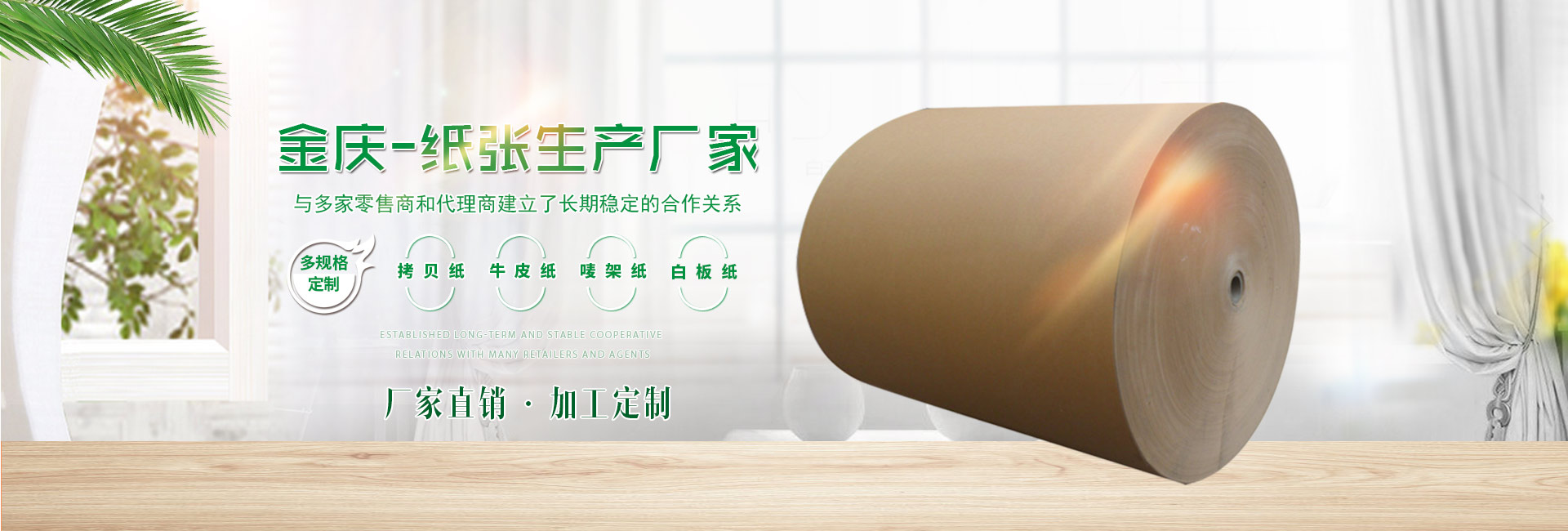



The growth of China's transportation packaging industry and the expanding consumer scale have directly led to an increase in the market demand for paper packaging. The printing of leather paper is also developing rapidly in the industry, but there are certain details that need attention.
Points to Consider When Printing on Paper Skin:
Be mindful of the printing color. Due to the natural dark brown hue of regular kraft paper, the effect of the ink is significantly different from that on bleached paper. Therefore, it's best to use bright inks and prominent colors for better printing results. Soft colors and light shades are hard to achieve the desired ink density, opacity, and wear resistance. Additionally, if necessary, adding a touch of white to the ink can help achieve the desired soft or light tones.
2. Opt for the appropriate ink selection; flexographic printing is generally preferred for uncoated kraft paper, as opposed to using a gravure press for solid color printing. This is due to the rough surface, soft texture, strong ink absorption, and lack of luster in the printed color of kraft paper, as well as the phenomenon of ink pulling down paper fibers (also known as "pulling off paper hair") during printing.
3. Cardboard Manufacturing and Processing: Due to the characteristics of uncoated kraft paper, which is loose, porous, and has a large volume, it is prone to generate dust during the cardboard manufacturing process. Therefore, attention should be paid to prevent and reduce the hazards caused by dust.
4. Post-press die-cutting: Due to the unique structure of the original color kraft paper, it boasts high strength and predictable fiber characteristics, thus exhibiting excellent properties for embossing, die-cutting, and stamping processes. However, for high-strength and flexible original fiber, it is necessary for the kraft paper to go through deep embossing lines to prevent rebound.
5. Reasonably adhesive, high solid and viscosity resin adhesive is suitable for low-temperature bonding, which requires cooling before adhering to kraft paperboard and does not penetrate the board excessively. Traditional hot melt adhesives are also ideal for kraft paperboard and polyester-coated kraft paper, offering good performance. Due to their light weight, kraft paperboard is well-suited for production on high-speed gluers.
With that said, how much do you understand of the kraft paper printing techniques explained by the copy paper manufacturer?
