
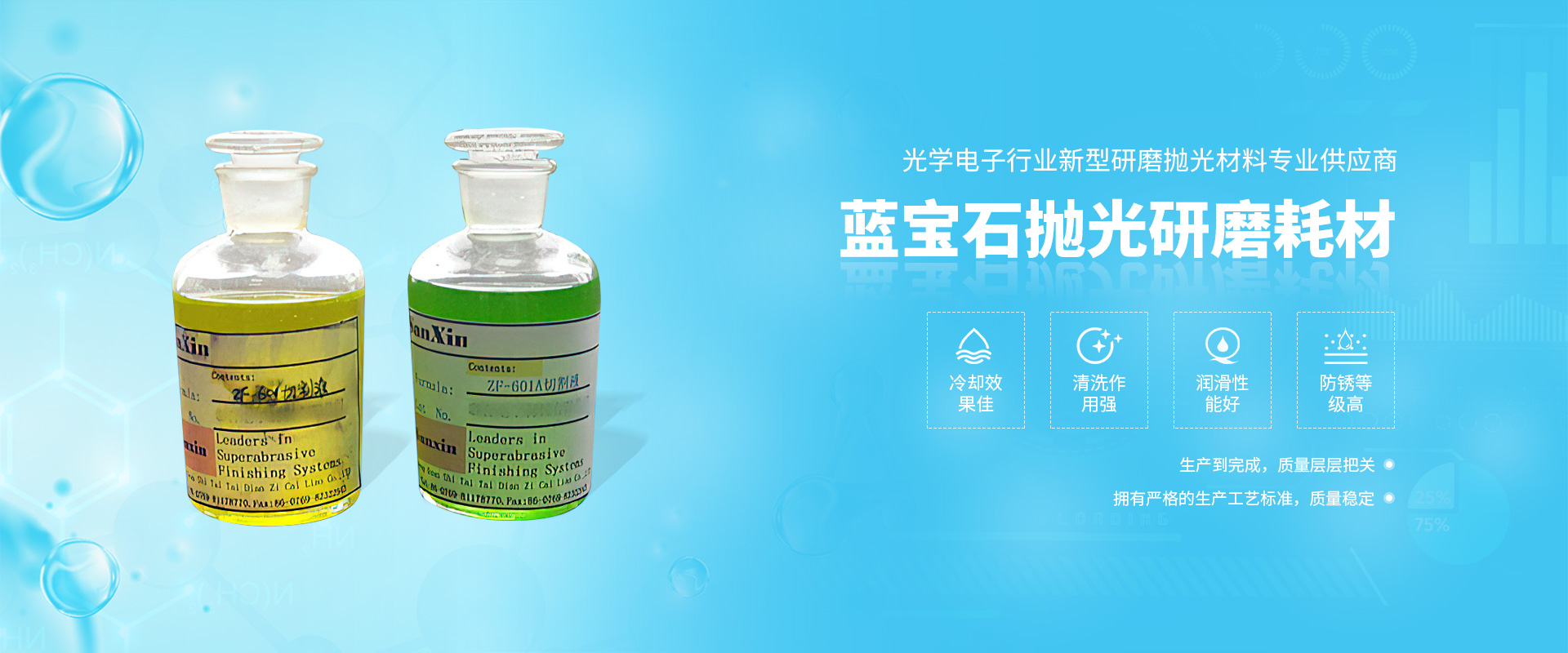

Different abrasive fluids should not yield the same polishing results on sapphire, and these fluids exhibit a positive response in enhancing the polishing efficiency of sapphire crystals and improving their surface quality.
Sapphire crystals, due to their physical and optical properties, are widely used in LED substrate materials and solid-state laser light-emitting media, and will also be applied to smartphone panels. The extensive use of sapphire demands a higher standard for its ultra-smooth and damage-free surface grinding and polishing technology. However, due to their stable physical and chemical properties, sapphire crystals are more challenging to process.
In the current industry, processing sapphire requires several steps such as slicing, chamfering, grinding, and polishing to complete. Among them, the grinding process is crucial, as it is the key to achieving good flatness of the workpiece and ensuring the quality and efficiency of polishing. The grinding of single crystal sapphire typically controls the feed rate by gradually reducing the diameter of an abrasive in the sapphire grinding fluid, thereby obtaining a better surface roughness. During the grinding process, the harder abrasive rolling between the workpiece and the grinding disc can easily cause significant surface damage layers, increasing polishing time. Additionally, the low utilization rate and high consumption of abrasive in the sapphire grinding fluid, as well as environmental pollution, are issues. Currently, bonded abrasives have become an effective method for low-damage processing due to their ability to micro-machining materials with the help of protruding abrasives.
In the process of bonded abrasive finishing, the chemical action of the polishing fluid cannot be overlooked. When using bonded abrasive to polish silicon substrates, the effects of different polishing fluids on material removal rate and surface quality were compared. It was found that changes in the composition of the polishing fluid and pH value have a significant impact on the polishing effect, thereby suggesting that there is a certain chemical interaction between the polishing fluid and the workpiece surface.
A chemical substance in the polishing fluid can soften the surface layer of crystal glass, thereby enhancing the polishing rate of the material. However, due to the high chemical stability of sapphire, the detailed report did not mention the chemical role of the sapphire abrasive fluid during the sapphire wafer grinding process.
The polishing effect of different abrasive fluids on single crystal sapphire varies, with the subtle chemical reactions influencing the polishing efficiency and surface damage of the sapphire wafers in a subtle manner.
