Shandong Provincial Architectural Design & Research Insti...

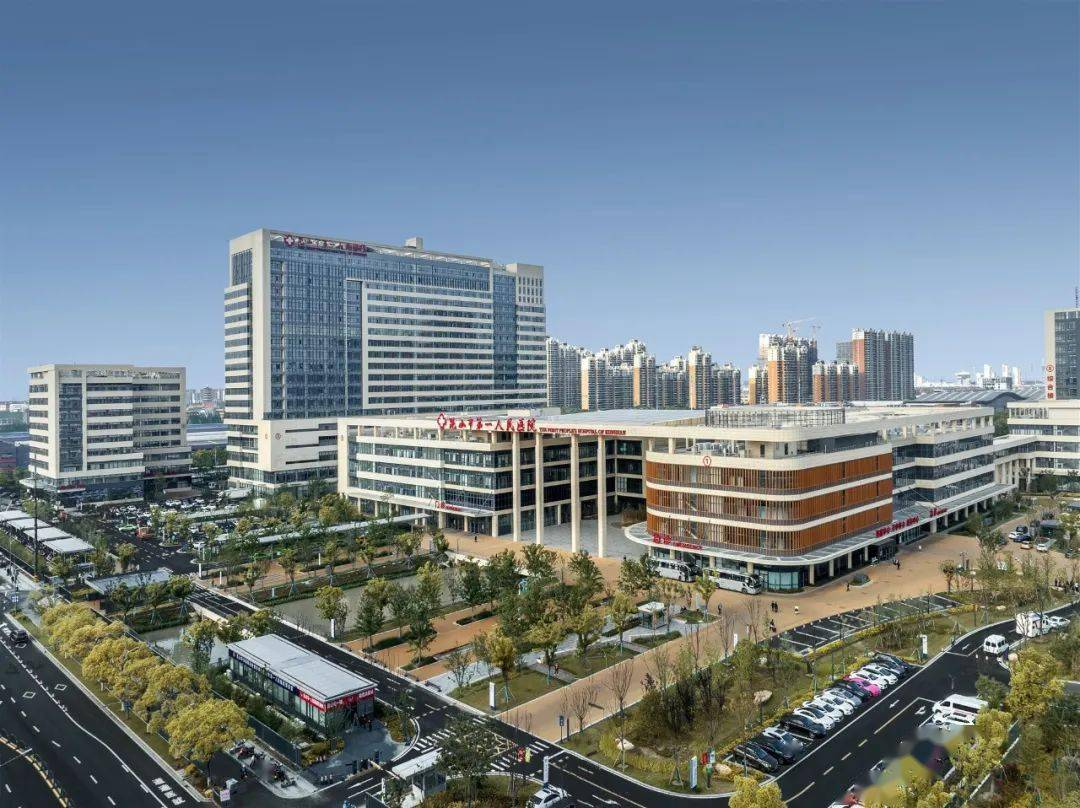
Kunshan First People's Hospital's New Campus
The new campus of Kunshan First People's Hospital, known as the Kunshan Eastern Medical Center, has emerged as a benchmark for the future of beautiful county-level hospital construction in China, thanks to its exceptional design philosophy and its core "people-oriented" construction concept. The hospital building subtly reflects the great love of medical professionals.
The Design Team from the Fourth Institute of the Shandong Provincial Architectural Design and Research Institute Co., Ltd., adhering to the core concept of "people-oriented" construction, integrates the natural environment into the medical setting, creating a relaxed and comfortable healthcare environment. The project has been awarded the Second Prize in Outstanding Survey and Design (Civil Architectural Design) of the Suzhou City Construction and Urban-Rural Construction System in 2023; and the Second China Medical Building User Experience Award in 2023.
Convenient medical flow, effortless healthcare at a glance
Strategic layout combined with flexible water system arrangement
In the planning and design of the new campus of Kunshan Hospital, the building layout is appropriately centralized and integrated with flexible water system arrangements. It is divided into the northern main medical area and the southern emergency and physical examination area, as well as the administrative, scientific research, and teaching area. The two areas are appropriately separated and connected vertically through corridors.
The corridor connects Building 2 with Building 3.
The Medical Technology Center, Outpatient Department, and some inpatient wards are strategically clustered within the main medical area, aimed at facilitating faster and more efficient flow between patients and medical staff.
Emergency care, physical examinations, administrative, and educational facilities require separate corridors and environments. Therefore, the location on the main road, East Main Avenue, is convenient for patients to identify and ensures independent flow. Additionally, the functional areas are set apart from the main medical facilities, which facilitates hospital management and infection control.
In addition, a chronic disease specialty center focusing on oncology and endocrinology has been designed at the southeastern corner of the site, with a capacity of 600 beds. It features independent entrances and exits, parking areas, outpatient and inpatient departments, as well as medical technology examination equipment, highlighting the hospital's strong specialty characteristics.
Planning Layout Diagram
Enhanced resource allocation to highlight specialized features
To better integrate medical resources, optimize processes, and provide more specialized medical services, after in-depth discussions with the client, we have established a "hospital within a hospital" model with emergency and oncology as its specializations. This has achieved a resource allocation model of "each hospital has its specializations, each department has renowned doctors, and each doctor has their expertise," paving the way for a professional and precise development path.
The new emergency medical center is situated on the south side of the river channel, at the corner of the city, with a separate emergency and first aid entrance. To integrate traffic flow, vehicles are分流 through the central square of the Peach Blossom River, with a dedicated transfer channel set up in the outpatient and emergency area. Apart from a few taxis entering the exclusive lane, all other motor vehicles are directed to the underground parking lot, ensuring a complete separation of pedestrians and vehicles, and maintaining a safe and comfortable environment within the hospital area.
Emergency corner treatment with arc angle
The Emergency Medical Center is fully equipped, spanning approximately 12,000 square meters, and includes five major centers: chest pain, stroke, trauma, critically ill pregnant women, and critically ill newborns. It also establishes a support system with emergency outpatient diagnosis, emergency medical technology diagnosis, emergency rescue, emergency surgery, emergency monitoring, emergency observation, and emergency inpatient care, creating a rapid, efficient, and multidisciplinary interactive integrated critical and emergency medical treatment system. The Emergency Medical Center is equipped with a dedicated elevator that vertically connects the emergency rescue hall, EICU (23 beds), and the emergency surgery center (6 operating rooms), enabling rapid and efficient rescue and monitoring. The comprehensive facilities allow the Emergency Medical Center to operate independently of the general medical system, forming a closed-loop in medical diagnosis and treatment. The entire functional unit can operate independently at night, creating a "hospital within a hospital" model within the comprehensive hospital, enabling patients to receive comprehensive medical services at any time.
With the increasing number of cancer patients and the growing medical demand, the new campus has planned a 600-bed oncology medical center on the east side of the administrative and teaching building. This center serves as a treatment hub for cancer diseases and extends to chronic disease treatment, health management, and post-treatment care. The facilities include chronic disease clinics, oncology clinics, day chemotherapy for cancer patients, international outpatient department, health management center, radiotherapy center (equipped with two linear accelerators and two DSA machines), telemedicine consultations, IT room, kitchen, dining hall, and related medical technology support and nursing areas for various departments. The "one-stop" medical service package reduces the inconvenience of patients traveling for treatment, providing citizens with more professional, precise, and personalized medical services.
Emergency Lobby
3. Accessibility Design and Facilities
The identification system at Kunshan Hospital is designed based on patient flow, with clear introductions and precise guidance for patients to reach their respective examination rooms. The design of the medical areas is inspired by the three-level medical process, providing patients with a streamlined experience.
Modular Convenience Facilities
To accommodate the needs of disabled, elderly, and critically ill patients, sections of the restrooms and nurse stations are designed with accessible low-service counters; floors with patient activity rooms feature walls around the rooms equipped with handrails to meet accessibility requirements; parking spaces close to the building entrance and garage are designated for disabled persons in accordance with regulations; vertical transportation is arranged in an alternating pattern; and self-service facilities are strategically located throughout.
Convenience Medical Clinic
4. Matched Smart Logistics Transmission System
To maximize the advantages of the integrated smart logistics transportation system, designers have introduced different logistics systems based on the needs of various hospital departments, such as ward nursing units, configuration centers, operating room supply systems, and nutrition meal delivery. Due to the large volume of supplies and their relatively concentrated delivery times, designers have chosen the box-type logistics transportation system.
The gas-powered logistics system is primarily used for the transportation of lightweight items such as blood and tissue samples; due to cost considerations, widespread use of AGV robots is not feasible, making them more suitable for flat-level transportation. Consequently, the AGV robot system was implemented only within the surgical department to address the issue of secondary delivery of surgical supplies, thus saving on labor costs. The adoption of this composite logistics system significantly enhances the hospital's management and services while reducing operational costs.
Various robots
Jiangnan Waterfront, Resonance with Courtyard City
City Lounge
The entrance and exit design of Kunshan First Hospital's outpatient department is based on the river, creating a larger-scale gray space to serve as the hospital's "urban lounge." This design not only serves the function of gathering and dispersing people but also aims to establish an outdoor leisure and stay area for visitors.
The lounge also adheres to the "people-oriented" design philosophy, featuring round wall panels on the facade to create a focal point at the main entrance, enhancing recognition. Inside, the space is set with leisure seating, greenery, and rock formations, shaping a picturesque Jiangnan courtyard that provides a resting area for patients to take a break from waiting.
City Lounge
The entrance lobby's junction area features a detailed design, with floors 1-4 above the river channel. The plan harmoniously blends with the existing natural landscape, creating a space for patients, family members, and medical staff to connect with nature, rest, and relax, allowing for a "zero-distance" intimate encounter with nature. This truly achieves a harmonious coexistence between humans, architecture, nature, and the environment.
Riverfront Landscape
Multi-level下沉广场
"Water Sleeve Corridor"
As a functional hub, the architectural designers have set up a "water sleeve" corridor connecting the southern and northern medical areas, allowing patients and medical staff to enjoy a unique view experience unique to Jiangnan. The purpose of the rain and wind corridor was to create a humanized traffic system that is not affected by extreme weather conditions such as rain and wind. The design also cleverly integrates with the water landscape, traversing the entire central landscape area, achieving full connectivity from the research building to the后勤 building and the medical areas. It also reflects the regional characteristics of small bridges, flowing water, and parallel waterways.
Water Sleeve Corridor
In the design, architects have set up a leisure area at the connecting corridor for passersby, featuring landscaping, decorations, and seating. This not only incorporates the beautiful scenery into the interior of the building but also encourages people to step outside for a brief relaxation and rest, allowing them to fully coexist with nature through sight, smell, and sound. As people walk along the corridor, they unconsciously slow down their pace, pause, and savor the tranquility and beauty of the moment.
"Water Sleeve Corridor"
3. Subterranean Garden Courtyard
Preserving the original natural characteristics of the site and integrating them with the architectural spaces is a major feature of the new hospital district in Kunshan. The design of the sunken square was initially to provide better lighting and ventilation for the building's interior. On this basis, the scale and size of the sunken square were enlarged, combined with the existing environmental landscape, creating a uniquely crafted space. The garden is meticulously landscaped, with artificial hills, running water, lawns, and greenery complementing each other, offering visitors a friendly place to converse with nature. It allows people to find a moment of tranquility amidst the hustle and bustle of medical visits.
Subterranean Landscape Courtyard
On the ground floor's east side, a 700-square-meter commercial facility is set up to offer leisure and catering services, providing a resting and waiting area for patients. Additionally, a sunken采光 landscape courtyard is strategically placed adjacent to the commercial area, ensuring ample natural light and a pleasant view for the building's interior.
Subterranean Food Court
Strategically utilizing ventilation and natural lighting to create a healing environment.
The challenges in constructing Green Hospital revolve around lighting and ventilation, which are fundamental to ensuring the comfort of the physical space. The new campus embraces the design philosophy of integrating the natural environment into the architectural space, blurring the boundaries between the building and its surroundings. Natural environments are unparalleled, offering an incredibly strong sense of healing, and they blur the line between medical treatment and leisure, allowing patients and their families to enjoy a more relaxed experience during their visits and accompaniment. At the same time, it provides healthcare professionals with a space to unwind, feeling the comfort of nature's breeze and sunlight.
Glass Skylight Lantern
All examination rooms at Kunshan Hospital are directly lit by natural light and offer a panoramic view of the natural scenery along the Peach River, a feature that sets them apart from most standard examination rooms. Different medical units are connected by a medical street, with spacious and well-lit public areas where family members can gaze out at the river views at any time.
Additionally, there are four skylit atriums along the north-south axis of the main medical street, with corresponding skylights designed to provide ample natural ventilation and lighting for the 1st to 4th floors of the outpatient and technical building, ensuring that natural light floods every corner of the hospital.
Glass Skylight Roof
2. Nuclear Medicine Department Skylight Atrium
In accordance with the requirements for protective measures and hospital construction, the nuclear medicine department and radiation oncology department are located underground. The design team has set up two sunken courtyards in this area, providing natural light and ventilation for the office spaces of medical staff and the waiting areas for patients, allowing sunlight to accompany the entire process of patient treatment.
3. Double Corridor Ward
The ward section features a dual-corridor layout, with the southern side designated for patient corridors and the northern side for medical staff corridors, ensuring a separation of medical staff and patients. On both sides of the medical staff corridor, dedicated office spaces for medical staff are provided. To offer a comfortable working environment for the medical staff, the designers at Shandong Fourth Hospital have put a lot of thought into the details. "The depth of conventional medical staff office rooms is 5.4 meters, making them quite cramped, and often insufficient space for office use is encountered later on. The medical staff office rooms at Kunshan First Hospital have a depth of 8.1 meters, providing ample and spacious use for medical staff, enhancing their work experience," shared Wang Chaoyi, the Creative Director at Shandong Fourth Hospital.
Dual-corridor ward
Green Building Design Embraces "Dual Carbon" Strategy
Green Design Involved Early
The evaluation criteria for green buildings encompass the design content of architecture, structure, water, heating, and electrical systems, forming a comprehensive evaluation system throughout the entire lifecycle of a building. During the design process of Kunshan First Hospital, the hospital architects from Shandong Fourth Institute actively intervened in the early stage of the project, based on the criteria for green buildings, and formulated green design measures tailored to the project's actual conditions. These measures guided the design process, ensuring a close integration of green design with the overall scheme, rather than just being a component of the construction drawing review. This foundation has been laid for the hospital's future adoption of the "dual carbon" strategy and green operations.
2. Sponge City Initiatives
Kunshan First Hospital primarily utilizes "green" measures such as grassed swales, permeable pavers, rooftop gardens, rainwater gardens, and sunken green spaces to organize drainage, with the main design philosophy focusing on "slow release" and "source dispersion" control. Among these facilities, the total area of sunken green spaces, rainwater gardens, and grassed shallow ditches accounts for over 30% of the green space area. Architectural designers have also set up landscape-type sponge demonstration nodes in the central landscape area and open park areas.
The design incorporates rainwater through stairway downspouts, drainage ditches, sunken green spaces, and permeable paving, channeling it underground. The rainwater is purified through a combination of filtration, infiltration absorption, and biological degradation, while the vegetation also slows down the water flow to control runoff. Additionally, water storage modules are placed beneath the green areas, allowing purified rainwater to be recycled for local landscaping irrigation and for cleaning the square's pavements.
Sponge Design Concept
Additionally, the campus has implemented sponge city technology measures in all four parking areas. Downslope green spaces are set around the parking lots, with grass-integrated paving for the parking spaces, which guide and collect runoff rainwater within the site. This water is then retained, infiltrated, detained, purified, and drained through the retention pools beneath the paving.
Foam Technology Applications
The new campus of Kunshan First Hospital perfectly embodies the human-centric and green ecological design philosophy, interpreting the century-old spirit of "broad kindness, diligence, and proximity." Through meticulous design, it fills every small detail with the great love of medical professionals, truly achieving a design goal of being intelligent, scenic, ecological, and warm.
Introduction to Kunshan Hospital Project
Total Floor Area: 310,000 square meters
Design Beds: 2,000 Beds
Total Investment Amount: Approximately $3 billion
Commissioned: February 2023
Project定位:An integrated, intelligent, green, efficient, and modern hospital, encompassing medical care, education, scientific research, and preventive healthcare.
Design Units: Institute 4 of Shandong Architectural Design Research Institute Co., Ltd., Q启迪 Design Group Co., Ltd.
Hospital Construction Team: Gu Yi-Yang, Sun Yong, Wei Rong
Design Team: Yang Shuguang, Du Xiaojun, Yan Shirui, Wang Chaoyi, Sun Lei, Zhu Hongcheng, Song Hongyu, Zhou Guanting, Zhang Wen, Xu Hui, Zhu Feng, Shi Zhimin, Lu Fengqing, Zhang Minghu
Project Honors: Second Prize in Outstanding Survey and Design (Civil Architectural Design - Residential Buildings) of Suzhou City's Construction and Urban-Rural Development System, Second China Medical Architecture User Experience Award

Project Design Team Leader
Yang Shuguang
President of Design Institute 4, Shandong Provincial Architectural Design Research Institute Co., Ltd.
Shandong Provincial Institute of Architectural Design for Health Facilities - Director
Master of Engineering, National First-Class Registered Architect
Engineering and Technical Application Researcher
China Architectural Society, Committee Member for Medical Architecture
National Healthcare Industry Management Association, Vice President of the Hospital Health Environment Branch
China Medical Equipment Association Standing Committee Member of the Hospital Construction and Equipment Branch
Committee Member of the Editorial Board of "HCD Healthcare and Elderly Design"
Deputy Director of the "China Health Engineering" Magazine
China Medical Architectural Designers Alliance Council Member
Northwest Regional Hospital Construction and Development Collaborative Alliance Board Member
Shandong Province Tender Evaluation Expert


b2b.china9.net © Zhongshang 114 Hebei Network Technology Co., Ltd.Address: Room 6009, Oriental New World Center, No.118 East Zhongshan Road, Qiaoxi District, Shijiazhuang City, Hebei ProvincePlatform Service Hotline: 4006299930