

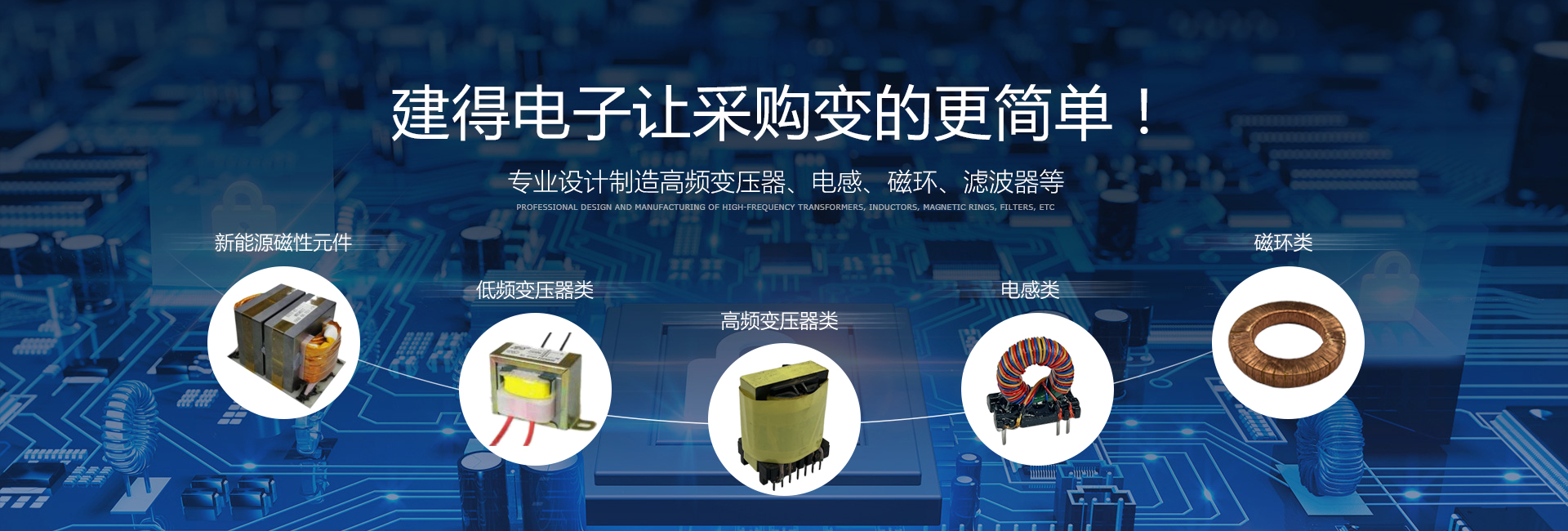


Transformers play a core role in power systems and electronic devices, their functions and principles involving multiple aspects such as power transmission, distribution, and conversion.
I. Basic Principle
The primary working principle of transformers is based on Faraday's Law of Electromagnetic Induction. When a conductor moves in a magnetic field, an induced current is generated within the conductor. This current, in turn, produces a magnetic field opposite to the original one, exerting a thrust on the conductor. This thrust is proportional to the direction of the conductor's movement and the magnitude of the current. This is the fundamental principle behind how transformers operate.
II. Structure
The transformer primarily consists of two parts: the core and the winding. The core is the magnetic circuit of the transformer, made of high permeability materials such as silicon steel sheets. The winding is the electrical circuit of the transformer, consisting of insulated copper or aluminum wire. Depending on requirements, transformers can also be equipped with other auxiliary components, such as radiators, insulating materials, and protection devices.
Section III: Types
Transformers can be categorized into various types based on their applications and functions. For instance, they can be classified into step-down transformers and step-up transformers according to their voltage ratio; into single-phase transformers and three-phase transformers according to the number of phases; and into dry-type transformers and oil-immersed transformers according to their cooling methods.
Application
Transformers are crucial equipment in the power system, used to increase the voltage from generators and then transmit electrical energy over transmission lines to distant locations. In areas of power consumption, transformers reduce the voltage to meet user requirements.
Power Conversion: Transformers are essential in many electronic devices, such as televisions and computers, where they convert AC to DC to meet the needs of internal circuits. Additionally, transformers play a role in inverters and rectifiers and other equipment.
Electromagnetic Shielding: Transformers generate magnetic fields during operation, making them suitable for electromagnetic shielding to protect surrounding electronic devices from interference.
Transformer: Transformers are also widely used in measuring instruments, such as voltmeters, ammeters, and power meters, for signal conversion and to enhance measurement accuracy.
Transformer Applications: In numerous industrial sectors such as steel, non-ferrous metals, and chemicals, transformers are utilized to power various large motors and pumps to meet the demands of industrial production.
