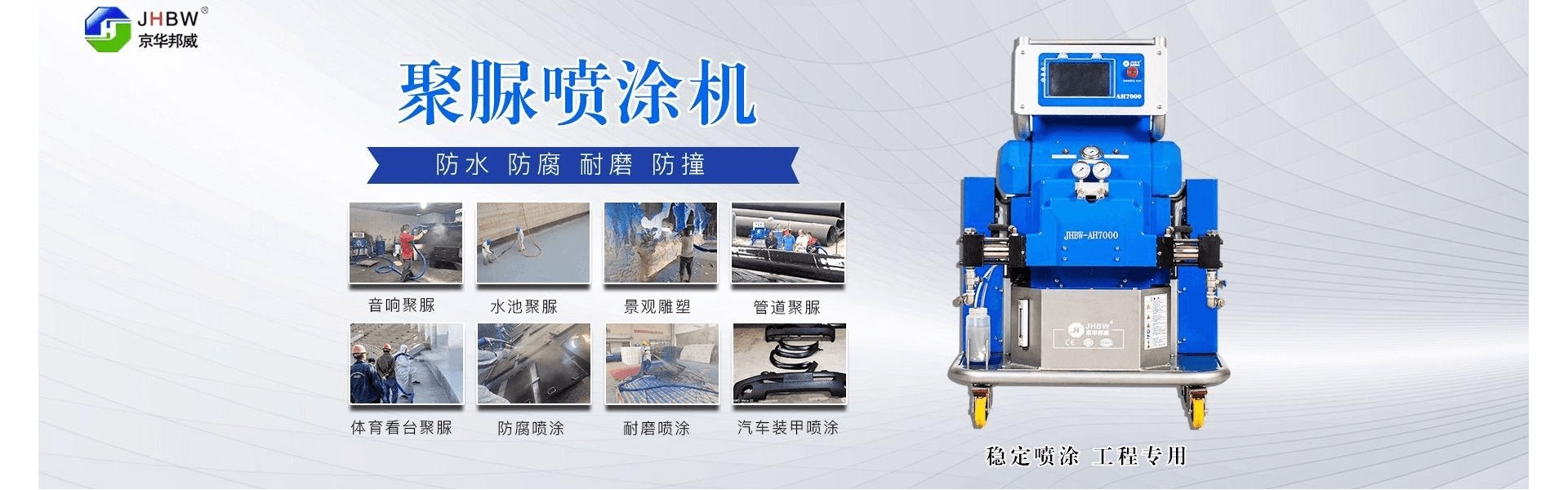

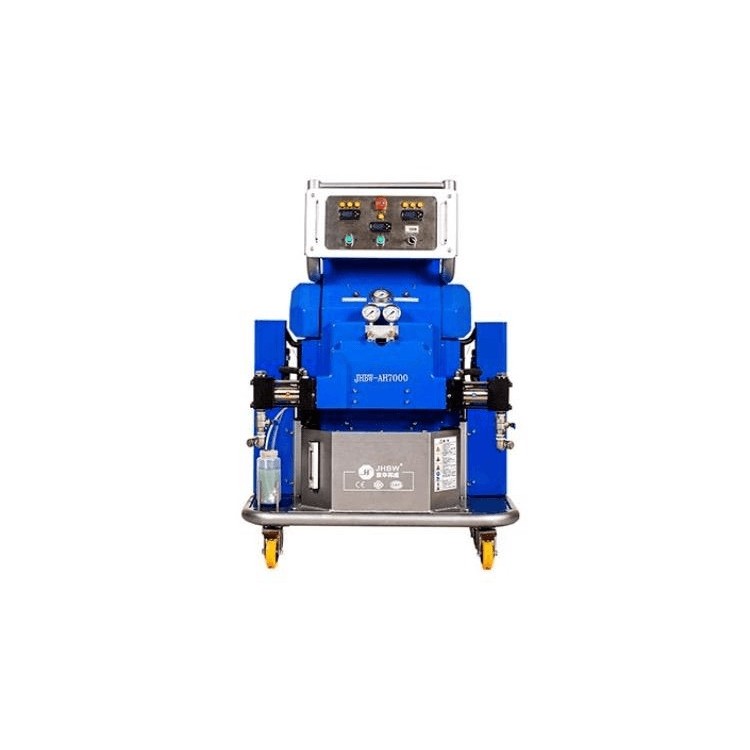
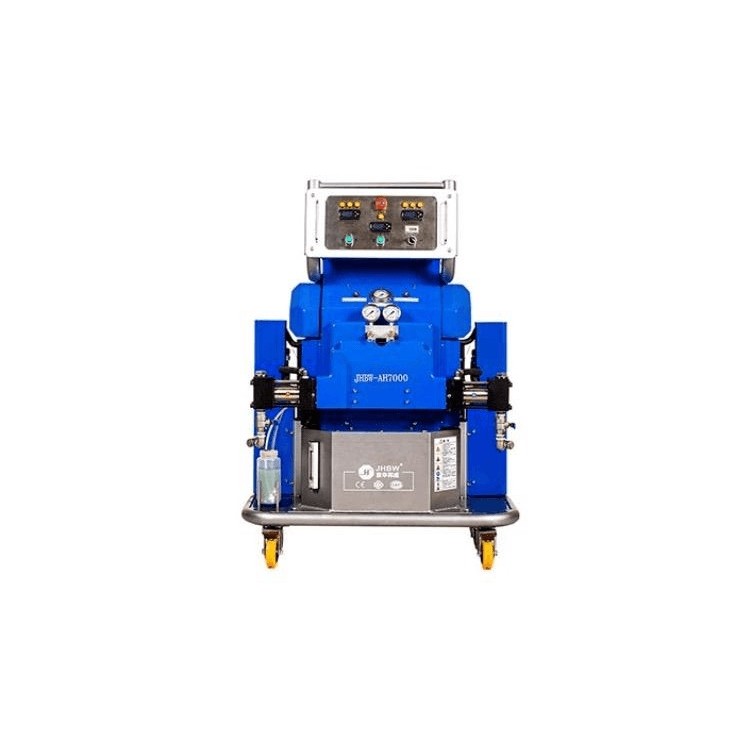
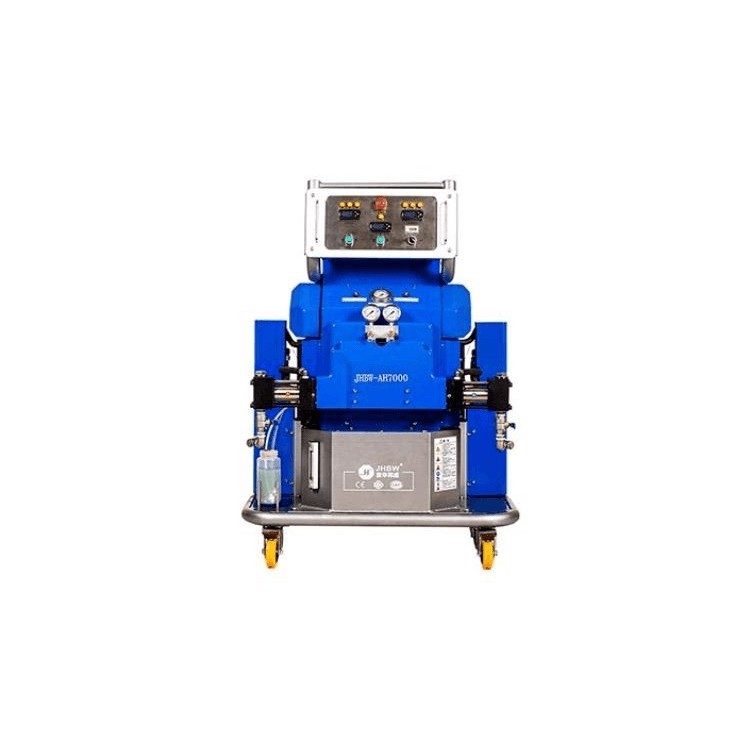
AH7000 Polyurea Spraying Machine
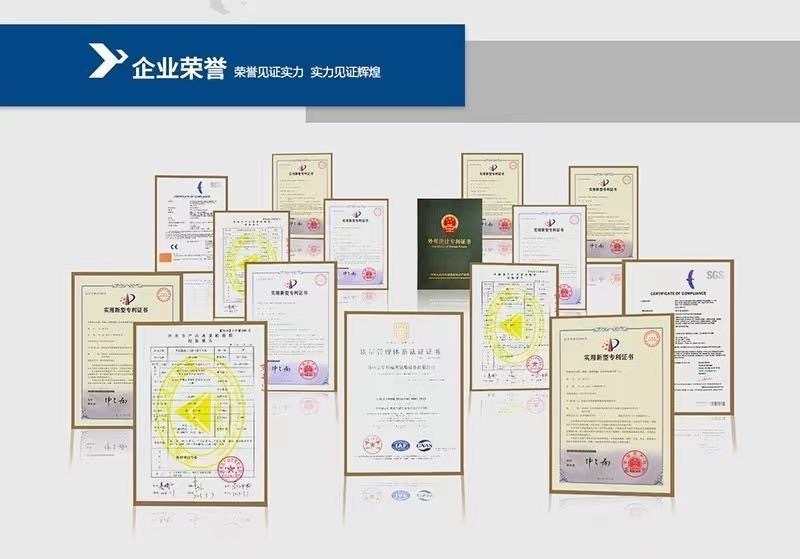
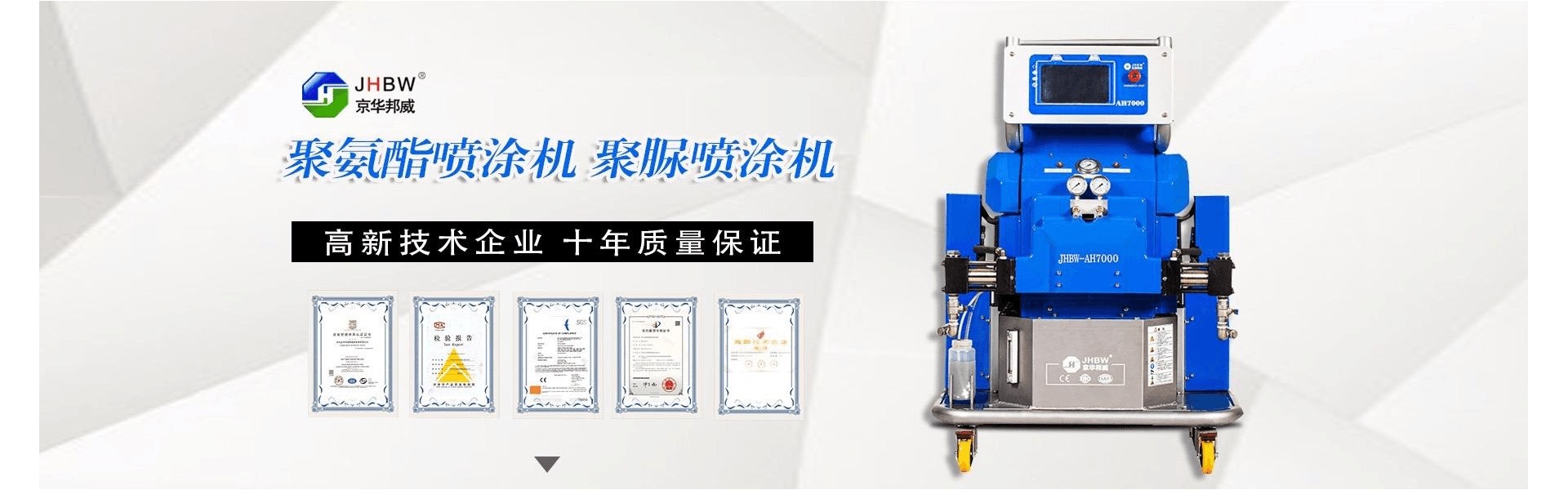
1. Our company's equipment has passed CE and ISO 9001 quality management system certification, is designed and manufactured with complete independent intellectual property rights, and has applied for multiple national patents (ZL 2016 3 0558972.2).
2. Our company guarantees a one-year warranty for the main unit of the equipment and lifetime maintenance.
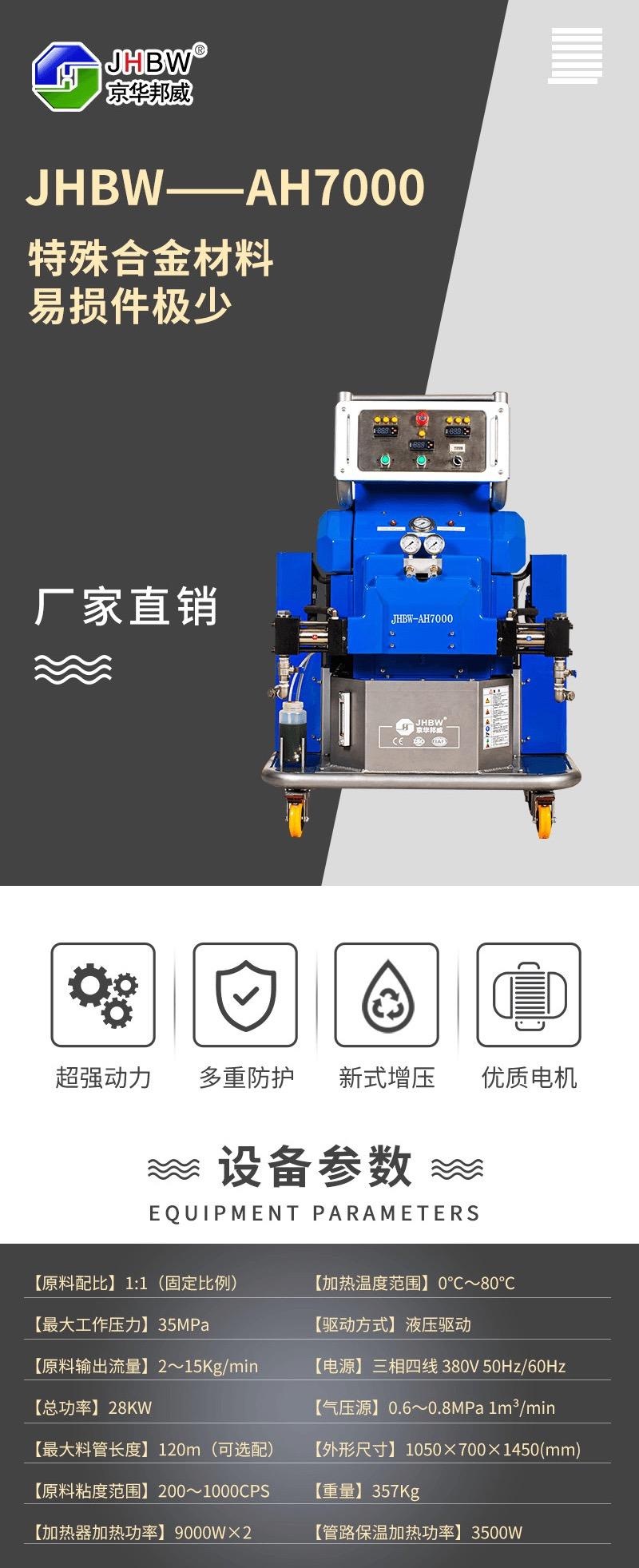
3. The AH7000 hydraulic polyurethane polyurea spray equipment is a new type of high-pressure spray system driven by hydraulic power. Its pressurization system breaks away from the traditional vertical pull-type pressurization, now featuring horizontal drive and bidirectional pressurization.
4. Easy to move, it's especially suitable for factory and construction contractors, offering extensive multi-functional use.
5. The design of electric hydraulic drive method is quieter during operation than pneumatic equipment, reducing noise by 80%.
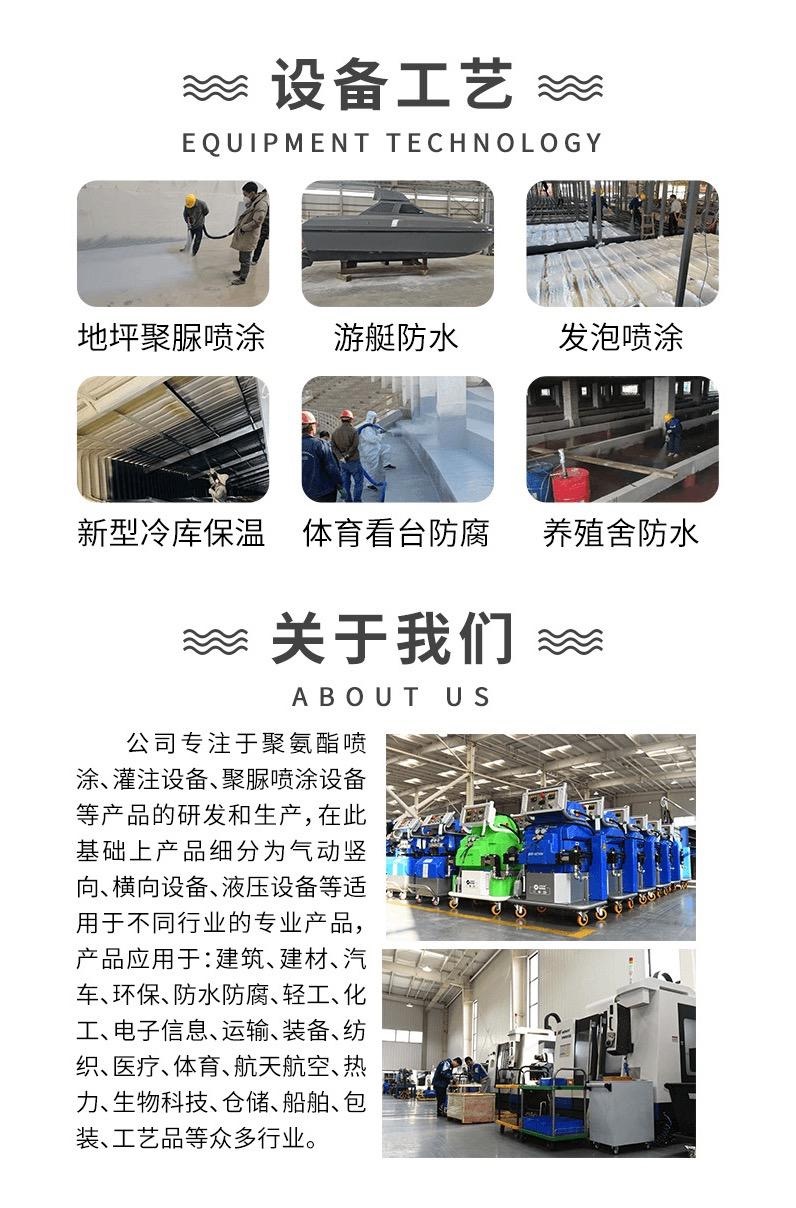
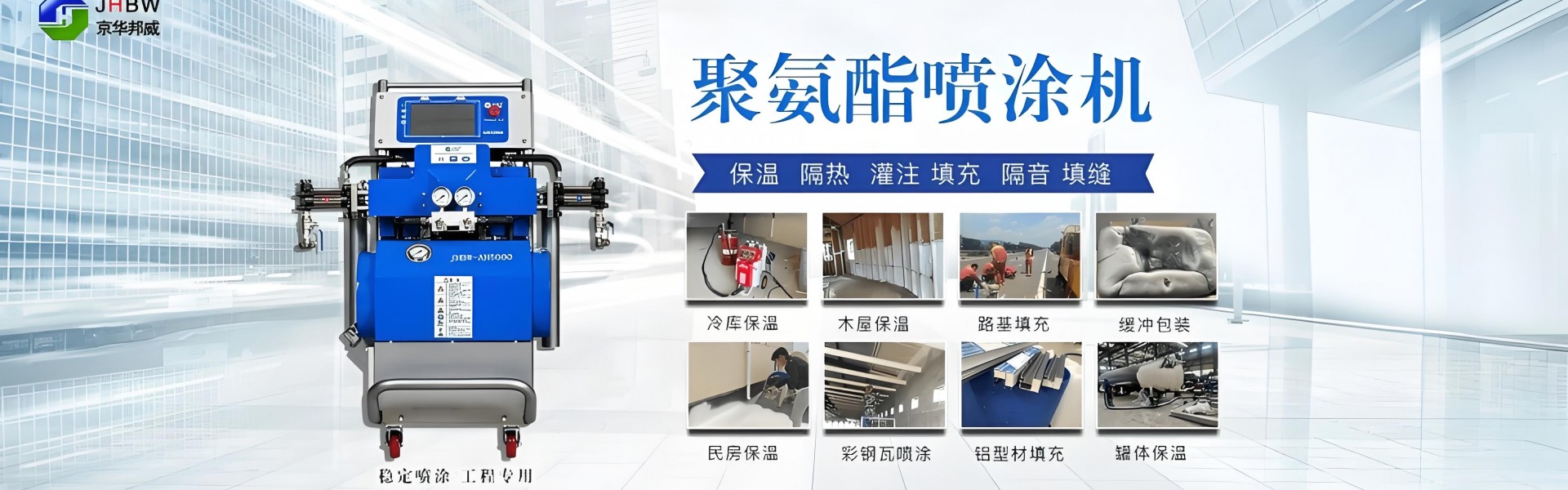
6. Stable performance and versatile applications, suitable for spraying various two-component materials: polyurea elastomers, polyurethane elastomers, polyurethane foams, polyurea adhesives, sealants, and more.
7. The hydraulic system's driving design significantly enhances overall efficiency. The driving method is no longer dependent on air sources, offering more stable and powerful power. Even a slight liquid movement can achieve a jet effect, which is more stable than traditional driving methods. Flow rates are easily adjustable, and atomization is uniformly excellent.
8. The new horizontal drive supercharging system features a rational structure and extreme stability. The supercharger system and sealing devices are made of alloy materials, enhancing the service life and durability of the equipment.
9. Anti-curing design ensures complete isolation of Component A (e.g., isocyanate) from air, leaving the booster pump shaft rod entirely unexposed. The sealed DOP (bis(2-ethylhexyl) phthalate) is fully immersed, solving the issue of crystallization upon contact with water in the air for the shaft rod and Component A (e.g., isocyanate), thus enhancing the usage frequency of the shaft rod and sealing components.