


Air-Cooled Industrial Chiller vs. Water-Cooled Industrial Chiller
There are two types of condensers in the cold water machines of the industrial production process: air-cooled and water-cooled.
Air-Cooled Industrial Chiller
Air-Cooled Chiller
Air-cooled chillers are easy to understand. They use air to cool the refrigerant, helping to keep your industrial production process running smoothly. The features of air-cooled chillers include:
Based on industrial production process cooling
Utilizing air cooling
Standalone and operational
We require more space for heat dissipation.
Water-cooled Chiller
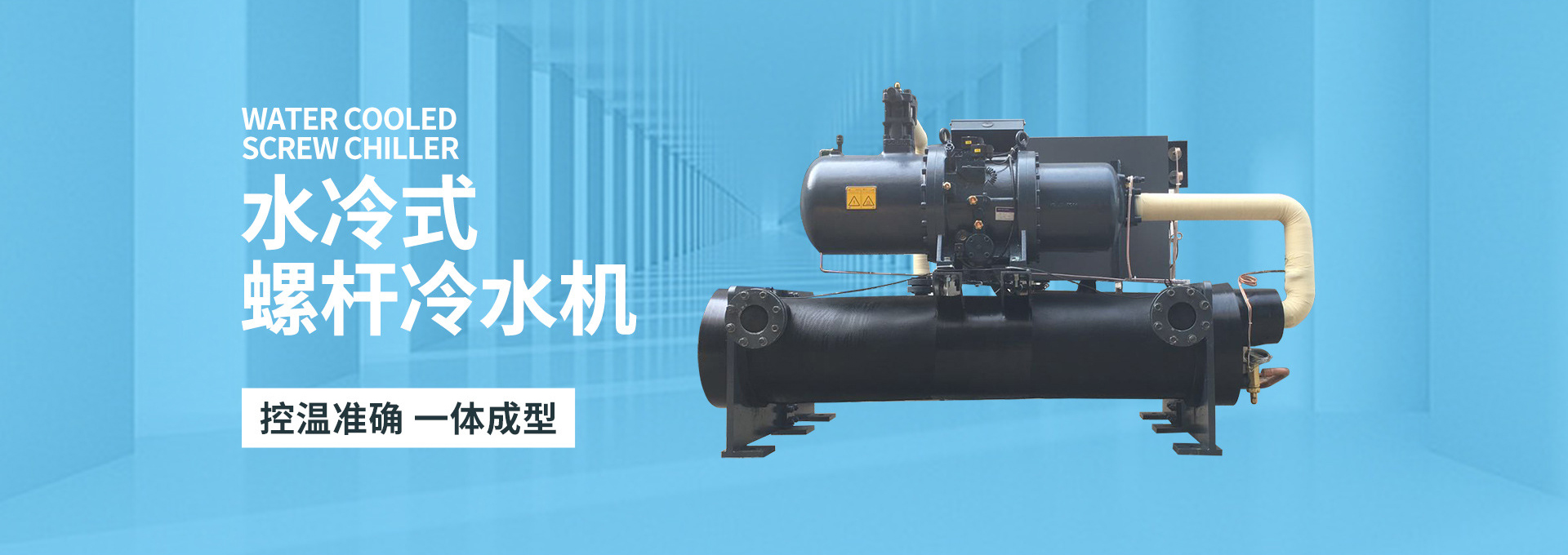
Industrial water-cooled chillers transfer heat during the cooling process using water. They have a separate cooling tower to remove heat from the refrigerant. Water-cooled chillers typically occupy less space than air-cooled units, and the cooling tower can be placed on the roof as an extra feature, but requires an external water source. Features of the water-cooled chillers include:
Based on the cooling process of the production process
Utilize water cooling
Occupies less space than wind-cooling units
Continuous water supply is required.
Components of Industrial Chiller
Industrial chillers consist of four main components: the evaporator, compressor, condenser, and expansion valve. Each component plays a crucial role in the cooling process:
Evaporator: During the cooling phase, the cold medium from the chiller enters the evaporator, where heat initiates the boiling of the refrigerant, transforming it from a low-pressure liquid to a low-pressure gas.
Compressors: Inside the compressor, gas is converted from low pressure to high pressure, then released as heat in the condenser.
Condenser: Cools high-pressure gas with ambient air or condenser water, condensing it into low-pressure, low-temperature liquid.
Throttling Valve: The liquid refrigerant enters the evaporator through the throttling valve, restarting the cycle.
