
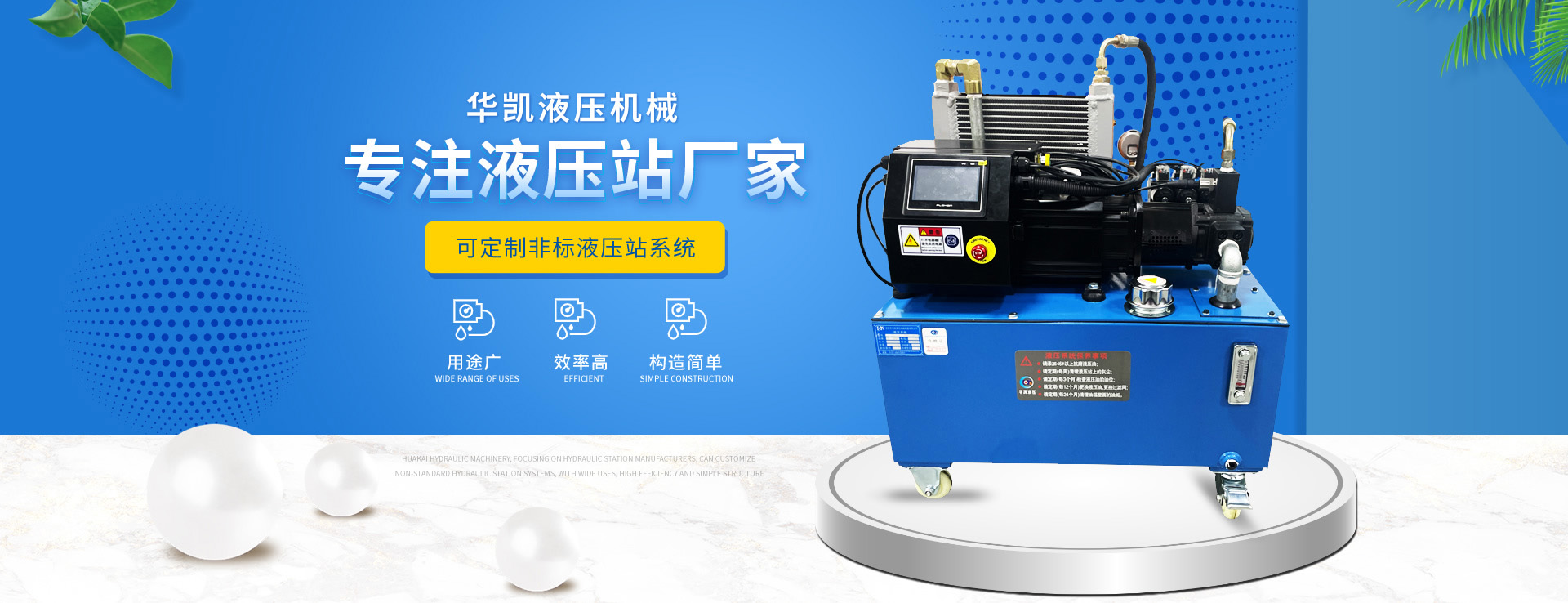

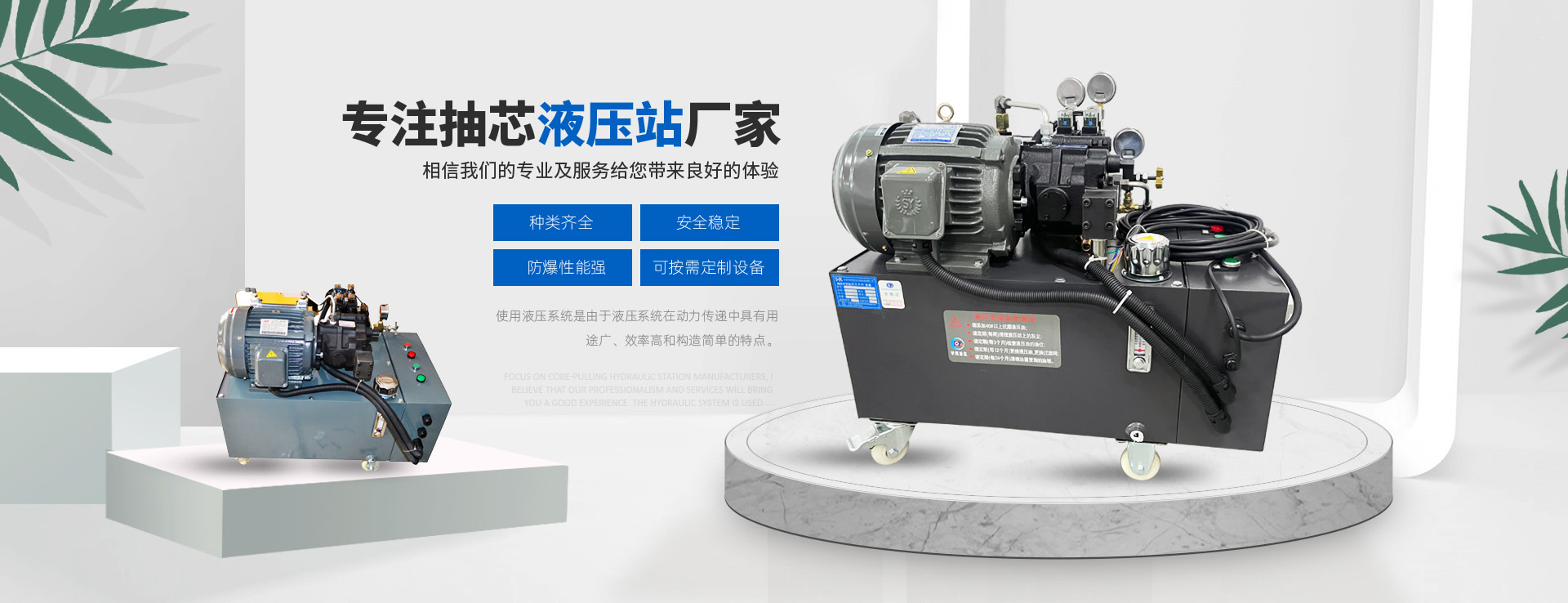

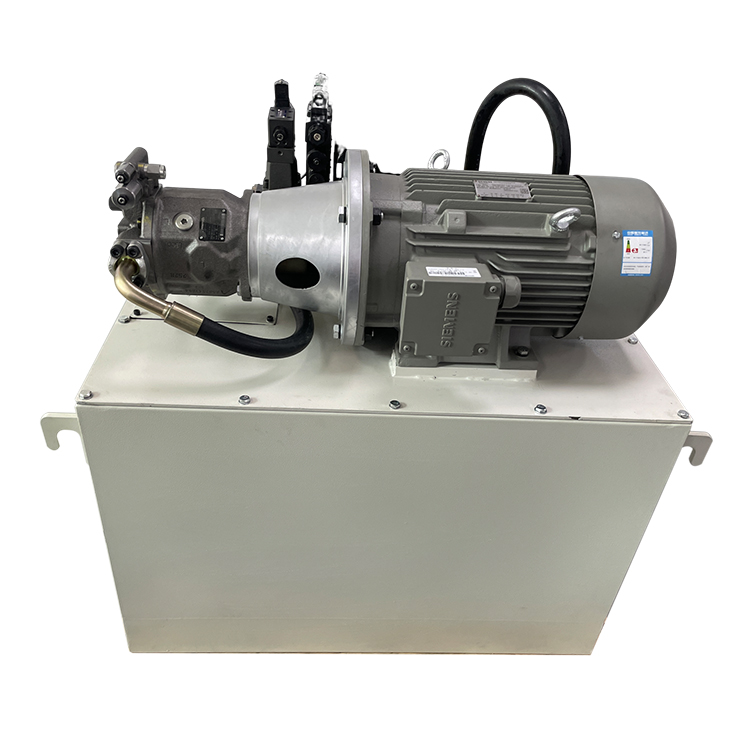
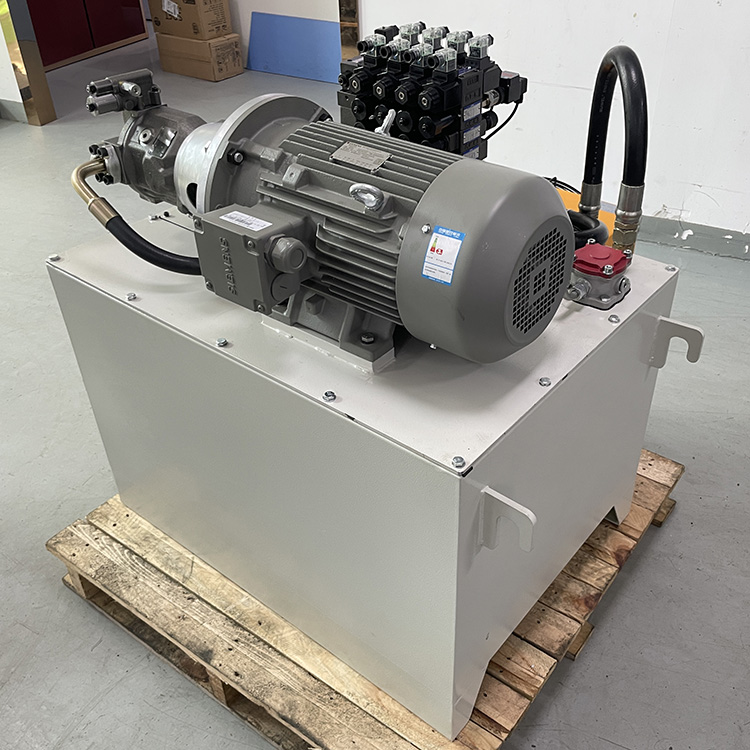
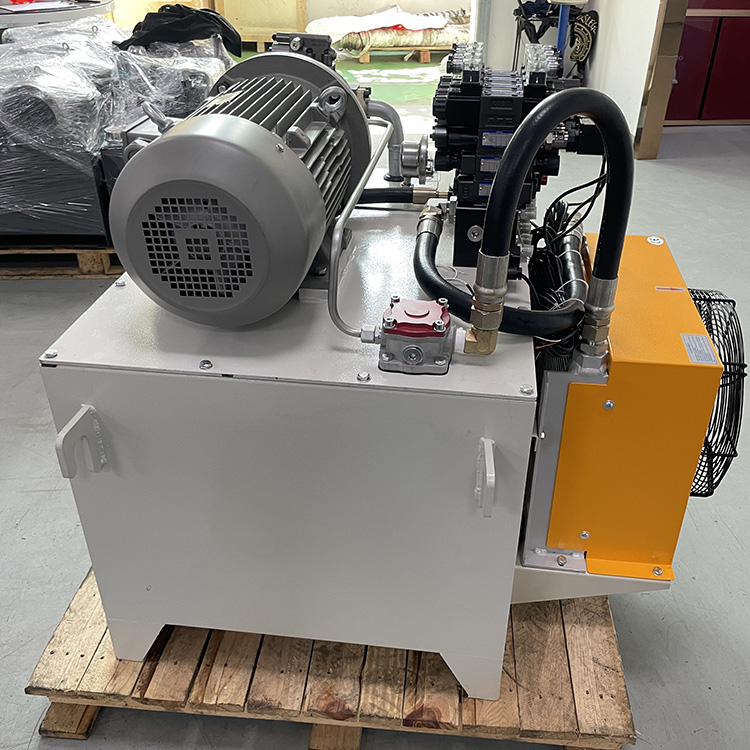
The hydraulic station is an independent hydraulic unit. It supplies oil in a step-by-step manner and controls the direction, pressure, and flow of hydraulic oil. It is suitable for various hydraulic machinery where the main unit can be separated from the hydraulic unit. After purchase, the user simply connects the hydraulic station to the actuator (cylinder or motor) on the main unit with oil pipes, and the hydraulic machinery can perform various specified actions and work cycles.
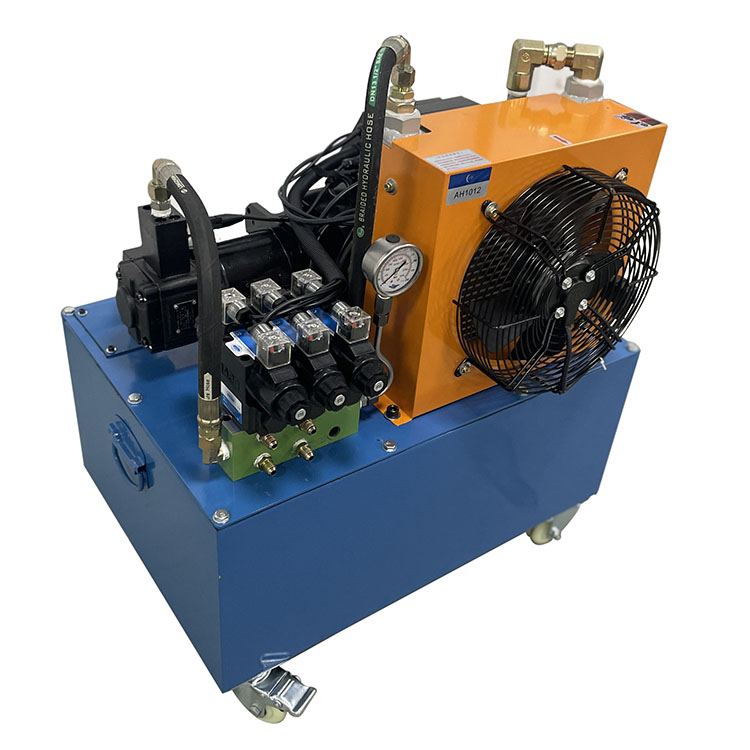
The hydraulic station is composed of a pump assembly, an integrated block or valve combination, an oil tank, and an electrical box combination. The functions of each component are:
Pump Assembly -- Equipped with an electric motor and oil pump, it serves as the power source for the hydraulic station, converting mechanical energy into the pressure energy of hydraulic oil.
Integrated block – assembled from hydraulic valves and passage bodies. It regulates the direction, pressure, and flow of hydraulic oil.
Valve assembly – Plate valves mounted on a vertical panel, with piping connections at the back, serving the same function as integrated modules.
Fuel Tank – A semi-enclosed container, welded flat, equipped with oil filter screen, air filter, etc., used for storing oil, cooling, and filtering the oil.
Electrical box – comes in two types. One features a terminal board with external wiring terminals; the other is equipped with a full set of control devices.
The working principle of the hydraulic station: The motor drives the oil pump to rotate, which吸取油箱中的油并供应,transforming mechanical energy into pressure energy of the hydraulic station. The hydraulic oil is then regulated for direction, pressure, and flow through an integrated block (or valve assembly) before being routed through external piping to the cylinders or hydraulic motors of hydraulic machinery. This controls the direction change, force magnitude, and speed of the liquid motor, enabling various hydraulic machines to perform work.
