
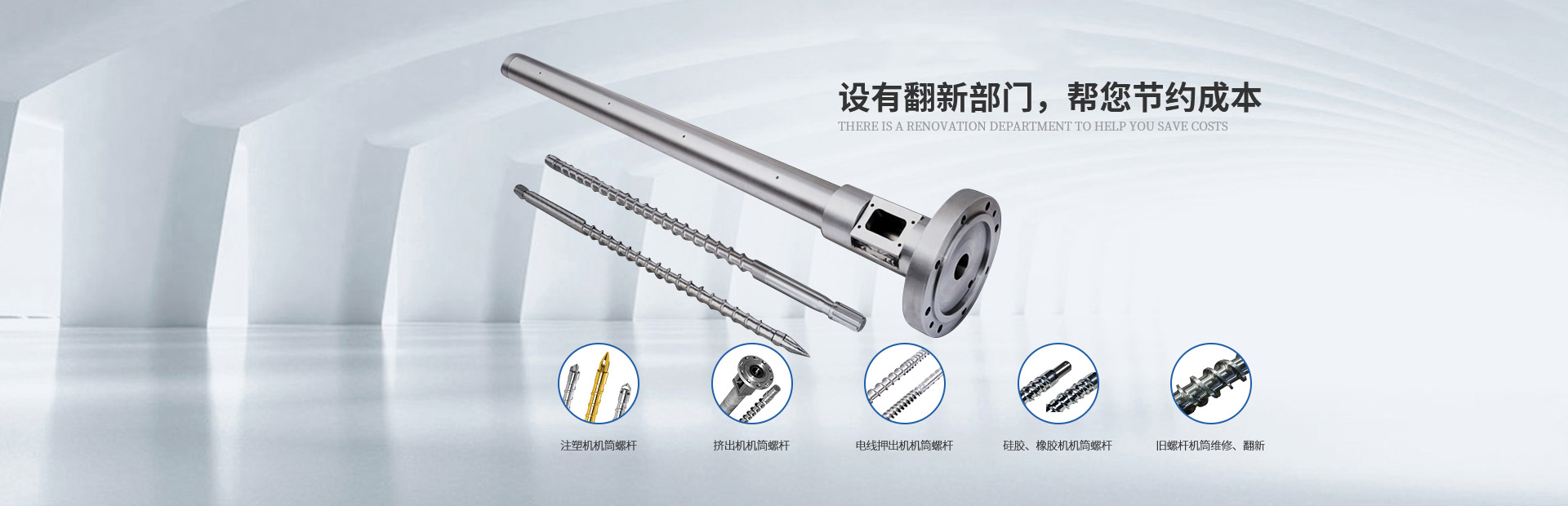
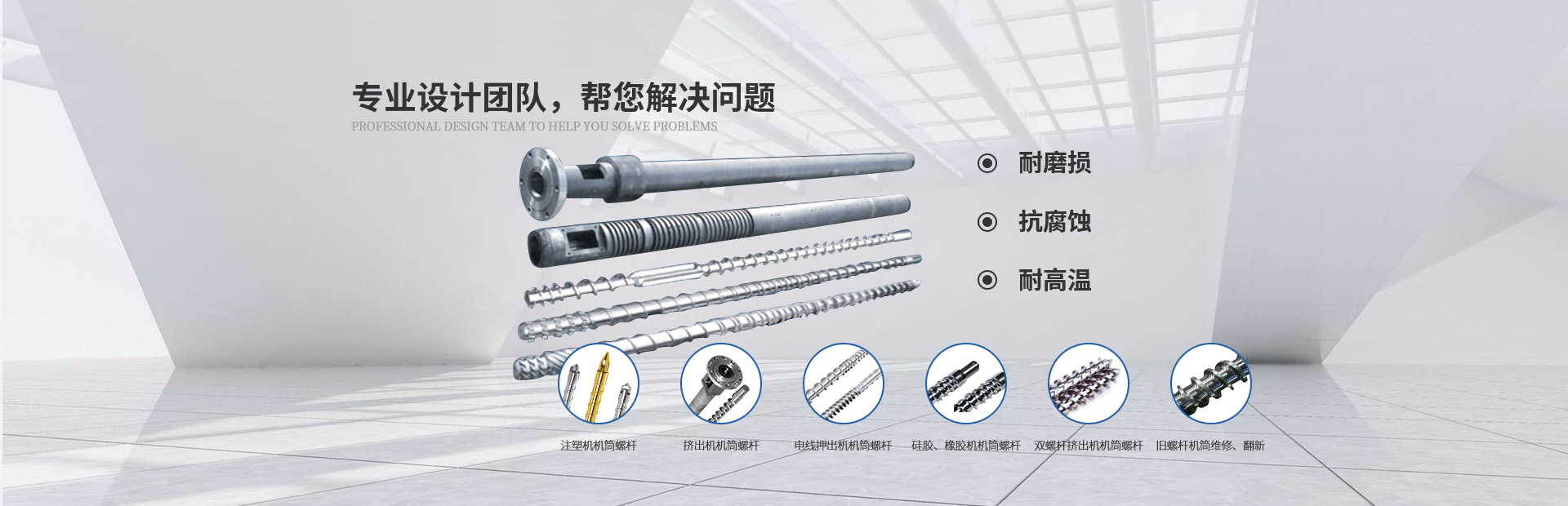
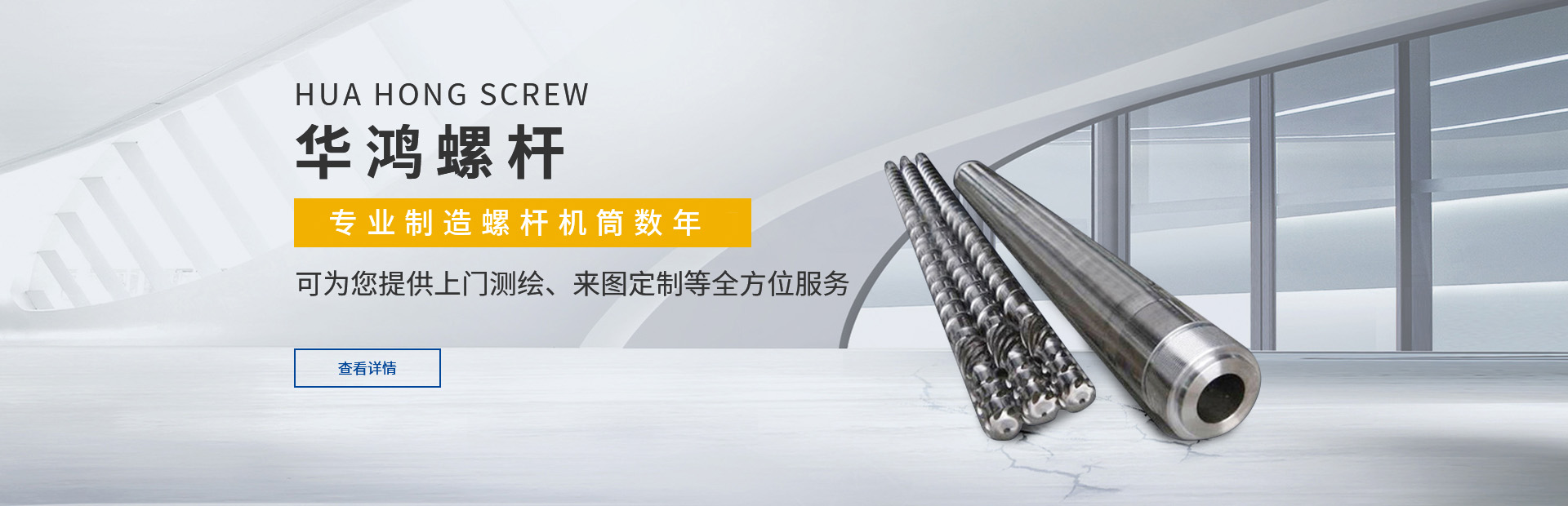

The combined working quality of the screw and barrel components significantly impacts the plasticization of materials, the quality of products, and production efficiency. Their working quality is related to the manufacturing accuracy of the barrel screw and the assembly gap. When the screw and barrel are severely worn and the output of the plastic machinery decreases, it's time to schedule maintenance for the screws and barrels.
One: Screw Repair Technology
The broken screw must be considered based on the actual inner diameter of the cylinder. The outer diameter tolerance of the new screw should be manufactured according to the normal gap with the cylinder.
2. The thread surface of the worn screw with reduced diameter is treated with thermal spray of wear-resistant tungsten carbide alloy, followed by grinding to the specified size.
3. Weld wear-resistant tungsten carbide alloy onto the threaded section of the worn screw. The welding thickness is 1~2mm based on the degree of wear, followed by machining the screw to the required dimensions. This wear-resistant tungsten carbide alloy is composed of materials such as C, Cr, Vi, Co, W, and B, enhancing the screw's resistance to wear and corrosion.
4. Corrected the process for electroplating hard chrome on the screw shaft diameter. Chrome is a metal that is wear-resistant and corrosion-resistant, but the hard chrome layer is prone to peeling off.
Section Two: Screw Repair Technology
The cylinder's inner surface hardness is greater than that of the screw, so it is less prone to damage compared to the screw. The cylinder is considered worn out when the inner diameter increases due to time-related wear. Its repair methods are as follows:
The barrel, whose diameter has increased due to wear, can be directly bored and smoothed if it still retains a certain nitriding layer. It can then be ground to a new diameter size, and a new screw can be made to fit this diameter.
2. The cylinder inner diameter has been re-machined and recast with tungsten carbide alloy, with a thickness ranging from 1 to 2 mm, followed by precision finishing to achieve the specified diameter size.
In most cases, the homogenizing section of the barrel wears down quickly. This section (with a length of 5~7D) can be bored and fitted with a sleeve, followed by a nitriding alloy steel liner. The inner diameter of the liner should match the screw diameter and be left at the normal fit clearance for processing and assembly.
4. Materials for screw and barrel manufacturing, commonly using alloys such as 45 steel, 40Cr, and 38CrMoAlA. This material boasts a yield strength of approximately 900MPa. After nitriding treatment, the hardness exceeds 950HV, offering excellent wear resistance and corrosion resistance.
