
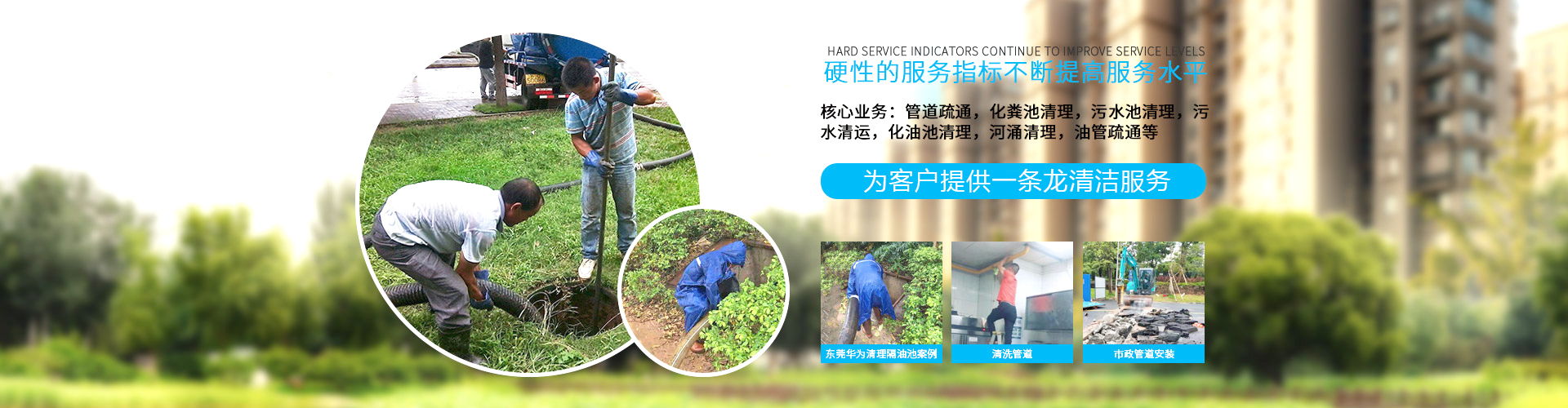

During pipeline cleaning, sludge pumps are used to pump wastewater from the inspection wells to the bottom silt. The pipeline sections requiring cleaning are divided based on diameter and length, with two inspection wells forming a section for pipes of the same diameter.
1. Debris Removal: The淤泥in both inspection wells were thoroughly removed using a vacuum truck. For the remaining small amount of sludge in the wells, a high-pressure water jet was used to冲击the bottom淤泥 within the well chamber, followed by further dilution. The sludge was then completely vacuumed out.
2. Sewage Blockage Control: Set up blockades to seal the inlet of the well room's water intake pipe at a certain section from top to bottom. Then, seal the outlets of downstream inspection wells and other pipeline openings, leaving only the intake and outlet of the specific pipeline section open.
3. Dilute Sediment. The high-pressure water truck fills the inspection wells in sections with water, using a疏通器 (drain cleaner) to stir the sediment within the inspection wells and sewage pipes, diluting the sediment. Workers must continuously mix the sediment with machinery until it is sufficiently diluted in the water.
4. High-pressure cleaning vehicle for pipeline clearing. In necessary situations, a high-pressure cleaning vehicle is used for pipeline clearing. The water hose of the vehicle is extended into the bottom of the upstream inspection well, and the water jet is aimed at the pipeline in the direction of the water flow for spraying. The downstream inspection well of the sewage pipeline continues to suction the sludge inside.
5. Debris Removal: After ensuring safety measures for construction workers are in place, the remaining bricks, stones, and part of the silt in the manhole were cleared away until the cleanup was complete.
6. Ventilation: Before entering the inspection well, workers must ensure oxygen supply and measure the oxygen content inside. Workers entering the well must wear safety belts, respirators, and oxygen tanks.
