

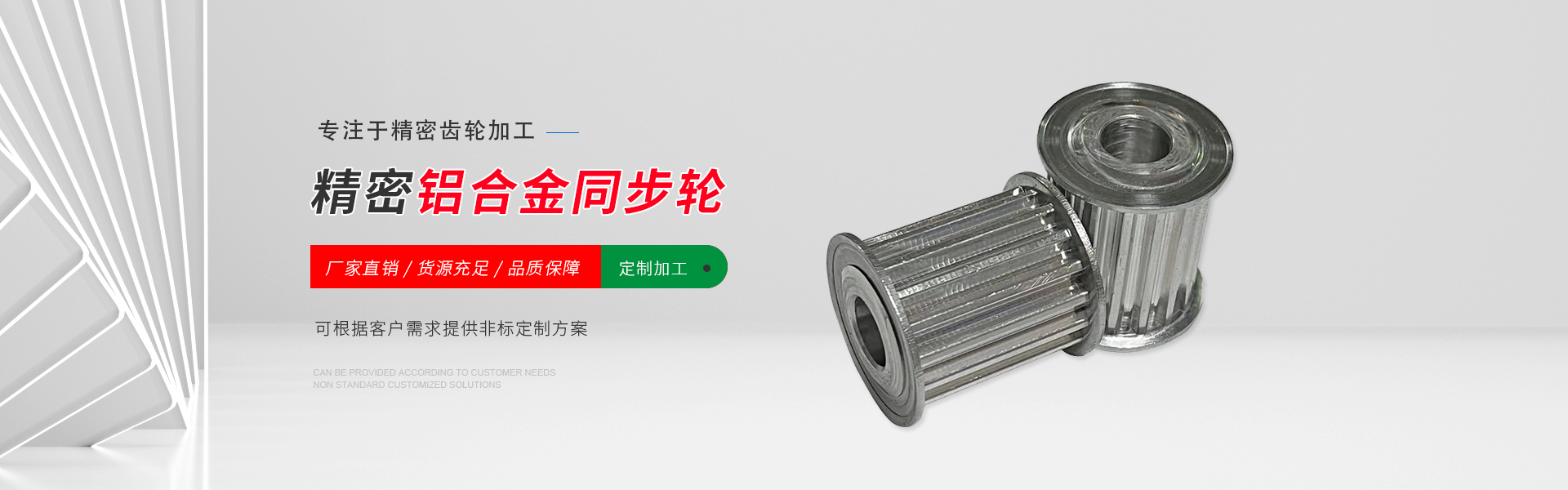


A synchronous pulley is a mechanical component used for power transmission. Typically made of materials such as steel, aluminum alloy, cast iron, and brass, its inner bore can come in various shapes, including round holes, D-shaped holes, and tapered holes. The synchronous belt pulley works in conjunction with a synchronous belt to ensure the synchronous operation of the entire mechanical transmission system.
In the application field, synchronous wheels are widely used in various types of machinery and equipment, such as printing presses, packaging machines, textile machines, as well as in construction machinery like excavators, cranes, concrete pump trucks, and sandblasting machines, and in the automotive field for car transmissions.
The primary drive method of synchronous pulleys in operation is through synchronous belts or chains to transfer power. Specifically, the electric motor is connected to the synchronous pulley on the drum via a synchronous belt or chain, driving the drum through synchronous transmission.
This driving method enables the entire mechanical transmission system to operate synchronously, offering advantages such as stable speed, low noise, and high precision. In applications requiring high precision, good stability, and low noise, such as logistics cranes, elevators, and wind turbines, the synchronous wheel driving method can be employed.
Different application scenarios and mechanical structures may require various driving methods and configurations. In practical applications, the appropriate driving method should be selected based on specific needs and conditions, and relevant installation and operation specifications should be followed to ensure the normal operation of the synchronous wheel and the stability of the transmission system.
