


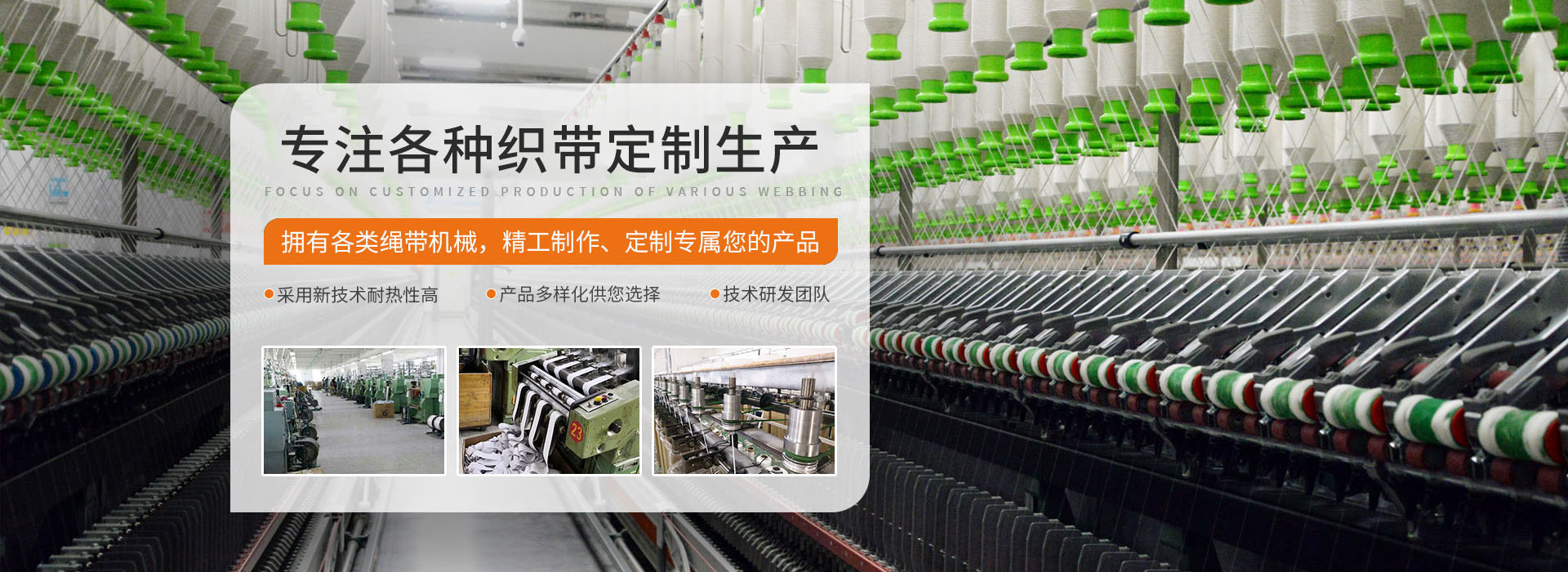

Ribbons are a widely used textile product, with high demand from various industries such as branded bags, industrial production, and agriculture. The quality of ribbon processing directly affects its application. However, due to the numerous steps involved in ribbon processing, it's inevitable that some manufacturers encounter minor issues during production, impacting the quality of the finished product. Properly addressing the causes of these challenges can help businesses avoid many potential hazards.
A Flexible Belt
Reason for Issue: Uneven threading of steel fasteners; uneven surface of the ferrule yarn; incorrect position of steel fasteners; improper method of yarn connection.
Preventive Measures: Always use a reliable method for threading the steel hooks, either in a 1-group or 2-group configuration; pull some from the very large and loose side until it is as flat as the other side or 1-5 fewer loops; there should be an empty space for a steel hook between the steel hook and the knitting needle; according to the necessity of the shoe material's webbing, connect layers left and right, or separately left and right, usually requiring an upper and lower separation; if a strap has more than two patterns or designs, they must be separated and connected.
Two: Wave-shaped
The cause: Uneven yarn threading on the steel clips, with too much yarn on both sides and too little in the middle; the steel clips are too large, and the fine yarn is pulled too tight; the bobbin head yarn pulling is uneven, tight on the sides and loose in the middle; incorrect yarn connection method, and the balance of weight pressing is not good.
Preventive Measures: Use standard steel buckles and wear them in 1 or 2 sets; choose the steel buckle to thread based on the total width of the webbing; exchange the yarns in the center and on both sides multiple times, or pull some of the overly loose middle yarns out; ensure to connect the webbing as per the method and balance the weights based on the average number of units.
Three: Poor edge quality
Reason for the Issue: Uneven yarn size; incorrect needle insertion, too long or too short; abnormal tension in the bobbin winding, sometimes tight, sometimes loose; the yarn bobbin is not round enough, has deformed; and the needle holder is damaged, not fixed.
Preventive Measures: Replace with a finer yarn; adjust the needle length based on the thickness of the weft, generally, the needle length should be just enough to return the yarn; securely fasten both ends of the bobbin without letting it rest against the iron frames; replace with a new yarn bobbin; change the fixed rod, or proceed to production manufacturing.
Four: Fluff
Causes: Fraying on the edge; fabric edge fraying; surface fraying on the processed webbing.
Preventive Measures:
1. Some knitting fabric factories have experienced long-lasting wear and damage to their needle boards, which have been replaced. Worn-out weft needles have been replaced as well. The clamping plates were too tight, so pressure has been relieved. Adjusted the spacing between the weft and weft needles to ensure the fine yarn can be fully hung.
2. Hook the fine yarn onto the steel clip, then insert the yarn into the fine yarn rod; replace the steel clip if it's damaged; if the material itself has loose fibers, replace the affected area if only a part is fluffy; if there are too many loose fibers, perform a full inspection after completing the product.
3. Damage due to broken weft needles; replace one, or tap with gauze. Damage caused by broken steel buttons; tap with gauze, or replace with new steel buttons. Damage to individual pieces of coconut fiber or standby sheets; replace with new ones.
V. Specifications and Models
Reason for Cause: Inconsistent material dimensions result in varying tape sizes during processing; steel buttons are excessively large or too small, causing size variations in the tape; the fine yarn roller becomes loose throughout the operation; the fine yarn passes through a yellowing rod, with yarn fluff inside.
Preventive Measures: Regularly measure the total width of shoe materials, fabrics, and ribbons; immediately return any不合格 items; ensure steel buttons are neither too large nor too small; do not compromise on substandard buttons; tighten the fixed fine yarn wheels; occasionally loosen the outer spring to allow the inner fibers to flow smoothly.
Section VI: Yin and Yang Colors
Causes: Color deviation in raw materials; uneven indentation on the disk head; unevenly distributed steel fasteners.
Preventive Measures: Avoid replacing frayed yarns or replacing caps; weight down the caps; position the weft needle in the middle of the open mouth.
Seventh: Needle Removal
Cause: The needle bar was not properly blocked; the positions of the weft needle and the warp needle were not aligned.
Preventive Measures: Position the warp needle bar close to the weft needle; align the weft and warp needles properly to ensure that all the fine yarn can be fully hung.
Section 8: Easy-to-Soil Belt Treatment
Reason for the Issue: The mountain palm leaves are very dirty; all conveyor belts are excessively dirty; all areas with yarn experience are not clean and tidy enough.
Preventive Measures: Distribute tissues and pens at the parts room; thoroughly clean each piece of bamboo; ensure all conveyor shafts are cleaned and organized; and clean all areas with yarn history, touching the convention and industrial park's paint district.
Section 9: Waves on Both Sides
Reason: Unevenly distributed steel扣, with fewer threads on both sides and more in the middle; the steel扣 is too small.
Preventive Measures: Choose the appropriate steel fasteners and follow the reliable installation method; ensure the steel fasteners are slightly snug, but not too loose or too tight.
Line 10
Cause: The mesh is too thick for the mask; the metal fasteners are not properly matched, as the mesh is not wrapped around; the metal fasteners are too spaced out, with too much yarn threading through each hole.
Preventive Measures: Move the thicker warp yarns to the side, or replace them with additional ones; choose appropriate steel buttons, either in pairs or sets of two; generally, opt for pairs or sets of two in stitching, and avoid using sets of three or more.
