


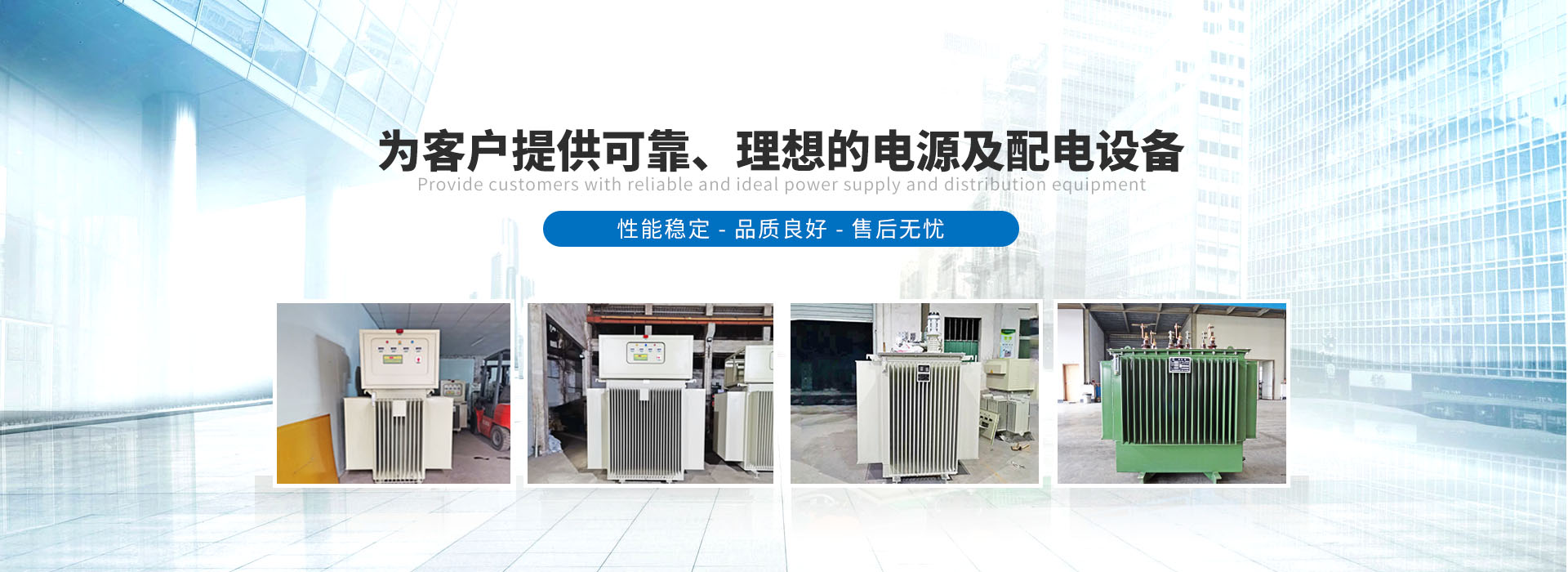

In an alternating current circuit, equipment that raises or lowers voltage is called a transformer. Transformers can convert any voltage level into the desired voltage value at the same frequency, to meet the requirements for the transmission, distribution, and usage of electrical energy.
For instance, the electricity generated by power plants typically has a lower voltage level. It must be stepped up to transmit over longer distances to areas where electricity is consumed. Upon reaching the consumption areas, the voltage must be stepped down to an appropriate level, suitable for powering machinery and everyday electrical equipment.
How Transformers Change Voltage?
Transformers are made based on electromagnetic induction. They consist of an iron core made of silicon steel sheets (or silicon steel sheets) stacked together and two sets of coils wound around the core, with the core and coils insulated from each other, having no electrical connection.
The coil connected to the transformer and power source is called the primary coil (or primary side), while the coil connected to the transformer and electrical equipment is known as the secondary coil (or secondary side). When the primary coil of the transformer is connected to an AC power source, varying magnetic lines are generated in the iron core.
Due to the secondary coil being wound on the same iron core, the magnetic flux cuts through the secondary coil, inevitably inducing an electromotive force on the secondary coil, resulting in voltage at both ends of the coil. Since the magnetic flux is alternating, the voltage of the secondary coil is also alternating. Moreover, the frequency is identical to the power source frequency.
The theoretical confirmation reveals that the voltage ratio between the primary and secondary windings of a transformer, as well as the ratio of the number of turns in the primary to the secondary windings, can be expressed using the following formula: Primary winding voltage / Secondary winding voltage = Primary winding turns / Secondary winding turns. This indicates that the more turns, the higher the voltage. Therefore, it can be observed that if the secondary winding has fewer turns than the primary winding, it is a step-down transformer. Conversely, it is a step-up transformer.
