
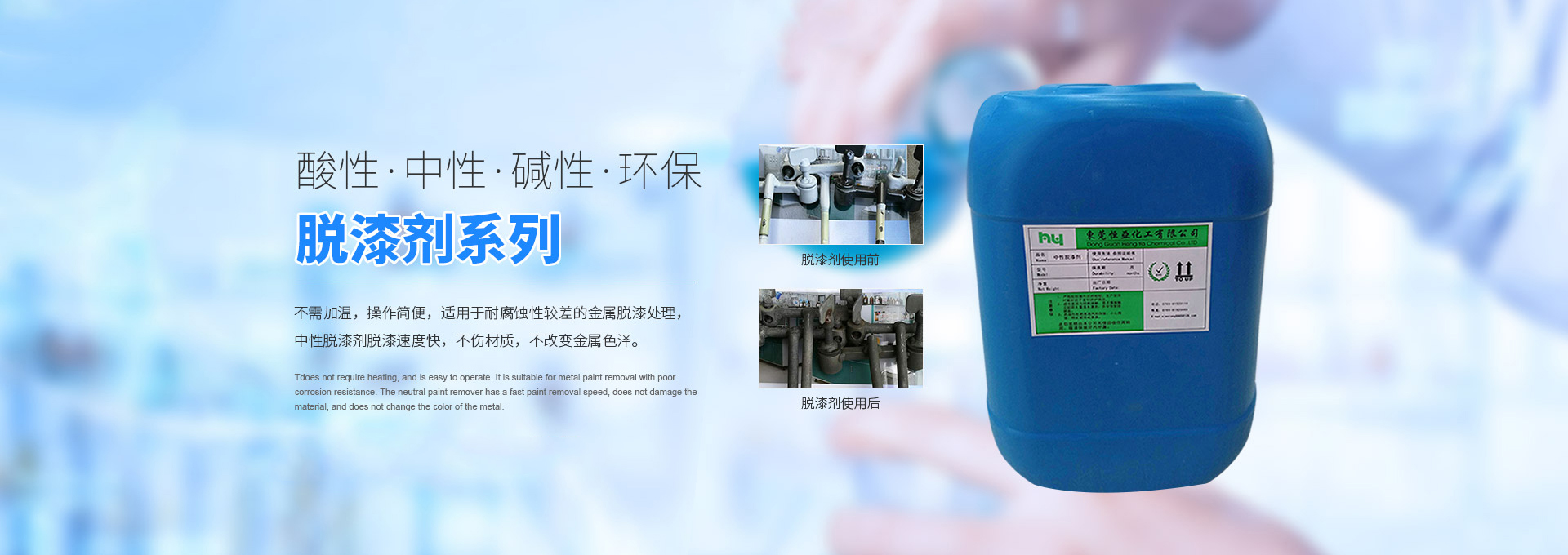

The paint strippers are easy and simple to use, and many people use them frequently, but few know what to be cautious of after use. Here's a share for everyone: there are three major requirements to note after application:
One: Prevent the formation of a dry film on workpiece surfaces after using a stripping agent.
Dry film, also known as a degreaser for parts, forms a dry coating before and after water washing. The presence of this dry film can affect the integrity and uniformity of the phosphatizing film, leading to blue film and yellow rust. Therefore, a fine mist spray system should be installed between degreasing and water washing, as well as between water washing and surface adjustment, to prevent drying.
Post-removing paint treatment rust prevention work
Parts that cannot be immediately processed after the stripping agent must undergo anti-rust treatment (the anti-rust solution contains trace amounts of diethanolamine, adjusting the pH of the solution to 8-9). After the anti-rust treatment, the parts should be dried directly (at 100°C, for 1-10 minutes).
Step three: Enhance the quality of water washing after using the paint stripping agent.
Typical paint strippers suppliers will inform you that post-stripping water washing is a crucial process, as the remaining paint stripper on the workpiece surface (containing SiO32-, Cl-, SO42-, CO32-, and surfactants, etc.) forms a coating film, which affects the phosphatizing effect (reducing the number of crystal nuclei, thinning the phosphatizing film, making it rough, and causing defects like white spots, silk-like patterns, and blooming, as well as reducing corrosion resistance); it also leads to defects such as pinholes and shrinkage in the film.
