
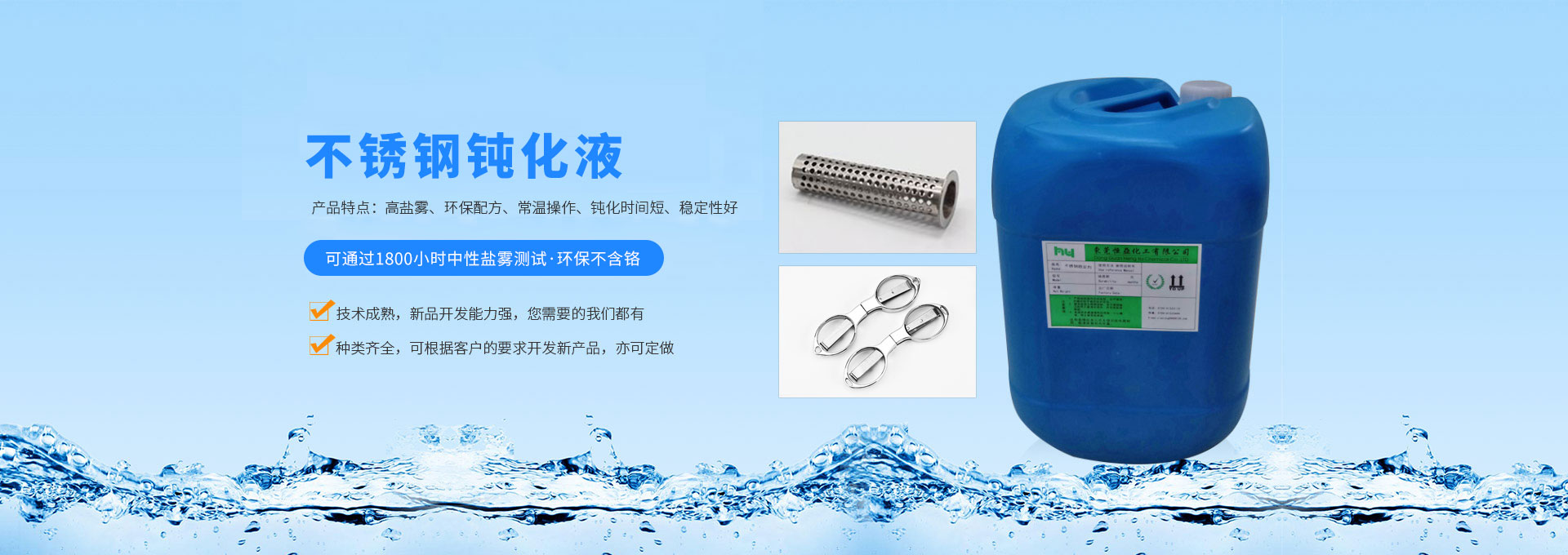

Enhancing the thermodynamic stability of stainless steel in environmental media. Passivated stainless steel is positioned more positively in the metal electrochemical series, akin to precious metals, with stable chemical properties. Conversely, unpassivated stainless steel is in an activated state, located at a more negative potential, similar to ordinary steel.
To prevent localized corrosion in stainless steel, various forms of corrosion that are commonly found in stainless steel, including pitting corrosion, intergranular corrosion, erosion corrosion, and corrosion fatigue, are all related to the surface condition. Passivation treatment can eliminate the sources of initiation for these corruptions, making the potential for critical point corrosion more positive.
Passivation provides stainless steel surfaces with sufficient cleanliness. It removes metal contaminants from the surface layer of stainless steel, as well as embedded impurities such as copper, zinc, cadmium, lead, and low-melting metals, and free iron. This process enriches and stabilizes the chromium and nickel content on the surface, preventing corrosion and damage caused by these metal pollutants.
