
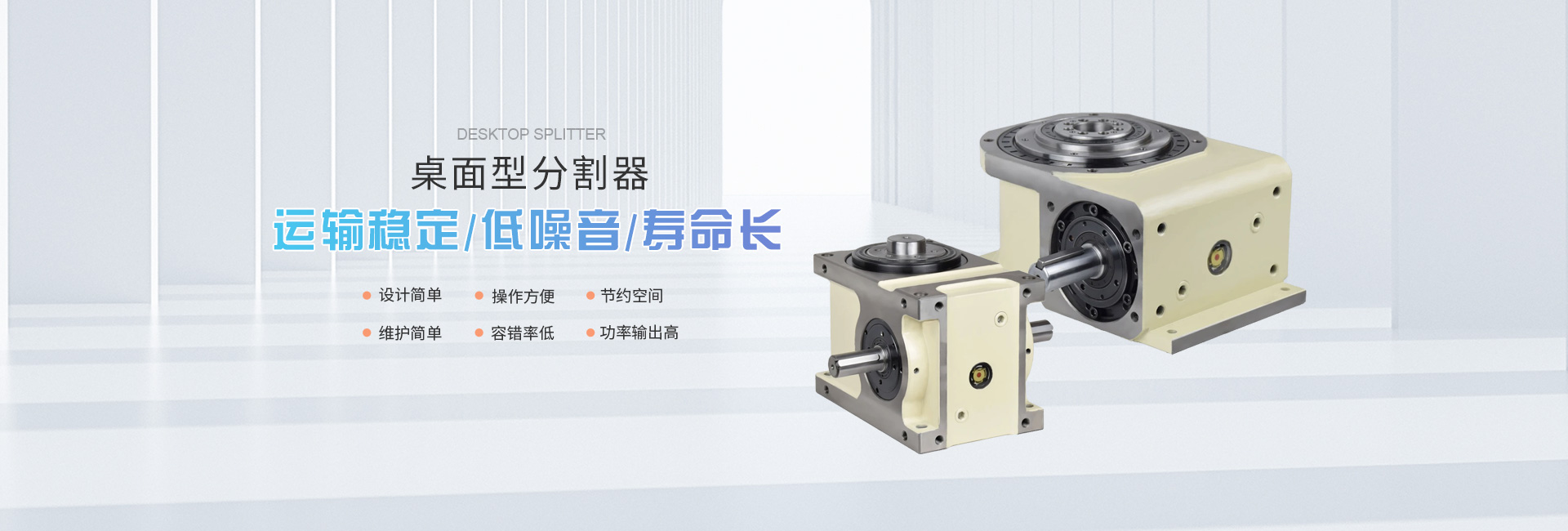
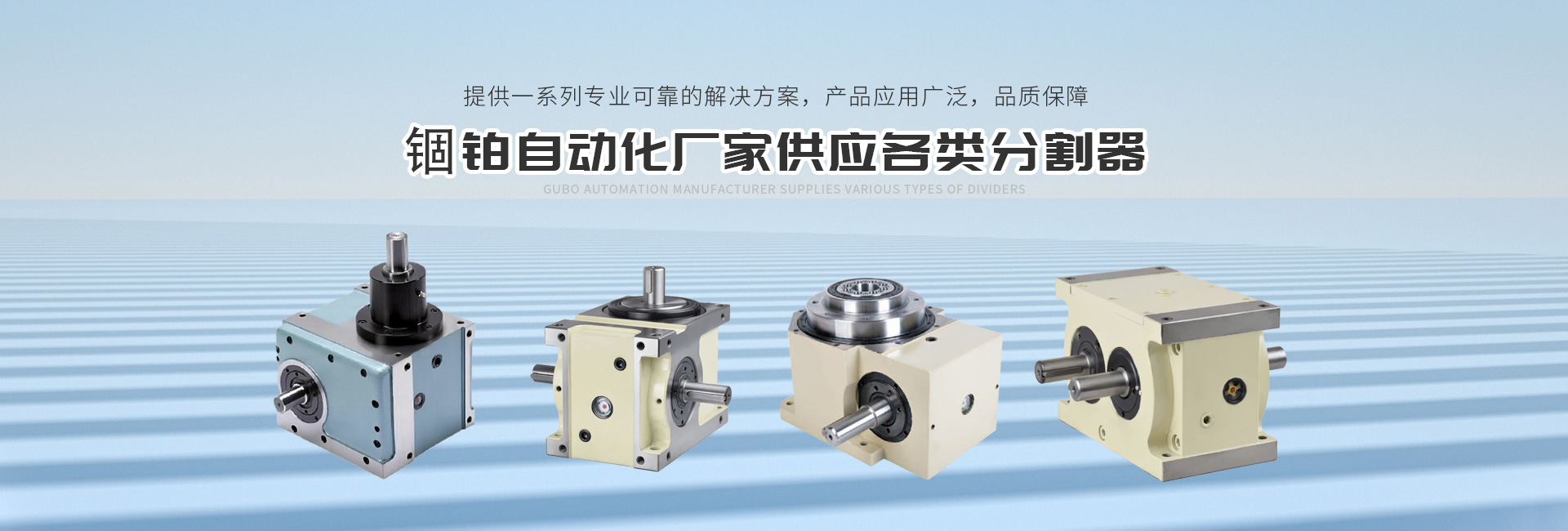


A cam divider is an intermittent transmission mechanism. Many people unfamiliar with it might assume that the internal structure of a cam divider is complex. However, those in the industry know that the principle of the divider's structure is relatively simple. The complexity of the internal cam surfaces mainly lies in the machining process of the cam itself. The rotating cam installed in the input shaft is connected to the output shaft tower, with cam rollers radially embedded in the circumference of the output shaft tower surface, making linear contact with the cam's dimension support ribs on their respective inclined surfaces.
During the operation of the cam divider, as the input shaft of the divider rotates, the cam rollers rotate around the output shaft tower according to the displacement curve on the cam while simultaneously rolling down the slanting surface of the rib. In the region where the rib and the cam end face are balanced, i.e., within the static energy range, the roller engages its shaft, but the output shaft tower itself does not rotate. The dimensional support rib of the same part simultaneously contacts two or more rollers, thereby allowing the rotation of the input shaft to be evenly transmitted to the output shaft. This results in a smooth and uninterrupted intermittent motion. Regarding the issue of the dynamic and static ratio of the cam drive, what I am concerned with is the time ratio between dynamic and static conditions during the use of the cam divider.
