
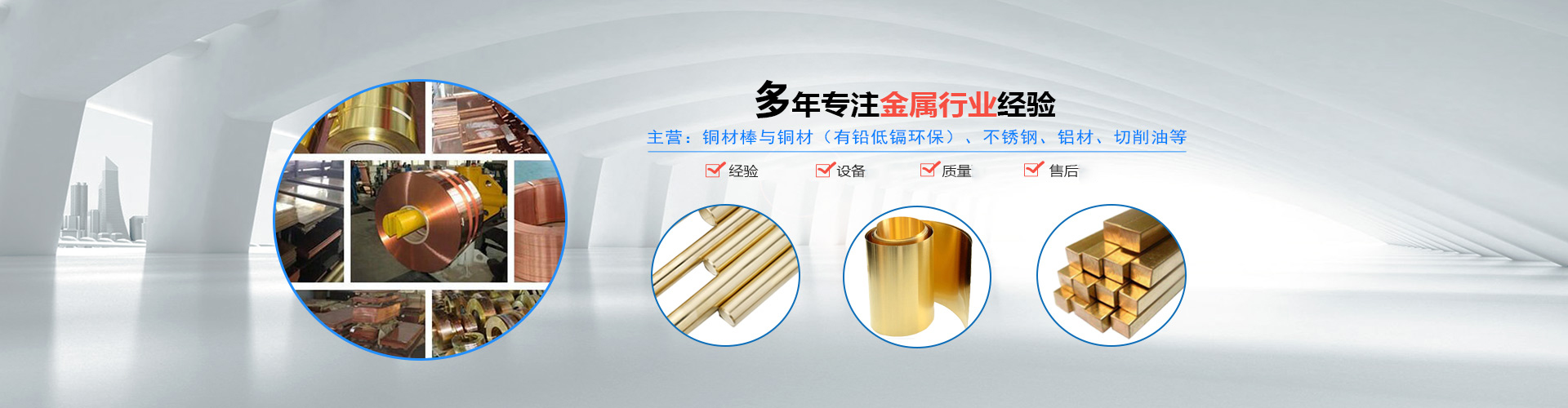



Non-standard brass refers to brass products that do not conform to standard dimensions and specifications. Compared to standard brass, non-standard brass may not meet national or industry standards in terms of size and specifications, but its performance and quality can still meet certain usage requirements.
Non-standard brass can be produced through casting, forging, extrusion, rolling, and other processes, with a wide range of applications in construction, machinery, automotive, electronics, and power industries.
Non-standard brass materials are primarily alloys based on copper, with the addition of other metals (such as zinc, aluminum, and tin, etc.). Compared to standard brass, non-standard brass may have a more complex composition. Common non-standard brass materials include tin bronze, aluminum bronze, alumina copper, FEC semi-hard red copper, and FRLPC soft brass, among others.
These non-standard brass materials offer various properties and application scopes, allowing for selection based on actual needs. For instance, zinc brass boasts good strength and conductivity, tin brass has excellent corrosion resistance, and aluminum brass is more suitable for high-temperature working environments.
