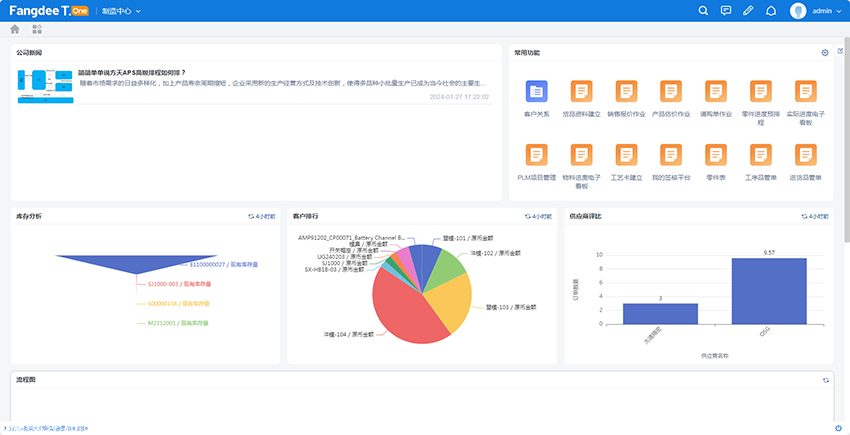



Some friends say that our company's tragedy is that we've degraded a million-dollar ERP system into a simple order processing software. What are your thoughts on this?
If it were a year ago, I would have told him: ERP software itself is an information system, just a tool. The accuracy of the data entered is what makes ERP useful. Even the most impressive tools require reliable operators. Therefore, to use ERP effectively, at least two factors are needed: the accuracy of basic data and the timeliness of data maintenance. Only with these two in place can the ERP system accurately reflect the actual situation; otherwise, the results or analytical conclusions derived may be incorrect.
When humans operate tools, errors are inevitable. However, if mistakes are ignored, even the best system becomes unusable and unusable. In the end, using the system itself is a part of enterprise management, reflecting the management's emphasis on system usage and the company's execution capabilities. In summary, the four main reasons for ERP failure are: untimely documents, inaccurate data, lack of leadership support, and lack of employee enthusiasm.
Now, I must say that ERP is not just order-processing software that can operate without human intervention! Starting in 2023, Fangtian established an AI research and development team, integrating AI capabilities into enterprise ERP software. The traditional mainstream perception of ERP is about to undergo a revolutionary change. A new generation of ERP, which does not require data entry or order processing, is on the horizon. For instance, Fangtian has introduced "QRCode AI" in its ERP software, where a simple scan of a QR code automatically generates documents. With a single click, the report the client desires appears, allowing businesses to obtain real, accurate, and reliable data, making data "visible, highly computable, and trustworthy."
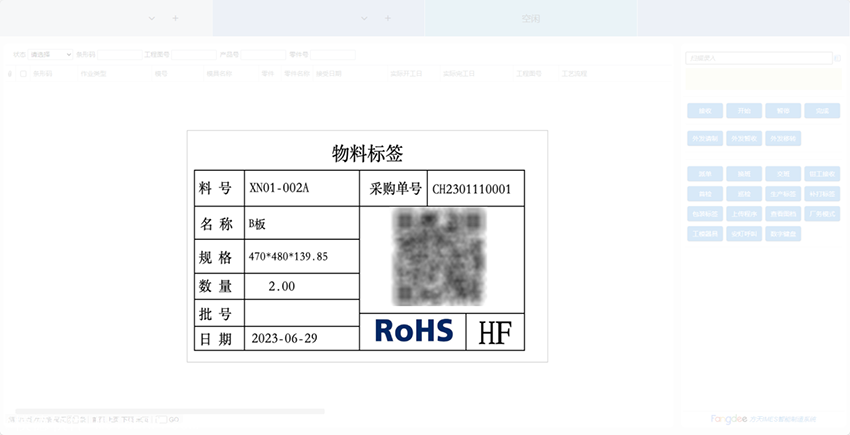
Twenty years ago, Fangtian upgraded its ERP system to MOLD ERP, pioneering the use of ERP systems in mold enterprises across Greater China. With the rise of the AI wave, how can enterprise management become intelligent? How can businesses leverage AI tools to enhance productivity? "We have already implemented scenarios and cases of artificial intelligence technology, and there will be a large number of AI applications integrated into the Fangtian Cloud ERP system's processes," said Xu Zefu, General Manager of Fangtian, at the Fangtian AI ERP Summit.
Xu Zefu also pointed out that leveraging artificial intelligence in R&D heralds a new era of accelerated innovation, which will fundamentally transform the traditional ERP model. If in the future, ERP systems no longer require generating orders or searching for information, and you can obtain the desired data dashboard with just a few commands, then how far away is it for businesses to use data-driven decision-making and innovation?