
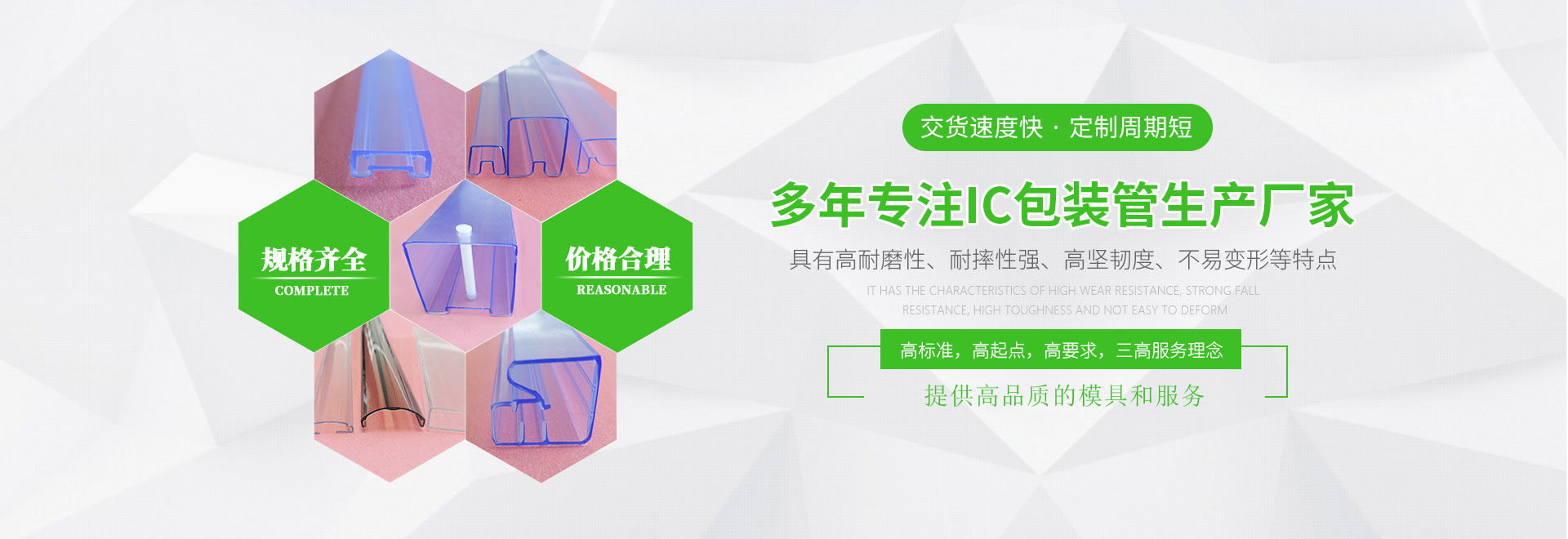
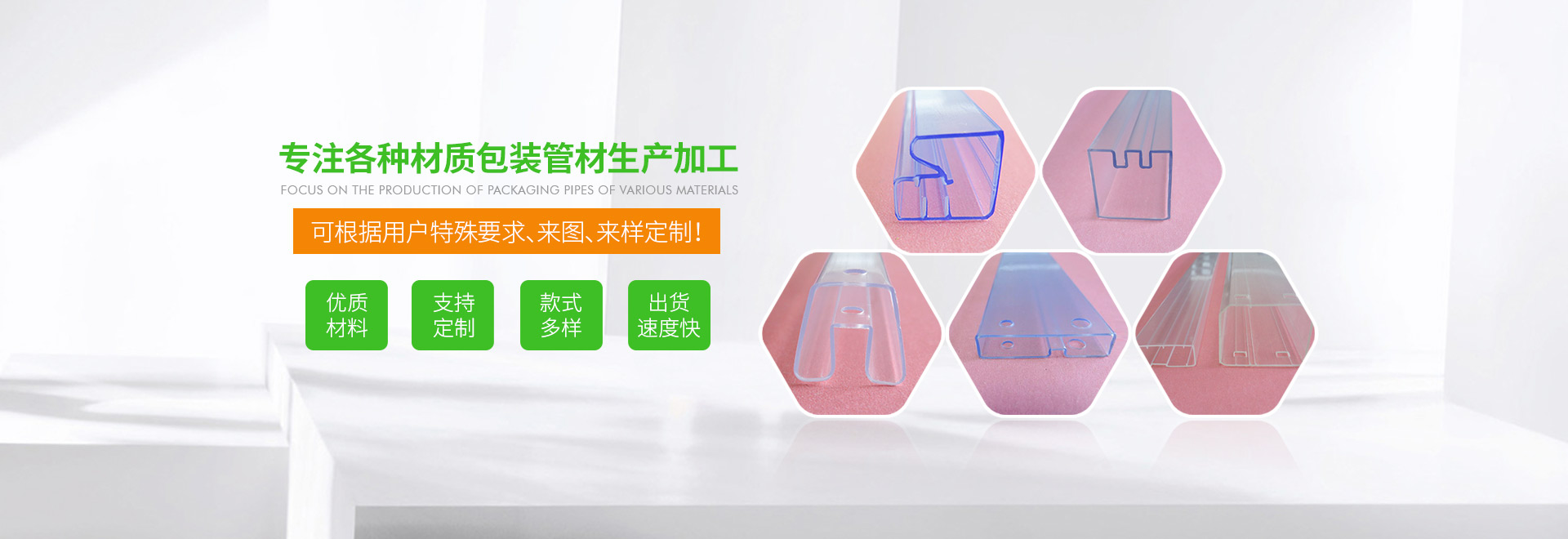


Electronic component blister tubes, as a type of packaging material for electronic components, are widely chosen by many electronic component manufacturers. But what is the material of electronic component blister tubes?
There are several materials used for making blister tubes, including PS, PVC, ABS, PC, etc., with PS and PVC being the most commonly used, as PS material is halogen-free.
Customers who demand high halogen-free requirements will opt for this PS material for packaging tubes, but there are also drawbacks: the material cost is high and the toughness is slightly lacking.
PVC material, conversely, is preferred over PS material, which is why many cost-conscious consumers initially opt for PVC material for packaging pipes.
ABS pipes offer a glossy appearance and excellent strength and toughness, resistant to inorganic acids, alkalis, and salts, but are susceptible to becoming brittle and changing color when exposed to sunlight, and can experience stress cracking due to solvents. They are slightly more expensive than PVC.
PVC pipes offer better dimensional stability and are more heat and cold-resistant than pipes made from other materials. However, they are not resistant to strong acids and alkalis, and are also more expensive than PVC pipes.
So when selecting materials for vacuum-formed plastic tubes for electronic components, most customers initially opt for PVC due to its lower cost compared to other materials, its durability, and decent transparency.
