


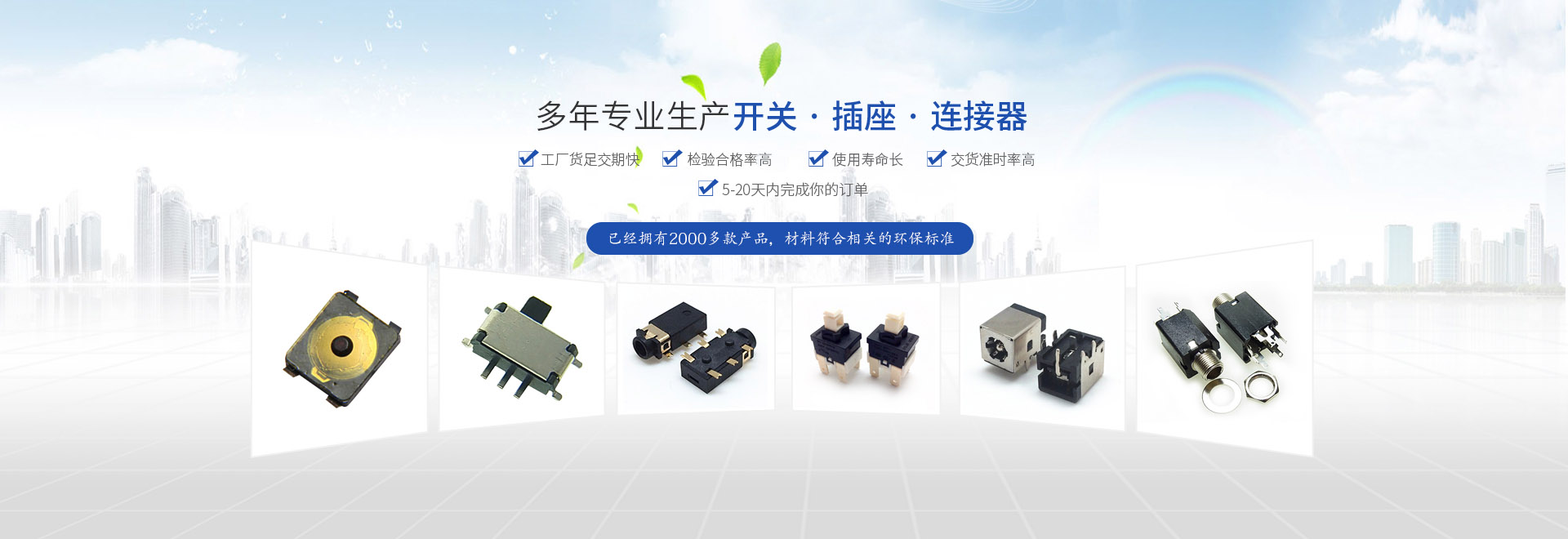

The headphone jack is widely used in various applications such as mobile phone 3D designs, CD players, cordless phones, MP3 players, digital laptops, DVDs, and digital cameras. When purchasing headphone jacks, sellers usually provide some kind of user manual, but it's not very detailed. Below, Ding Shang will introduce the precautions to consider when using headphone jacks:
Do not touch the earphone jack with wet hands during daily use, as it may cause electric shocks and other accidents; extreme caution is required.
2. When not in use, please cover the dust cap to prevent oxidation of the plating on the earphone jack surface due to prolonged contact with air, which can easily lead to poor contact between the earphone jack and plug.
3. Currently, there are mainly two types of earphone jack specifications: 2.5mm and 3.5mm. When in use, we should choose according to the device, as different specifications of earphone jack devices have varying usage requirements. Some devices are not compatible with the 2.5mm earphone jack. Forcing the use of an incompatible jack can easily damage the earphone jack.
4. The insulation resistance of earphone jacks is generally greater than or equal to 100MΩ. Insulation resistance refers to the resistance between conductors of earphone jacks that do not touch each other. If it is less than 100MΩ, the resistance between conductors cannot handle normal current, which is prone to damaging the earphone jack.
5. Do not use other three-segment or four-segment plug types to replace the earphone jacks, as these do not meet the wiring requirements for amplification equipment and are not compatible with the specific plug type.
6. Do not cross-wire the 2nd and 3rd pins, as well as the 3rd and 4th pins, in the earphone jack wiring; otherwise, it may cause issues with no sound when using the earphone jack.
7. During the use of the earphone jack, attention must be paid to prevent water and vapor from entering the interface, otherwise it may cause circuit short-circuiting and other issues, resulting in noise or no sound problems with the earphone jack.
8. When distinguishing between the national and American standards for earphone jack wiring, it's crucial to first understand whether the corresponding specification manual indicates the national or American wiring method before operating and connecting the earphone jack. This is to avoid incorrect wiring connections.
9. When plugging and unplugging earphone jacks and sockets, it's crucial to avoid excessive force. Overly forceful insertion or removal can wear down the metal chip inside the earphone socket and may lead to loose connections between the socket and the plug.
