


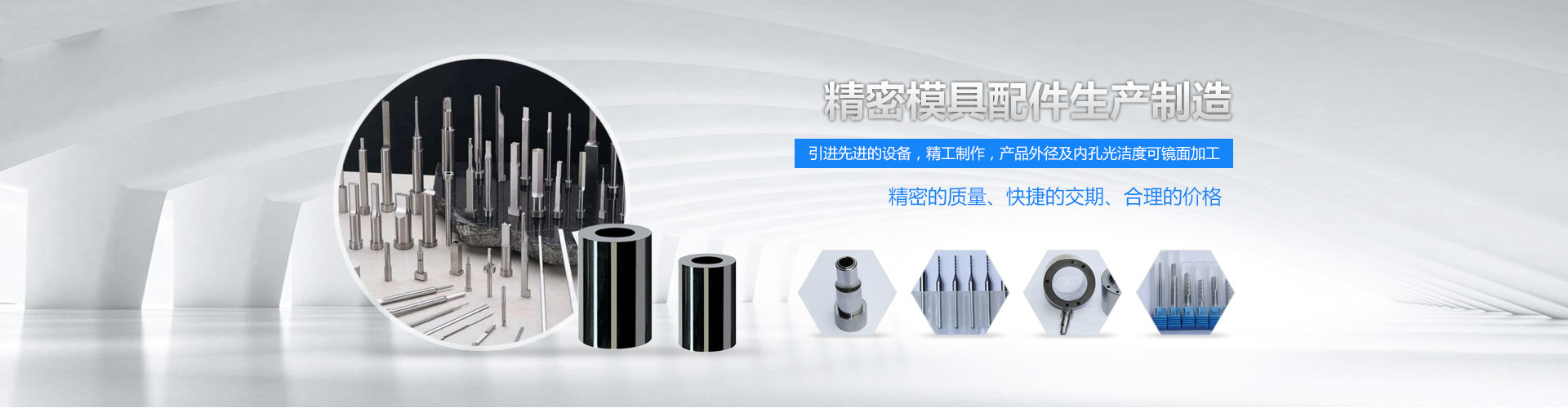

Tungsten carbide punch manufacturers can process and modify products according to different customer requirements. Sometimes, our manufacturers need to design special machinery to meet diverse customer needs. They produce punches in various shapes for mass hole processing. Tungsten carbide punches are used in computer cases for heat dissipation holes, smartphones, appliances, and machinery, among others. Using standard drilling or lathe/milling machines can only produce round holes, with a significantly lower efficiency. However, during stamping, a large-scale punch press can process hundreds of holes in less than a second, greatly enhancing production efficiency.
Tungsten carbide punch needles are commonly used in stamping presses for punching various types and shapes of holes. They feature high wear resistance, high surface finish, and efficiency, and are used together with punch rods, nut, and die. They are generally used for punching purposes in tower factories. Also known as punch die, upper die, positive die, tungsten carbide punch needle, etc. A punch is a metal part mounted on a stamping mold, which is in direct contact with the material, causing deformation and cutting of the material. The molds usually use high-speed steel and tungsten carbide as materials, including high-speed steel punches and tungsten carbide punches.
Several Common Mold Manufacturing Processes for Tungsten Steel Needles
1. Apply the red lead (do not dilute the red lead too much) thinly, without making it too thick.
2. Tap the center part of the mold with a copper rod, applying moderate force (the amount of force can be determined based on the size of the mold).
Do not blindly grind based on the red丹 intake; during the molding process, use a height gauge to measure whether the mold core's parallelism has deviated (keep in mind).
4. First, sand off the areas that are particularly tight for Hong Dan (showing black spots), such as corners and hard-to-notice spots.
The research and development rate of tungsten steel punch upper and lower mold red lead must exceed 85%.
Before the machine is turned on, roughly estimate the material thickness, typically grinding off 70% to 80% of the material thickness diameter.
7. Benchmarks for stone grinding and sandpaper production.
