




Inductors are devices used to provide inductance. Various coils wrapped with insulating wire are called inductors. The inductor manufacturer states that its primary function is to block AC from passing through DC and high-frequency signals from passing through low-frequency signals. This means that high-frequency signals encounter significant resistance when passing through inductor coils, making them difficult to pass through, whereas low-frequency signals face less resistance, allowing them to pass through more easily. Inductor coils have almost zero resistance to DC.
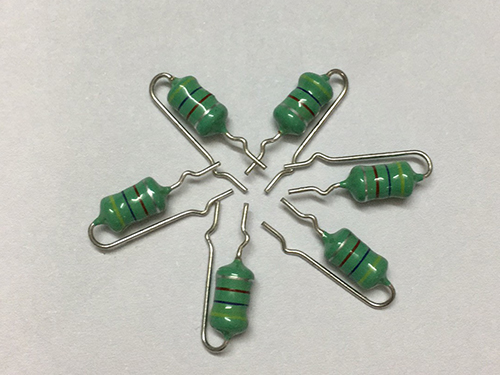
Inductor Classification
By material type: hollow rings, ferrite, iron core, copper core.
2. Job Nature Categories: Antenna, Oscillator, Choke, Attenuator, and Deflector.
3. Winding Structure: Single-layer, multi-layer honeycomb. High-frequency chip-type ceramic inductor
4. Inductance Forms: Fixed and Variable.
5. Structural Features: Core, Variable, Color Coding, Coreless, etc.
Basic Uses of Inductors
Inductors are primarily used to conduct direct current and block alternating current, serving mainly as filters, oscillators, delayers, and notches in circuits. Inductor manufacturers state that inductor coils have a blocking effect on alternating current, known as inductive reactance (XL), measured in ohms. The relationship between inductance (L) and alternating frequency (F) is given by XL = 2fL. Inductors can be categorized into high-frequency and low-frequency chokes. Tuning and frequency selection: Inductor coils in parallel with capacitors can form an LC tuning circuit. That is, if the circuit's natural oscillation frequency (f0) equals the frequency of a non-alternating signal (F), the inductive reactance and capacitive reactance of the loop are also equal, causing electromagnetic energy to oscillate back and forth between the inductor and capacitor, which is the resonance phenomenon of the LC loop. Inductor manufacturers indicate that when the inductance and capacitance of the resonance circuit are equal in magnitude and opposite in direction, the total current in the loop is at its lowest inductance, resulting in the highest current flow (referring to f=)'f0 The communication signal (signal). The LC resonant circuit has a frequency selection function, which can select an alternating current signal at a certain frequency f.
2. Additionally, the inductor manufacturer pointed out that inductors also serve to shield signals, filter noise, stabilize current, and prevent electromagnetic interference. We often see magnetic rings that, when paired with the connecting cable, form an inductor, a commonly used anti-interference component in electronic circuits. These inductors provide excellent shielding against high-frequency noise, hence they are referred to as absorption magnetic rings.
3. The inductor features the ability to block AC current while allowing DC current to pass smoothly. The resistance for DC signal through the coil is the inherent resistance of the wire, resulting in minimal voltage drop. When AC signals pass through the coil, an induced electromotive force (EMF) is generated at both ends of the coil. As per the inductor manufacturer, the direction of this induced EMF is opposite to the applied voltage, which hinders the passage of AC current. Consequently, the inductor's characteristic is to conduct DC and block AC. Higher frequency leads to greater impedance.
Oxide materials, also known as ferrite cores, are commonly used. They exhibit different impedance characteristics at various frequencies. Impedance is very low at low frequencies, but it sharply increases as the signal frequency rises.
