
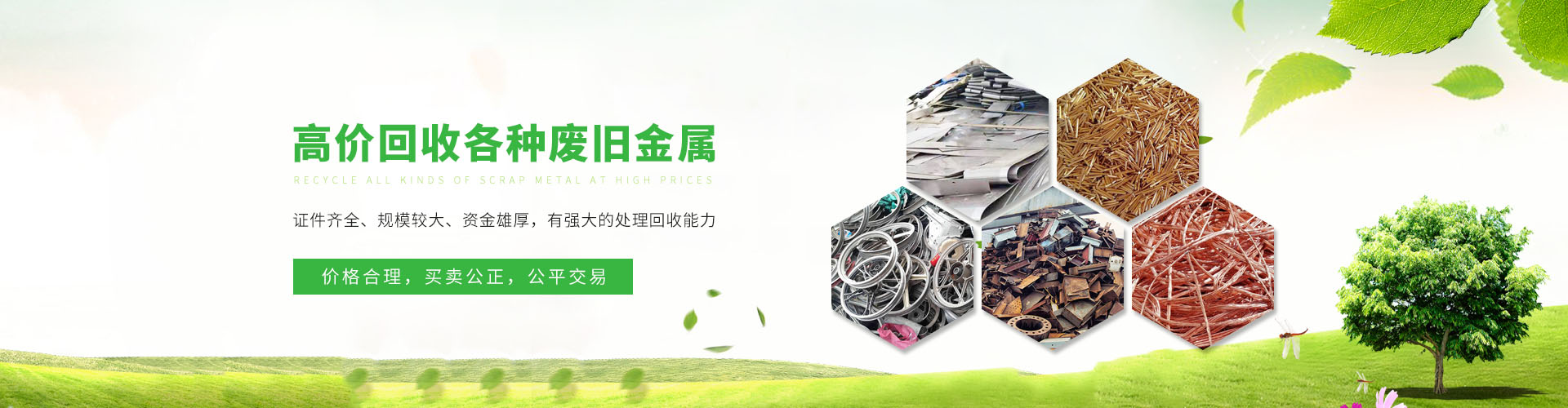


Scrap metal recycling is divided into two major categories: productive scrap metal and non-productive scrap metal.
Production scrap metal refers to metal materials, metal products, and production equipment that have lost their original utility value during the production process in fields such as metallurgy, machinery, chemical industry, construction, transportation, communication, electricity, water conservancy, oil fields, and other production sectors. This includes materials like run-out steel, slag steel, cutoffs, edge strips, waste and substandard materials, iron oxide scales, steel shavings, iron shavings, and offcuts; scrap cast steel, cast iron parts, waste semi-finished products, waste components, substandard products, broken iron; scrapped and obsolete production equipment; waste iron equipment, urban public waste metal facilities; waste tractors, waste combine harvesters; scrapped transmission equipment; scrapped motor vehicles, ships, and their components; scrapped and retired military equipment; waste cutting tools, taps, dies, drills; waste bearings, springs, stainless steel containers; cut-offs, shavings, and offcuts of non-ferrous metals; waste non-ferrous metal components in machinery and equipment, waste non-ferrous metal wires, pipes, rods, and strips; waste cables and wires, waste copper enamel wires, waste conductive plates, waste lead batteries, waste aircraft aluminum, waste car radiators, waste non-ferrous metal containers; waste liquids containing gold and silver, plated gold and silver electronic components, etc.
Non-productive scrap metal refers to metal household items and small agricultural tools used in farming that have lost their original utility for urban and rural residents, enterprises, and institutions, such as scrap stoves, cooking utensils, metal tableware, scrap sewing machines, bicycles, rickshaws, and their worn-out parts, as well as scrap sickles, hoes, plows, and worn-out small grain processing equipment. It also includes other scrap metal household goods and miscellaneous items.
Part II: Introducing Scrap Aluminum
Aluminum is one of the most widely used metals in the world, second only to steel. Among non-ferrous metals, aluminum leads in terms of reserves, production, and consumption. In 1997, global aluminum production and usage reached 22 million tons and 23 million tons, respectively. Since China's reform and opening-up, the aluminum industry has experienced rapid growth, with output skyrocketing from 445,000 tons in 1983 at the beginning of the reform to 2.43 million tons in 1998.
Aluminum is used extensively across various industries, including civil, construction, transportation, communication, electronics, home appliances, power, and machinery. Aluminum alloys are almost ubiquitous in every field. As production and usage increase, so does the amount of discarded aluminum products. Moreover, many aluminum items are single-use, with a short lifespan from production to obsolescence. Consequently, these discarded materials have become a source of pollution.
Section 3: Scrap Metal Recycling and Processing
In our country's industrial classification, iron, manganese, chromium, and their alloys are commonly referred to as ferrous metals, while all other metals are categorized as non-ferrous metals. In reality, pure iron and chromium are silvery-white, and manganese is silvery-gray. They are called ferrous metals because the surface of steel often has a layer of black ferric oxide. Moreover, manganese and chromium are primarily used in the production of alloy steels, thus earning the name. This classification is a result of following the former Soviet Union's textbooks, which lacks scientific rigor both logically and in terms of the essence of things. "Non-ferrous" should be relative to "ferrous," and isn't "black" also a color? Furthermore, iron, manganese, and chromium themselves are not black. In European and American textbooks, metals are divided into ferrous metals and non-ferrous metals, which is more scientific and rigorous. However, the terminology of ferrous and non-ferrous metals has been used in our country for a long time and is still sometimes used.
Currently, the total production of metal materials worldwide is approximately 800 million tons, with steel accounting for about 95% as the main component; non-ferrous metal materials account for about 5%, playing a supplementary role, yet their functions are irreplaceable by steel materials.
Many non-ferrous metals can be used in their pure metal form in industrial and scientific applications. For example, Au, Ag, Cu, and Al are used as conductors, Ti for corrosion-resistant components, W, Mo, and Ta for high-temperature heating elements, Al and Sn foils for food packaging, Hg for instruments, and Pb for batteries; however, it is more common to use various non-ferrous metals in combination or to employ alloys of non-ferrous metals.
Non-ferrous metal alloys possess many significant characteristics, playing a crucial role in both structural and functional materials, and are of great importance in industrial sectors and high-tech fields. For instance, alloys of Al, Mg, Ti, and their derivatives are indispensable in the aerospace industry due to their low density and high strength, enabling the lightweighting of automobiles; copper boasts excellent conductivity, while the Cu-Ni-Mn alloy is a superior resistive material; high-temperature components of jet engines cannot do without Ni, Co, and their alloys; zirconium alloys are not only used as critical structural components in nuclear reactors but also as corrosion-resistant materials for heat exchangers, antenna arrays, sonar domes, and other structures exposed to seawater.
In the field of high-tech industries, non-ferrous metal alloys and compounds demonstrate greater potential for development. This includes materials like the w-cu alloy used as the cathode material in coal-fired magnetohydrodynamic generator channels; oxygen storage materials such as La-Ni, Mg-Ni, and Ti-Mn alloys required for secondary energy development; the Nd-Fe-B alloy with exceptional hard magnetic properties; the Ti-Ni alloy with unique shape-memory effects; Gd-Co alloy for optical recording materials; gallium arsenide, an excellent material for high-speed electronic computers, microwave communication, and laser technology; yttrium barium copper oxide, a new superconductive material; and nickel-aluminum and titanium-aluminum compounds, the novel high-temperature structural materials of the future. In summary, the role of non-ferrous metals in the national economy and modern science and technology cannot be measured by production volume alone and plays an indispensable and irreplaceable role.
Non-ferrous metals refer to the non-ferrous metal components and materials contained in devices that have completed their service life in the production and consumption process. For example, old wires, old batteries, old appliances, old planes, scrapped cars, and abandoned ships all contain a certain amount of non-ferrous metals.
In developed countries, the production of non-ferrous metals primarily relies on recycled resources, making the recycling industry a standalone sector. In 2000, the global production of recycled aluminum and alloys reached 8.16 million tons, accounting for 33% of primary aluminum production; among them, the U.S. accounted for 93%, France for 59%, Germany for 89%, and Japan's recycled aluminum production was 186 times that of primary aluminum. The world's recycled lead market holds a significant share, with the global refined lead production totaling 6.218 million tons in 1999, of which 3.273 million tons were recycled lead, making up 52.63% of the total refined lead. The U.S. is a major producer of recycled lead, with its share in the total refined lead production rising from 66.8% in 1990 to 75.8% in 1999. Germany, France, Italy, Japan, and the U.K. all have recycled lead production ratios exceeding 50%. In France, 80% of the copper production raw materials come from recycled copper. In contrast, China's non-ferrous metal recycling industry still lags behind in many categories.
Recycling waste non-ferrous metals is also an effective way to conserve energy and reduce environmental pollution. Taking aluminum as an example, producing 1 ton of primary aluminum requires 213.08×10^4 kJ (1.7×10^4 kWh of electricity), whereas producing 1 ton of recycled aluminum alloy consumes only 548.8×10^4 kJ, which is just 2.6% of the primary aluminum's energy demand. This also saves 10.5 tons of water, reduces the use of solid materials by 11 tons, and cuts CO2 emissions by 91% compared to hydropower production, and even more when compared to coal-powered production. Additionally, it reduces sulfur oxide (SOX) emissions by 0.06 tons, decreases waste liquid and slag disposal by 1.9 tons, minimizes topsoil stripping by 0.6 tons, and avoids mining gangue by 6.1 tons. Similarly, the energy-saving rates for recycled copper, lead, and zinc are 82%, 72%, and 63%, respectively. The energy-saving rates for recycled precious metals such as gold, silver, and platinum, as well as for rare metals like nickel, chromium, titanium, niobium, and cobalt, are approximately 60% to 90%.
Actively studying advanced experiences from developed countries and exploring recycling and utilization technologies for waste non-ferrous metals that suit our national conditions will have significant practical and strategic implications for supporting and promoting China's sustainable development.
The urgency of utilizing recycling is paramount. The cost and energy consumption are immense in transforming aluminum from ore to metal and then to finished products. Producing one ton of metal aluminum through electrolysis alone requires 13,000 to 15,000 kilowatts of electricity per hour. However, recycling and reusing scrap aluminum significantly reduces energy and material consumption, conserving resources and cutting costs. Therefore, the recycling and reuse of scrap aluminum holds tremendous significance across various aspects, including conserving Earth's resources, saving energy and costs, shortening production cycles, and protecting the environment and improving human ecological environments.
