
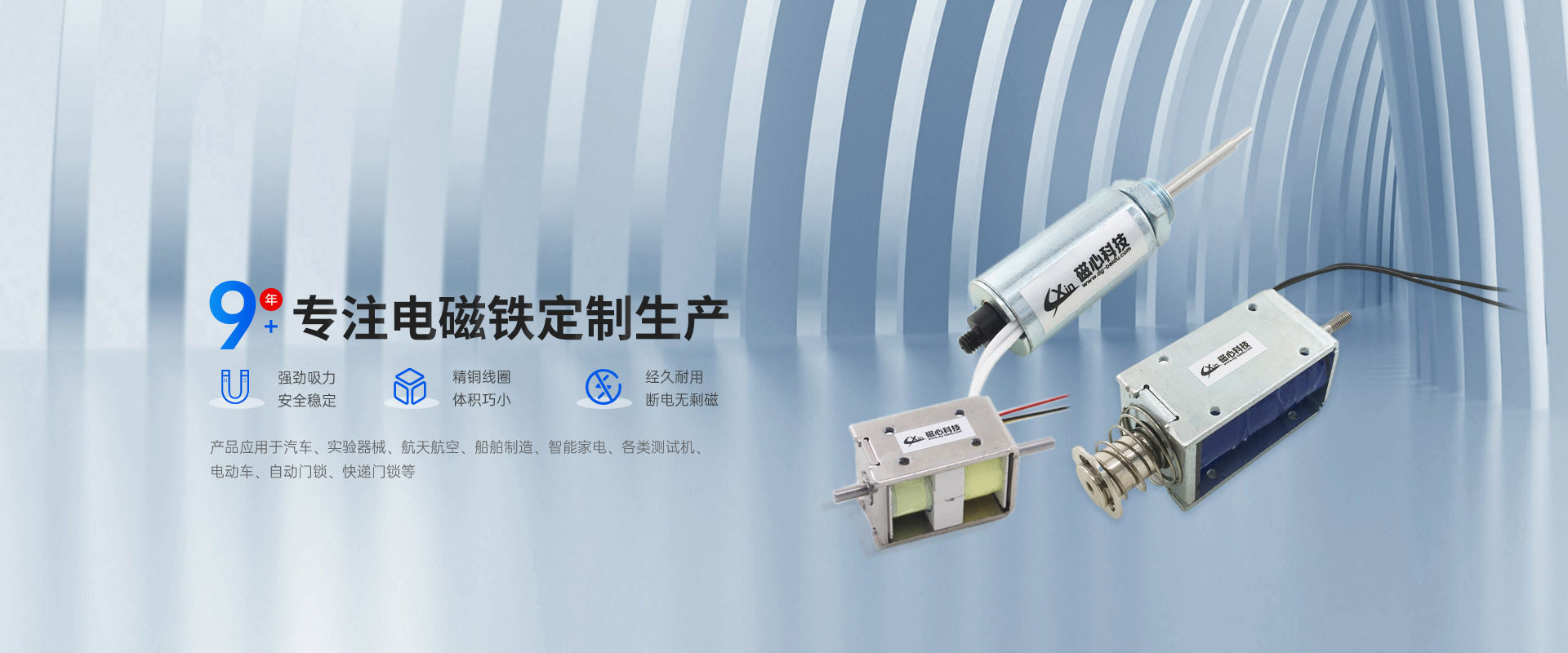



An electromagnet is an electrically charged helical coil with an iron core inside. When an iron core is inserted into the electrically charged helical coil, it becomes magnetized by the coil's magnetic field. The magnetized core then becomes a magnet as well, resulting in a significant enhancement of the coil's magnetic field due to the superposition of the two fields. To increase the magnetic strength of the electromagnet, the iron core is typically shaped like a horseshoe. However, it is important to note that the winding direction of the coil on the horseshoe core is opposite: one side is clockwise and the other must be counterclockwise. If the winding directions are the same, the magnetic effects of the two coils on the core will cancel each other out, rendering the core non-magnetic. Additionally, the core of the electromagnet is made of soft iron and not steel. Otherwise, once the steel is magnetized, it will retain its magnetism for a long time and cannot be demagnetized, losing the ability to control the strength of the magnetism with the size of the current, thus negating the advantages of the electromagnet.
Application of Electromagnets:
Electromagnets are categorized based on the nature of their coil current, into DC electromagnets and AC electromagnets; and according to their different applications, into traction electromagnets, braking electromagnets, lifting electromagnets, and other types of electromagnets.
The牵引 electromagnetic iron is primarily used in automatic control equipment, serving to attract or repel mechanical devices to achieve automatic or remote control objectives.
The braking electromagnetic iron is an electromagnet used to control the brake, to accomplish the braking task.
Lifting electromagnets are electromagnetic devices used for lifting and transporting ferromagnetic heavy objects.
Electromagnet Power Supply Current Characteristics:
① AC Solenoids. The usage voltage of AC solenoids for valves is typically AC 220V, with a simple electrical circuit configuration. They have a high starting force and short reversal time. However, the reversal impact is significant, and the temperature rises during operation (the housing is equipped with fins for heat dissipation); when the valve core is stuck, the solenoid is prone to burn out due to excessive current, resulting in poor reliability. Therefore, the switching frequency must not exceed 30 times/min, and the lifespan is relatively short.
② DC Electromagnet. Generally, DC electromagnets operate at 24V DC voltage, requiring a dedicated DC power supply. Their advantages include no burnout due to core jamming (as they lack fins on their cylindrical shell for heat dissipation), compact size, reliable operation, and allow for a switching frequency of 120 times/min with minimal reversing impact and a longer service life. However, their starting force is less than that of AC electromagnets.
