
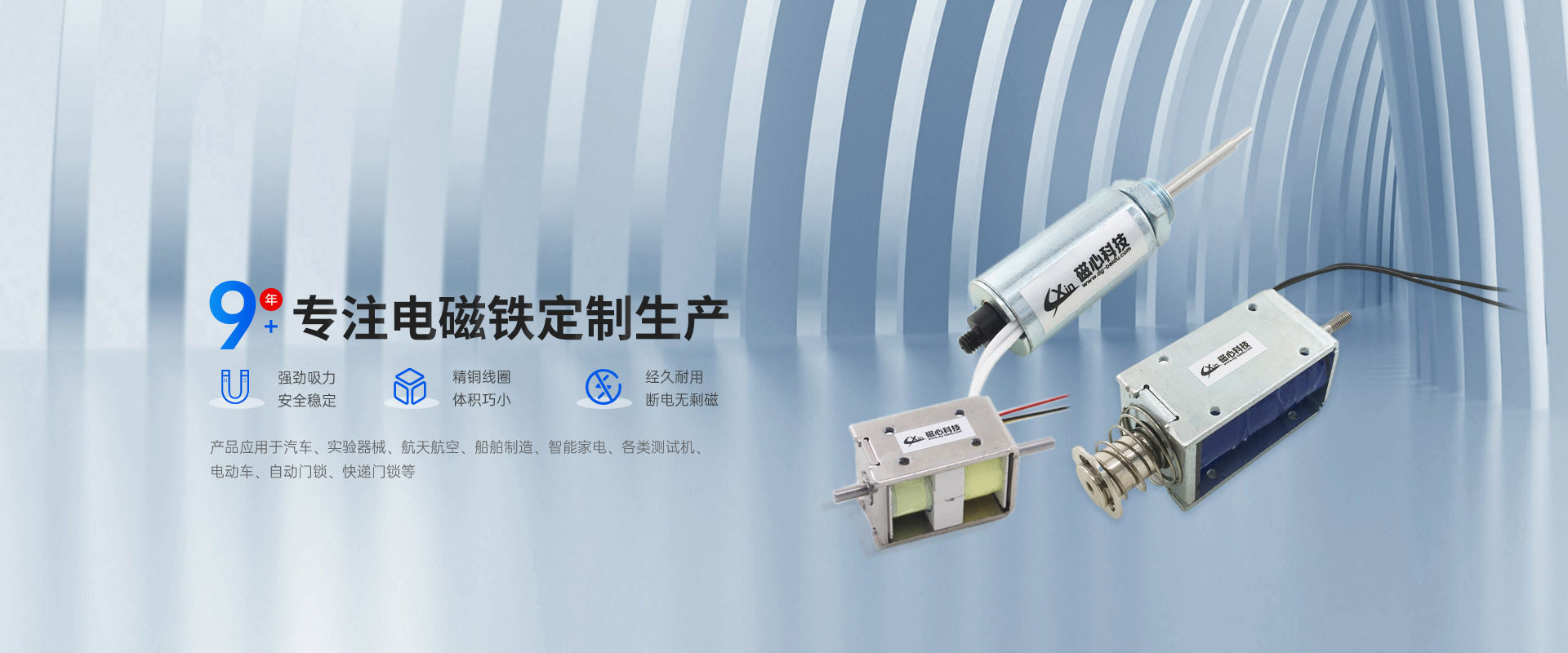



An electromagnet is a device containing iron and electromagnetic components that becomes magnetic when an electric current passes through a coil (which generates a magnetic field). Typically, electromagnets are made in square and tubular shapes. The iron core is made of soft iron or silicon steel, which is easily magnetized and demagnetized, with wrought iron commonly used. These electromagnets are magnetic when the current is on and lose their magnetism when the current is off. The advantages of electromagnets are quite unique: 1) The presence or absence of magnetism can be controlled by the flow or cessation of current, making it an automatic control component. The strength of the magnetism can be controlled by the intensity of the current or the number of turns in the coil, allowing for the precise adjustment of the force required to meet customer needs. Electromagnets have wide applications in everyday life; they are an application of the electromagnetic induction (electricity produces magnetism), closely linked to our lives, such as in electromagnetic relays, electromagnetic cranes, maglev trains, household appliances, automation equipment, and aerospace industries.
Invention of the Electromagnet
In 1822, French physicists Arago and Lussac discovered that when an electric current passed through a coil containing an iron block, it could magnetize the iron block within the coil. This was an early discovery of the principle behind electromagnets. In 1823, Sturgeon conducted a similar experiment: he wrapped 18 turns of copper wire around a U-shaped iron rod that was not a magnet. When the copper wire was connected to a Voltaic battery, the copper coil around the U-shaped rod produced a strong magnetic field, transforming the rod into a "magnetic electromagnet." The magnetic energy of this electromagnet was many times greater than that of permanent magnets, capable of lifting an iron block 20 times its weight. Once the power source was disconnected, the U-shaped rod could no longer attract iron, reverting back to a normal iron rod.
Sturtevant's invention of the electromagnet illuminated the bright prospect of converting electrical energy into magnetic energy, and this innovation quickly spread to countries such as Britain, the United States, and some coastal nations in Western Europe.
In 1829, American physicist Henry made some innovations to the Sturgeon electromagnet device. He replaced the bare copper conductors with insulated wires, thereby eliminating concerns of short circuits due to excessive proximity between the copper conductors. With the wires insulated, they could be tightly coiled around each other, and the denser the coils, the stronger the magnetic field produced. This significantly enhanced the ability to convert electrical energy into magnetic energy. By 1831, Henry had developed an improved electromagnet, which, although not large in size, was capable of lifting iron blocks weighing up to one ton.
The invention of the electromagnet also greatly increased the power of generators.
Introduction to Electromagnets: Electromagnets can be broadly categorized into two main types: DC electromagnets and AC electromagnets. If classified by application, electromagnets can be mainly divided into the following five categories:
Traction electromagnets—primarily used to pull mechanical devices, open or close various valves, and execute automatic control tasks.
(2) Lifting Electromagnet – Used as a lifting device for transporting ingots, steel, iron sand, and other ferromagnetic materials.
(3) Braking Electromagnet – Primarily used for braking electric motors to achieve precise stopping.
(4) Electromagnetic systems of automatic electrical equipment – such as the electromagnetic systems of relays and contactors, electromagnetic release mechanisms of automatic switches, and operating electromagnetic cores, etc.
(5) Other applications of electromagnets – such as magnetic chucks for grinding machines and electromagnetic vibrators, etc.
