
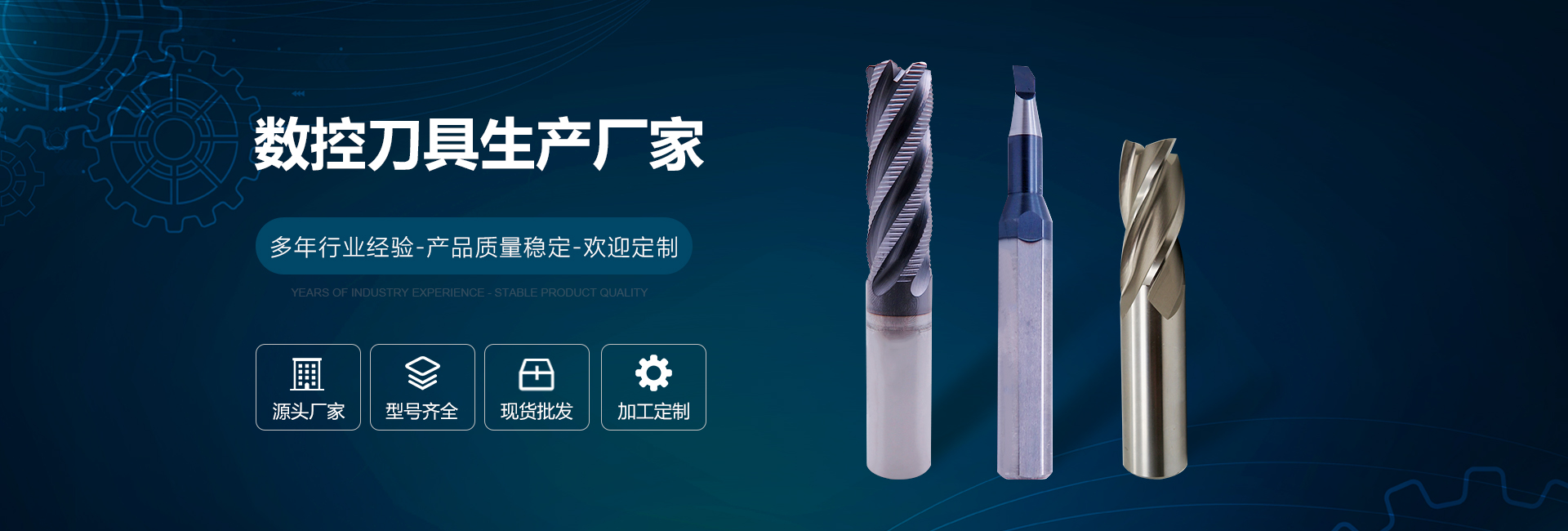
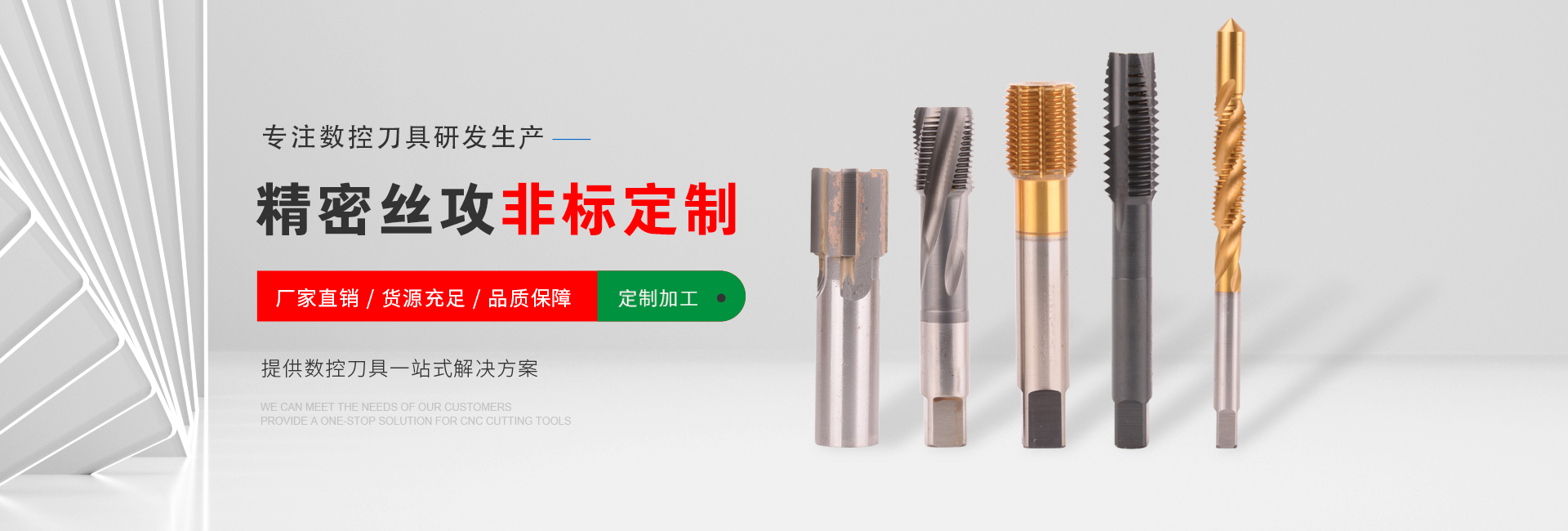
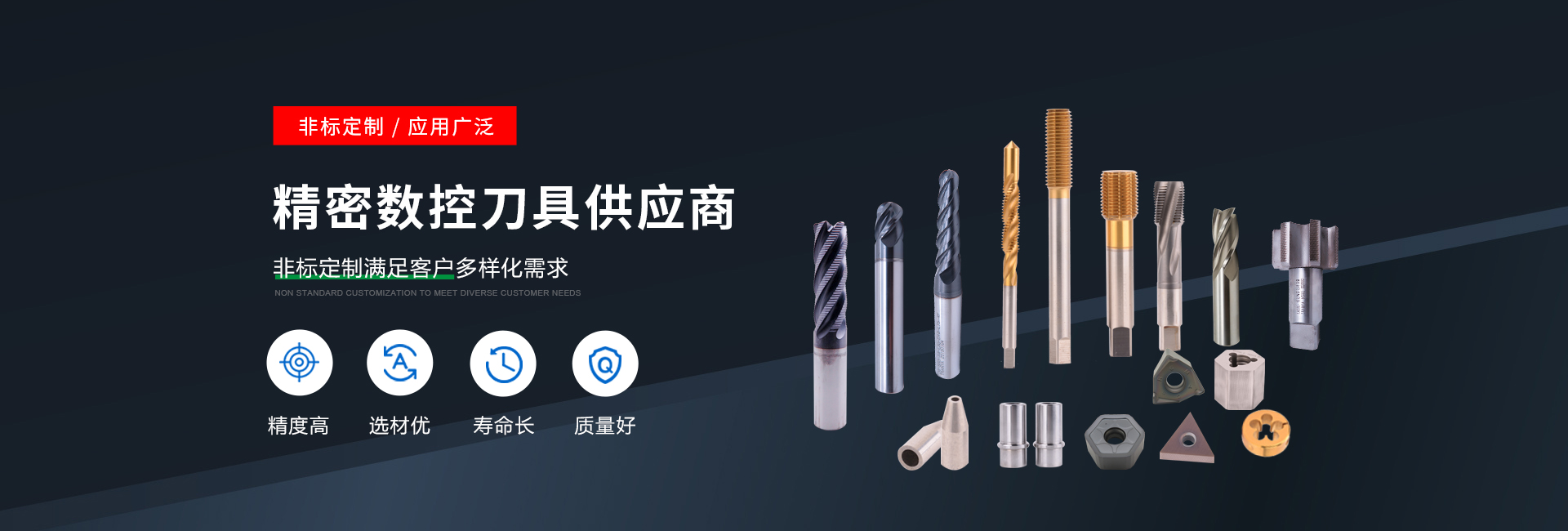

Utilizing the high hardness of tungsten carbide and improving its toughness, people bond tungsten carbide together using metallic binders, resulting in a material that boasts superior hardness far exceeding high-speed steel. The hard alloy milling cutters have a high hardness, excellent wear resistance, good strength and toughness, heat resistance, and corrosion resistance. Particularly, their high hardness and wear resistance remain largely unchanged even at 500°C temperatures and retain high hardness at 1000°C. The hard alloy material used is widely employed as cutting tools, such as lathe tools, milling cutters, planers, drills, and boring tools, for cutting cast iron, non-ferrous metals, plastics, synthetic fibers, graphite, glass, stone, and common steel. It can also be used to machine difficult-to-cut materials like heat-resistant steel, stainless steel, high-manganese steel, and tool steel.
Factors Influencing the Characteristics and Applications of Hardened Alloy Milling Cutters, including some of the elements such as:
(1) Challenging workpiece materials, including substitute metals and difficult-to-machine alloys. Some materials have machinability less than 1/4 that of steel, and some materials can cost hundreds of dollars per pound.
(2) Increasingly complex workpiece geometries, such as thin-walled parts and complex-shaped aerospace components.
(3) Large-sized workpieces are in high demand, especially for turbines and various heavy-duty mechanical components. The high cost per piece of these workpieces poses stringent requirements for hard alloy milling cutters.
(4) Increasingly specialized quality and performance requirements. For instance, the demand for fatigue resistance on machined part surfaces.
Analysis of Factors Influencing the Quality of Hard Alloy Milling Cutters:
(Hardness and Tensile Strength)
Hardened alloy milling cutters boast unique advantages in both hardness and toughness. Tungsten carbide (WC) inherently has a high level of hardness (exceeding that of corundum or alumina), and its hardness rarely decreases with the rise in working temperatures. However, it lacks sufficient toughness, which is a crucial property for cutting tools. To leverage the high hardness of tungsten carbide while improving its toughness, metal binders are used to bond it together, resulting in a material that possesses far superior hardness to high-speed steel and can withstand the cutting forces encountered during most machining operations. Additionally, it can withstand the high cutting temperatures produced by high-speed machining.
Therefore, the performance and compatibility of carbide milling cutters with specific machining processes largely depend on the initial powder-making process.
Hardmetal Milling Cutter Powder Manufacturing Process
Tungsten carbide powder is obtained through carburization treatment of tungsten (W) powder. The properties, particularly the particle size, of tungsten carbide powder primarily depend on the particle size of the raw tungsten powder as well as the carburization temperature and time. Chemical control is also crucial, with the carbon content needing to be maintained consistently (close to the theoretical ratio of 6.13% by weight). To control the particle size during subsequent processes, a small amount of vanadium and/or chromium can be added prior to carburization. Different process conditions and machining applications for hard metal milling cutters require specific combinations of tungsten carbide particle size, carbon content, vanadium content, and chromium content. Through variations in these combinations, a variety of tungsten carbide powders can be produced.
