
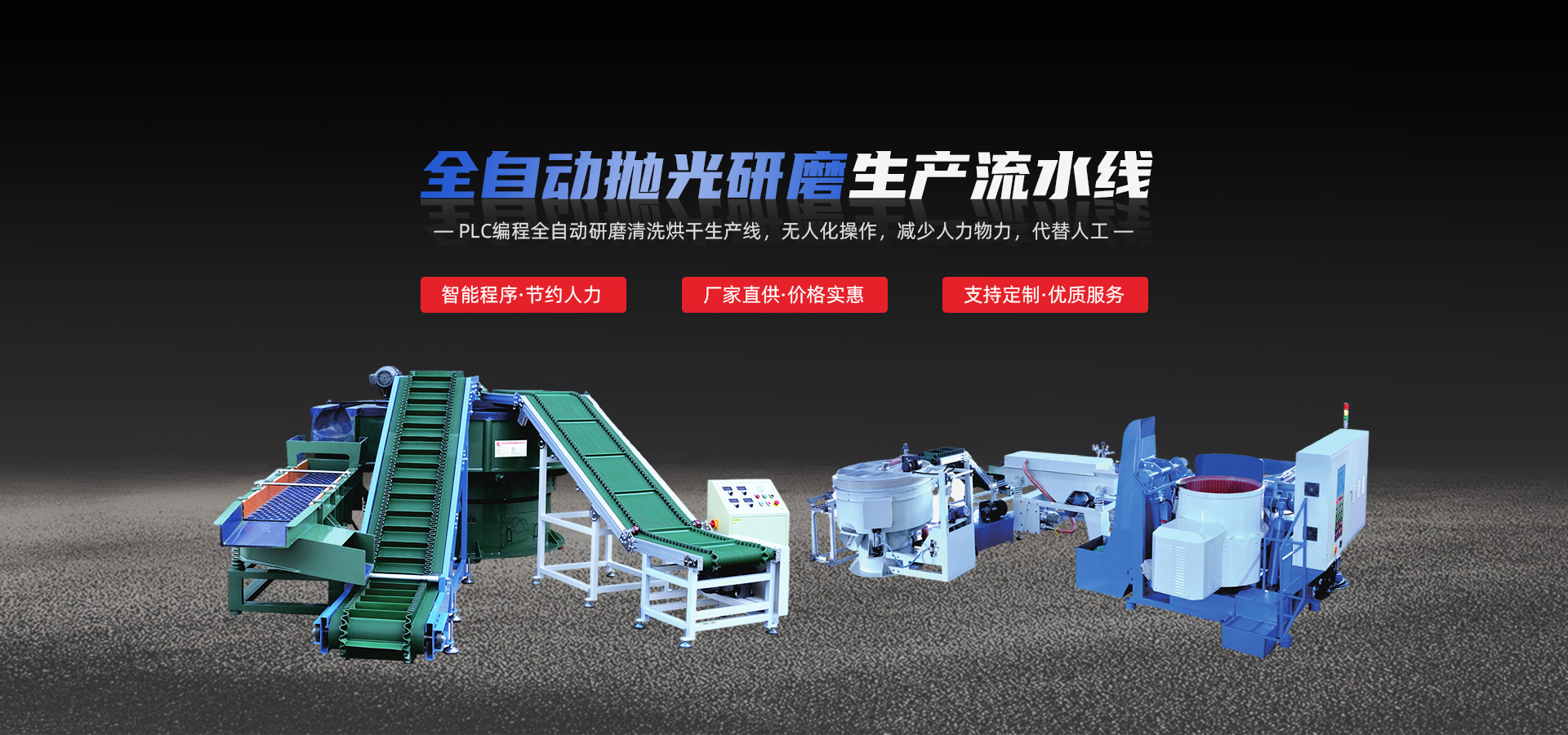


Vibration Grinding Machine
Grinding is a precision finishing method that involves using a vibratory grinding tool and abrasive to remove a very thin surface layer from a workpiece.
During the grinding process of the vibration grinding machine, after金刚砂or other abrasive is placed between the workpiece and the grinding plate, the workpiece surface is fractured under the pressure of the abrasive. As the grinding plate and workpiece move relative to each other, the irregular abrasive rolling against the surface of the workpiece pushes away the fractured pieces of the workpiece surface and the abrasive, repeating this process gradually smooths and refines the workpiece surface into a precise flatness. The grinding process can be categorized as wet grinding or dry grinding based on whether the abrasive is used with a working liquid.
The wet grinding method processes large volumes, typically for coarse finishing, resulting in a dark, matte surface resembling the skin of a pear.
Dry grinding methods typically result in lower processing volumes, usually for precision work, yielding a shiny, mirror-like finish.
Abrasive Agent
Grinding compound is a mixture composed of abrasive material and water or oil. Different specifications of abrasives can be chosen according to the hardness of the workpiece and the machining allowance.
Mogico can be categorized into natural abrasives and artificial abrasives. Natural abrasives include diamond, corundum, garnet, etc. Artificial abrasives include synthetic diamond, synthetic corundum, silicon carbide, boron nitride, etc.
Diamond-like carbon (C) crystalline bodies, with a density between 3.4 and 3.6, and a Vickers hardness over 10,000, are extremely hard. Due to the high cost of diamonds, micron-sized diamond powder is commonly used to prepare grinding paste in vibration grinding machines for precise finishing and polishing of materials such as abrasive alloys or ceramics.
Sapphire-series alumina (Al2O3) crystals have a specific gravity ranging from 3.9 to 4.0 for natural sapphire and from 3.2 to 4.0 for artificial sapphire. Alumina exhibits high toughness and a Vickers hardness of over 2000.
Silicon carbide (SiC) crystallizes in thin, plate-like structures with a Vickers hardness of around 3000 and often comes in various colors due to the presence of impurities. The most common colors are green and black. Black silicon carbide contains approximately 98% SiC, while green silicon carbide contains about 98.5%. Silicon carbide has low toughness, with green silicon carbide being slightly more brittle than the black variety, making it suitable for processing brittle materials.
Boron carbide (B4C) has a specific gravity of about 2.5, with a hardness exceeding silicon carbide and approaching that of diamond. It is used for the grinding of high-hardness workpieces.
Artificial diamond abrasive膏 is formulated from artificial diamond powder mixed with other additives. The paste is water-soluble and boasts ideal lubricity. It can be diluted with water and glycerin for use. Each manufacturer's abrasive paste comes in different colors, depending on the specifications, for easy identification during application.
Manual Grinding
Hand grinding typically takes place on a grinding plate. The plates are square, measuring 300×300mm or 350×350mm, and are made of cast iron. The precision grade should not be lower than grade “-“. The plates are usually used in sets of three, and regular checks must be conducted to ensure accuracy during use. When grinding workpieces, the surface of the grinding plate should be applied evenly. Repair and recalibrate the corresponding three plates against each other, as maintaining the plate's precision consistently is essential for achieving good grinding quality.
Four: Grinder
During mass production and mechanical seal maintenance, a grinder is required, which is a specialized equipment for grinding flat surfaces. It is categorized into mechanical grinders and electromagnetic vibration grinders, among others. Within mechanical grinders, there are single-sided and double-sided models. Some high-automation grinders can also automatically apply pressure and measure work thickness, resulting in higher grinding efficiency.
