
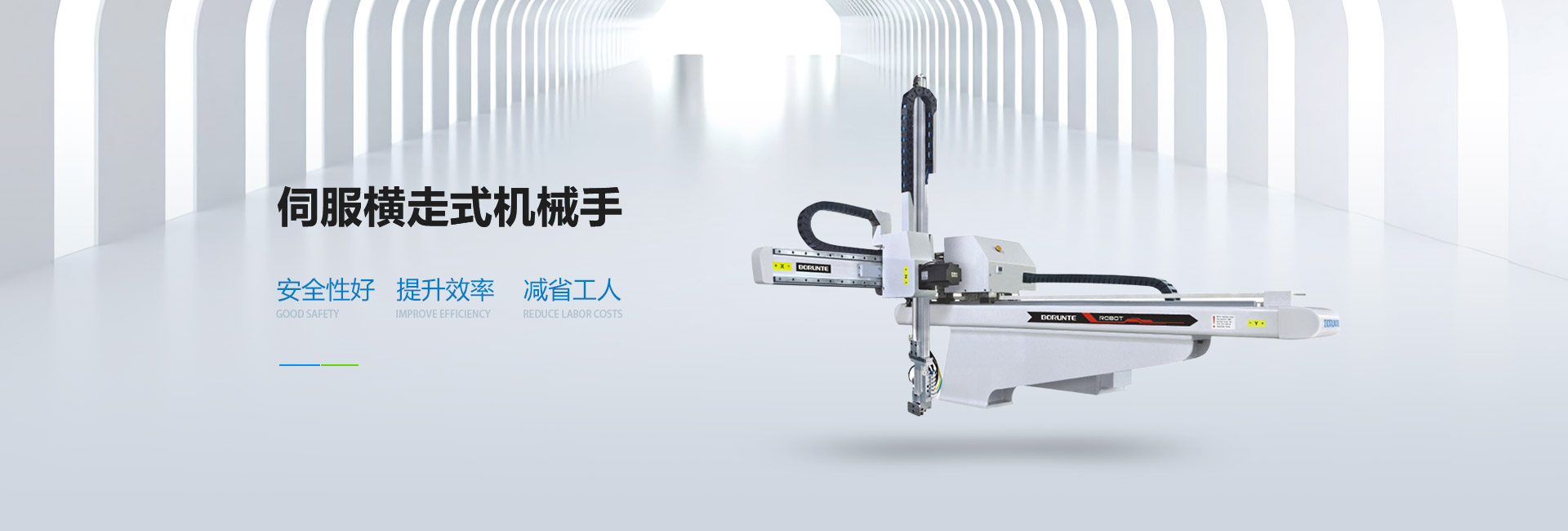

With the rapid development of intelligence, robotic arms are automated production equipment capable of mimicking some functions of the human upper limb. They can be automatically controlled to deliver products according to predetermined requirements or handle tools for production operations. However, robotic arms have five major advantages over manual labor: they are not picky about the environment and highly adaptable; they have long working hours and can operate continuously; they reduce defects and have a high rate of good-quality products; they are flexible and adaptable; and they improve work efficiency while reducing costs. Details are outlined as follows, hoping to be helpful to everyone!
The mechanical arm is less picky about the environment and has stronger adaptability to it than manual labor.
Some perilous and hazardous work environments pose risks to workers' personal safety. Unlike mechanical arms, which are adaptable to various environments, they can replace workers in dangerous and harmful operations in harsh conditions. In places where prolonged work can harm workers' physical health, mechanical arms remain unaffected. As long as they are reasonably designed according to the working environment, with appropriate materials and equipment structures, mechanical arms can operate in extreme temperatures, abnormal pressures, harmful gases, dust, radiation, and in dangerous environments such as stamping and firefighting.
The robotic arm can work for longer hours than manual labor, allowing for continuous, uninterrupted operation.
Long work hours can lead to fatigue and errors among workers, and prolonged work may even result in occupational diseases. Robots, on the other hand, are durable and hardworking, freeing humans from heavy and monotonous labor while expanding and extending human capabilities. Moreover, they can be set to work for specific hours as per the company's requirements, allowing for continuous, uninterrupted operations.
The robotic arms have proven to reduce defects by 30% compared to manual labor, resulting in a higher rate of good-quality products.
Workers are prone to mistakes during emotional fluctuations, poor health, or fatigue, which can easily lead to defects and waste. Due to the standardized operation and precise movements of the robotic arms, consistent handling ensures high product quality while also preventing human errors.
Four: How Does the Mechanical Arm Outperform Human Flexibility and Adaptability?
Product updates, packaging changes, and the need for workers to relearn to adapt—this will take some time. The versatility and flexibility are good, allowing for better adaptation to the continuous changes in product variety to meet the needs of flexible production.
Section 5: The robotic arm's efficiency surpasses manual labor, resulting in cost reduction.
Machinery operates to precise standards, yielding far more output than manual labor within the same unit of time. Mechanization significantly boosts labor productivity and reduces costs. In cases of high supply demands, it can sustain long hours of operation, effortlessly meeting the challenge and ensuring output.
