

In industrial automation, automated robots are commonly used as the means of transport. What does the key factor of the robot, often discussed as the degree of freedom, refer to?
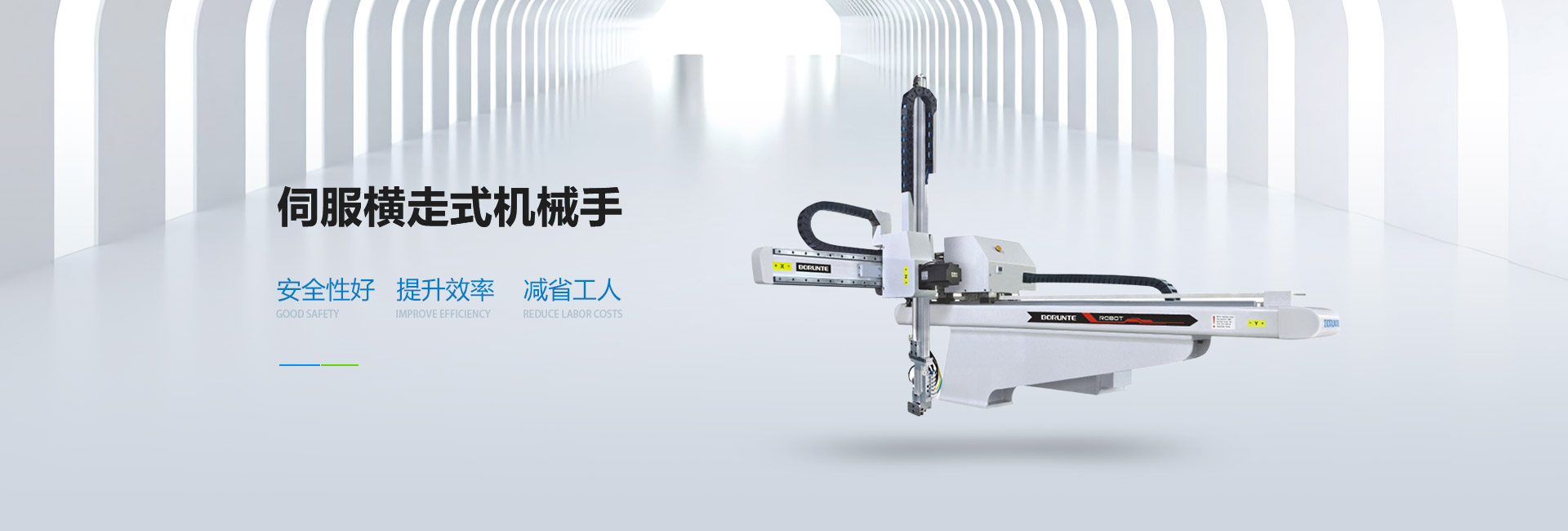
Industrial robots, categorized by their different structural forms, include multi-axis robots. In the mechanical arm of industrial robots, the movement of the transmission mechanism is typically referred to as the degree of freedom of the transmission mechanism. Humans have 27 degrees of freedom from the fingers to the shoulders, making it difficult and unnecessary for a robotic arm to possess so many. From a mechanical perspective, objects in space only have 6 degrees of freedom.
Therefore, to capture and transmit objects at various positions and orientations within space, the transmission mechanism should possess six degrees of freedom. Common robotic arm transmission mechanisms have fewer than seven degrees of freedom. Special-purpose robotic arms typically have 2 to 4 degrees of freedom, while general-purpose robotic arms generally have between 3 to 7 degrees of freedom; the degrees of freedom mentioned here do not include the finger gripping action.
