
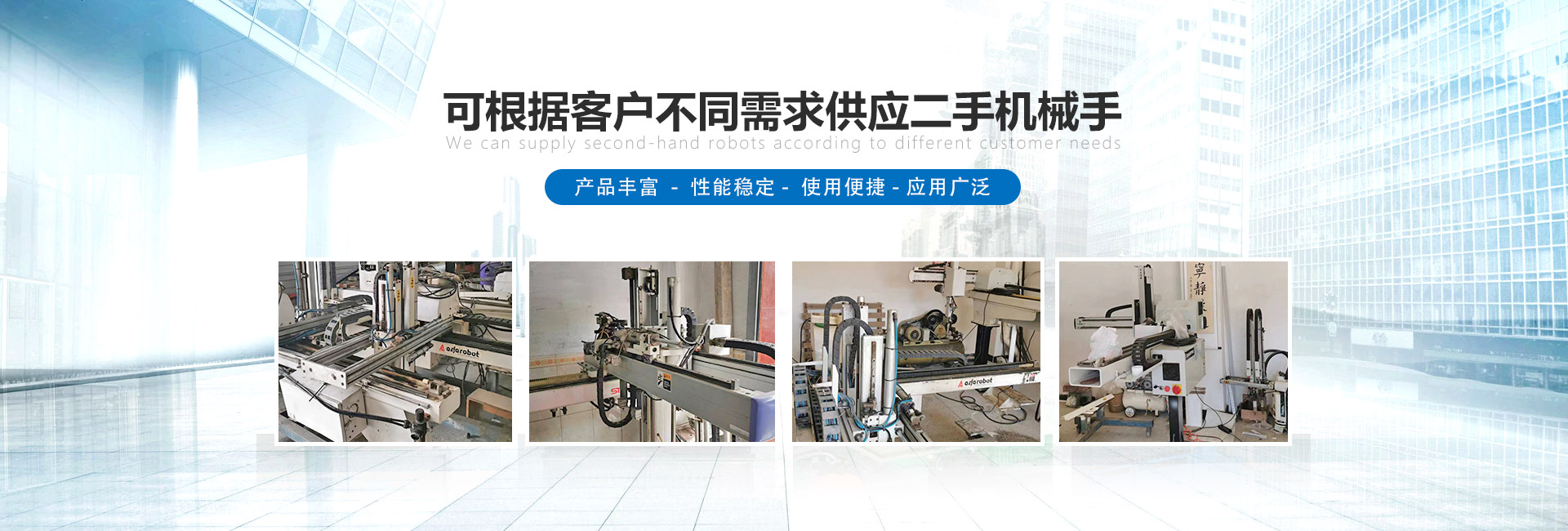


Servo robots can mimic certain functions of the human upper limb, allowing for automatic control to transport products or handle tools for production operations, making them an automated production equipment that meets predetermined requirements.
Servo robotic arms are specifically designed for the automation of injection molding production. They play a crucial role in reducing heavy physical labor, improving working conditions, ensuring safe production, enhancing the production efficiency of injection molding machines, stabilizing product quality, reducing waste rates, lowering production costs, and strengthening the competitiveness of enterprises. What are the scope of applications for servo robotic arms?
1 Heat Treatment: Heat treatment involves heavy, dangerous manual labor at high temperatures. Automation is essential to enhance work efficiency and ensure the safety of workers, especially for large, low-volume, slow-speed operations, and tasks that human effort cannot handle; robotic arms are particularly necessary.
2 Cold Working: Cold working is primarily used for the loading and unloading of parts for diesel engine components, shafts, discs, and box-like parts during single-machine processing, as well as for tool installation. It is then applied on machine tools with program control and digital control, becoming a part of the equipment. In the application of processing lines and automatic production lines, it serves as a crucial means for connecting the upstream and downstream processes of machine tools and equipment.
Disassembly, Repair, and Assembly: As one of the departments in the railway industry with heavy manual labor, disassembly, repair, and assembly has spurred the development of robotic arms. Currently, domestic railway factories, locomotive sections, and other departments have adopted robotic arms for tasks such as disassembling three-way valves, couplings, decomposing brake cylinders, loading and unloading axle boxes, assembling wheelsets, and removing asbestos, thereby reducing labor intensity and enhancing the efficiency of disassembly, repair, and assembly. In recent years, a general-purpose robotic arm for interior painting in passenger cars has also been developed, which can be used for continuous painting inside passenger cars to improve working conditions and enhance the quality and efficiency of painting.
