


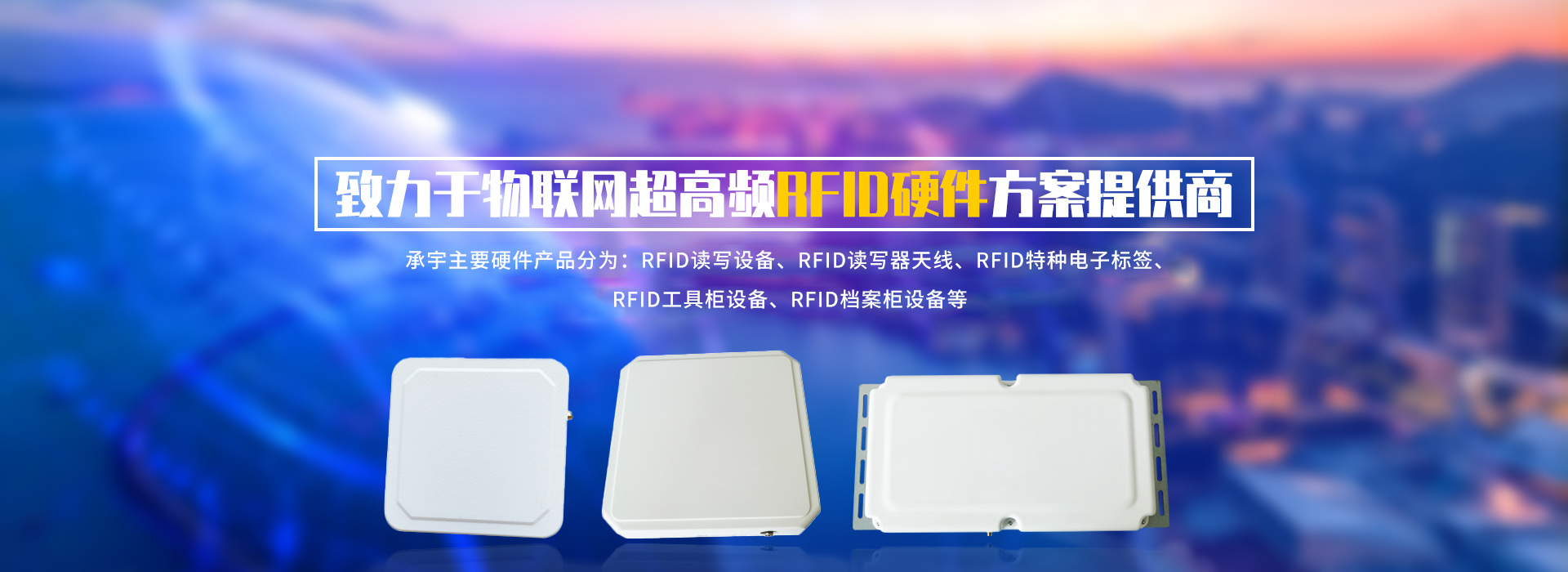

Industry Pain Points
Multiple manual processes: Inventory in and out are manually counted and accounted for, which is time-consuming, labor-intensive, and not convenient for statistics and management.
Material Information Unclear: Inability to promptly acquire material information, delayed response, and lack of information traceability.
Material Quality Data Lacking: Inventory in and out, and return data are not closed loops, resulting in a lack of basis for material and supplier assessment.
Low material search efficiency: repetitive tasks, time-consuming searches, large site specifications, and vast amounts of information.
System Overview
Utilizing advanced RFID technology, we have established an asset information and intelligent warehousing system, creating a material tracking and traceability system. This provides robust data support for asset quality comparison and procurement decisions. The system integrates with other systems, achieving a unified information platform. Electronic tags are installed at each storage location, enabling physical segmentation of distinct areas for identifying storage locations. Each pallet is equipped with a pallet electronic tag for identity marking. Individual items can be tagged with electronic tags for identification. Drivers can carry electronic tags for identity verification (optional). Fixed RFID readers are installed at warehouse entrances/exits, with RFID antennas placed on both sides for automatic detection of incoming and outgoing pallets and driver identities. Based on the on-site terrain layout, infrared, vehicle detectors, and reader-pairing can assist in detecting vehicle entry and exit statuses.
Hardware Components
RFID tags: Placed on the exterior of packaging boxes, they are used for binding and verification during inventory, for locating and verifying during outbound, and can be scanned and read via handheld devices for inventory and search operations.
RFID Handheld Terminals: Facilitate warehouse attendants to operate asset information at any time, capable of reading and writing RFID tag information, as well as conducting verification operations during incoming and outgoing inventory.
Desktop Reader: This device is primarily used to write asset information onto tags prior to inventory operations.
Fixed-Reader: Reads and confirms assets in coordination with the forklift's antenna.
RFID Forklift Antennas: This device is primarily installed on forklifts to confirm during the movement of warehouses and assets.
RFID Portal Door: Primarily used for product verification during inbound and outbound bulk shipments, it operates quickly and efficiently, significantly enhancing work efficiency and accuracy in inventory management.

System Application Process
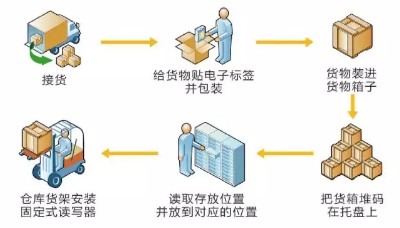
Inventory Management Operation: Bind RFID tags to goods; As forklifts pass through the warehouse gate, fixed readers at the gate access the goods' tag information and send the goods data to the forklift terminal.
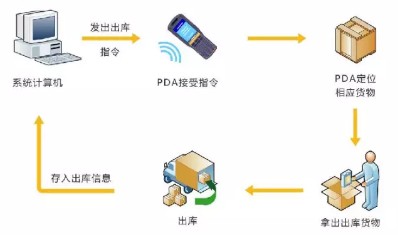
Inventory Management Operation: The system issues an outbound instruction, the user scans the shipping document with an RFID handheld terminal to confirm the shipment information. RFID fixed读写 devices are installed at the storage exit. When forklifts tow the goods out of the warehouse for loading, the RFID fixed读写 devices read the goods information, compare it with the outbound goods, and automatically upload the outbound goods to the system.
Inventory Management Operation: Goods to be transferred through the allocation and relocation process are identified by RFID readers installed alongside the access channels. The readers record the current tag information and send it to the backend center. Additionally, the relocation of goods can be performed using an RFID handheld terminal. When moving goods from one warehouse to another, simply scan the box label with the RFID handheld terminal, and the data is recorded on the backend.
Inventory Management: Using an RFID handheld terminal to scan shelf labels, the system displays product information and quantities, while the backend automatically counts varieties and specifications to generate records.
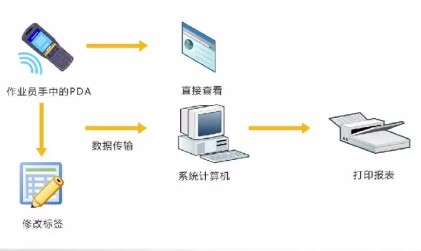
Item Search Operation: Users select the item they wish to locate on the RFID handheld terminal, then scan around; if detected, an audio prompt will appear.
Product Traceability Module: Through data collection throughout the entire lifecycle of the product, accurately understand the quality of suppliers' products, and enables traceability of a single item, a box, or a batch.
System Advantages
Efficient Operations: RFID technology ensures efficient and rapid completion of various business operations, thereby improving warehouse management, enhancing efficiency and value, and reducing labor and management costs.
Accurate Inventory Counting: Reduce counting cycles, decrease complexity, enhance real-time data accuracy, and dynamically monitor inventory status in real-time, achieving visual management of inventory items.
Evidence-Based: Achieving comprehensive information recording of products and tracking their entire lifecycle, providing data support for tracing supplier product quality. Enhancing customers' confidence in the company's product traceability guarantee.
