
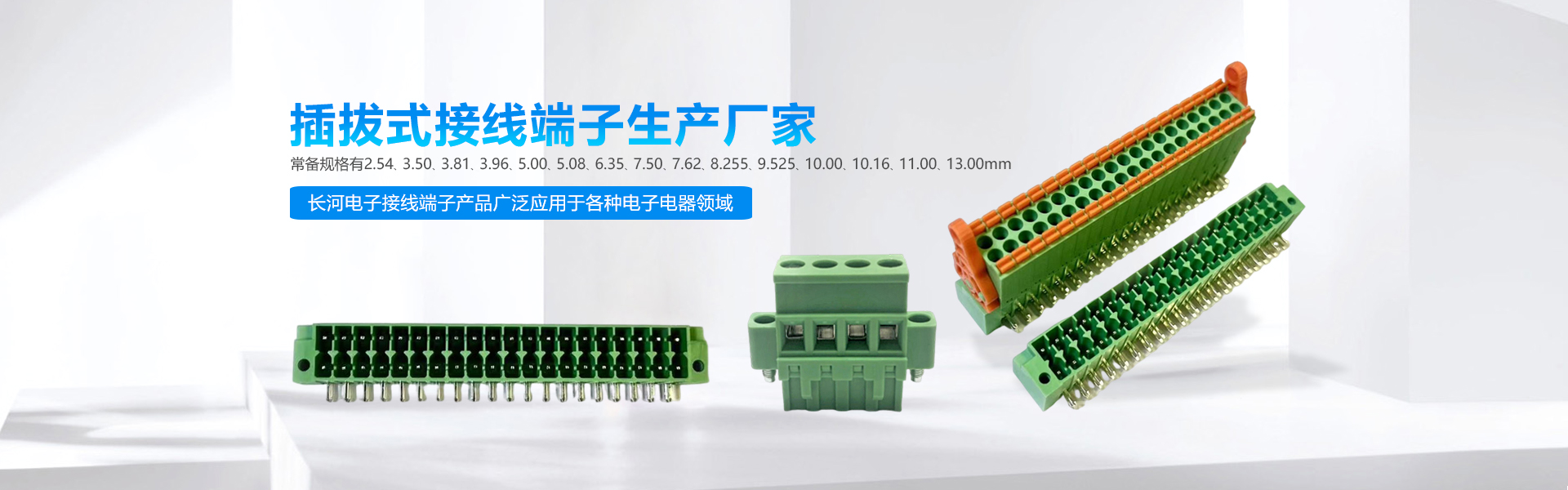
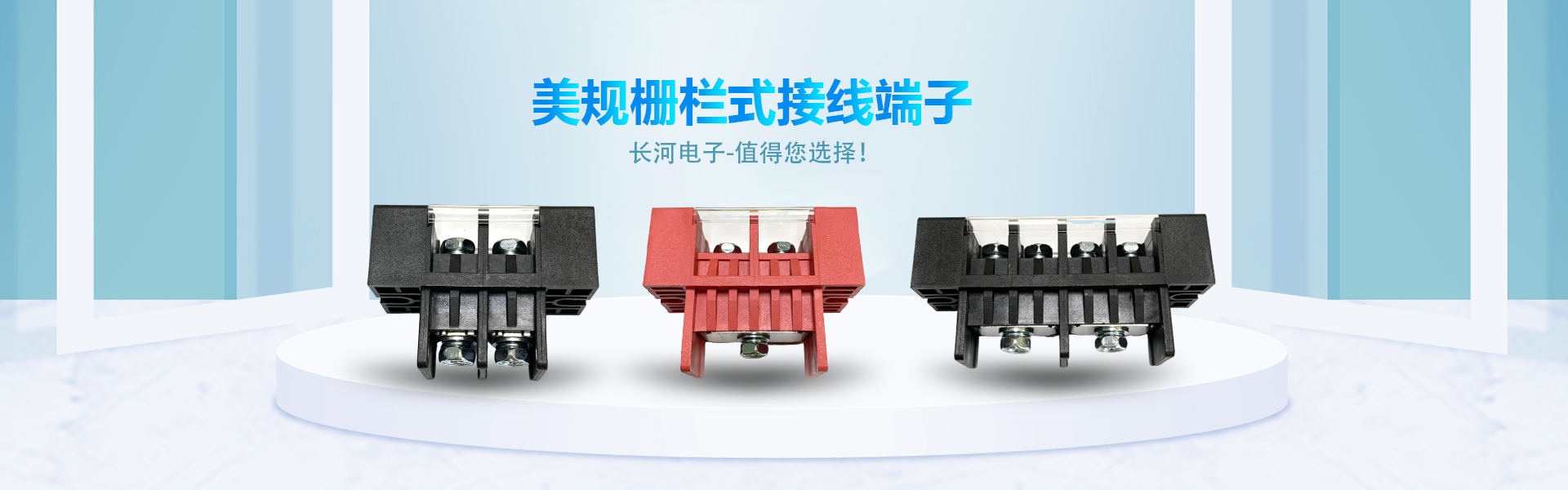
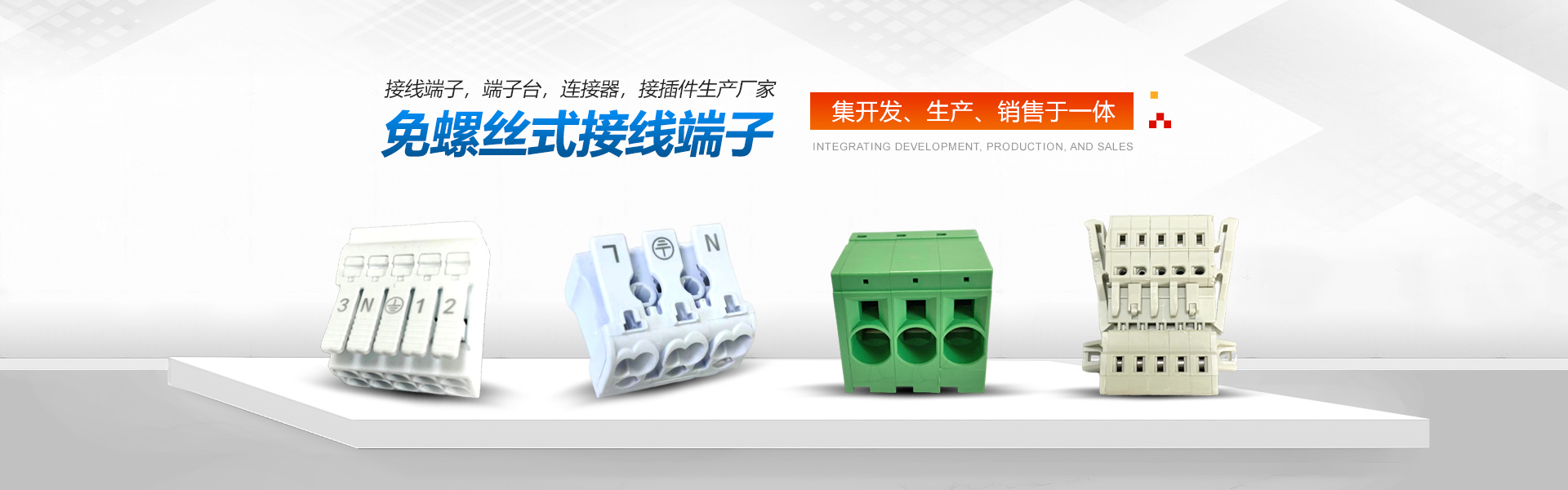

Terminal connectors are fundamental accessories, with their primary function stemming from screws and bolts and extending to electrical connections and control applications. They meet the requirements of being sturdy, secure, aesthetically pleasing, and quick to install. As society progresses and labor costs rise, the demands for terminal connectors also increase, manifesting in the following forms:
1) Control Box Industry: Electric complete plants, power protection, power generation control systems, and power control boxes are integrated systems that include enclosures, switches, fuses, meters, instruments, and signal controls, with a large number of control circuits mainly using track-type terminals.
2) Terminal connections for electrical components, instruments within control cabinets, controllers, relays, meters, switch control systems, etc., as well as for independent lighting, power supplies, motors, measuring instruments, and automation equipment controls, including the input and output terminals for their electrical and control functions.
Terminal blocks are accessory products used to establish electrical connections, categorized under connectors in the industrial sector. As industrial automation levels increase and control requirements become stricter, the demand for terminal blocks has been on the rise. With the development of the electronics industry, the application fields of terminal blocks are expanding, and the variety is also increasing.
