
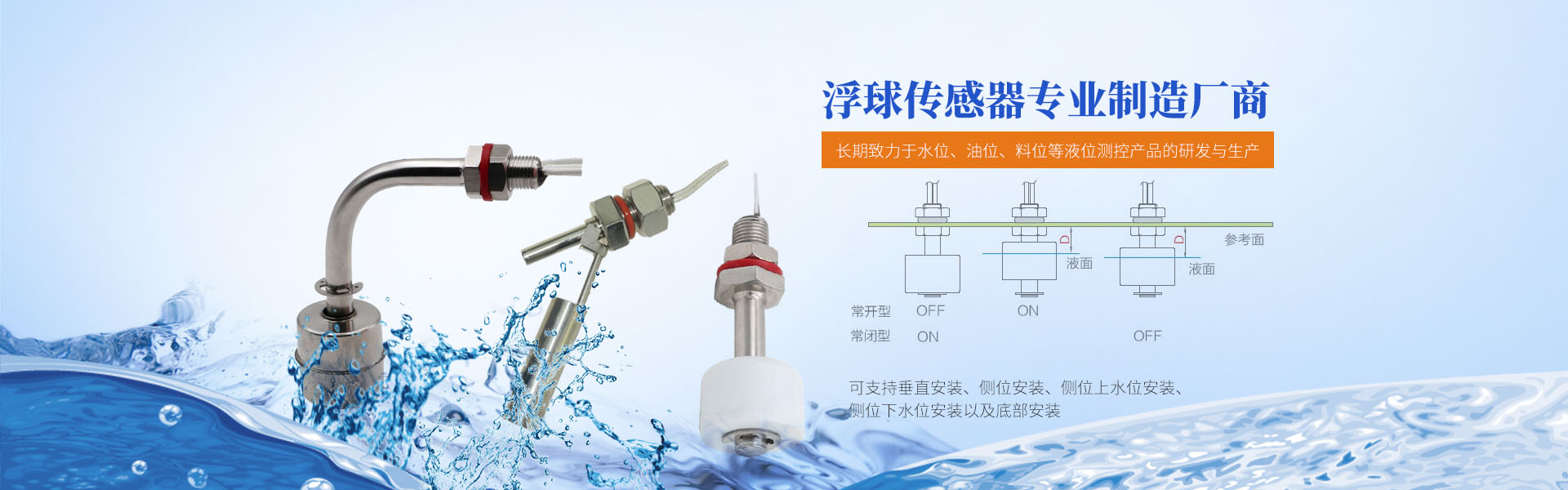



The plastic float switch is composed of two types: one-piece molding and potting. Generally, the potting type is chosen for its better product quality and appearance, as well as its protective effect on the reed switch's lifespan.
Plastic float ball switches generally have better resistance to acids and alkalis than stainless steel. In the market, plastics like PP and PVC are predominantly used, but these materials can only withstand medium concentrations of acidic and alkaline liquids. Switches that can withstand concentrated acidic and alkaline liquids usually use PVDF material, which is resistant to high temperatures and corrosion. However, plastic float ball switches are not highly efficient due to their hardness, making them difficult to mold and limiting their length. Available market specifications include 44mm and 40mm lengths.
Other plastic float switches come in varying lengths, with smaller ones typically used in water dispensers, humidifiers, nebulizers, floor washers, ultrasonic cleaners, coffee machines, air conditioners, water heaters, small water tanks, and other products that do not require high temperatures or acidic/alkaline conditions, often for eco-friendly series.
The plastic float switches can be selected based on user requirements and the shape of the machinery equipment, including side-mounted options. They can be vertically installed, with both bottom and top mounting available. The market typically uses M16, M12, and 1/4 inch threads for standard specifications. The switches can be easily converted between normally open and normally closed positions.
