


Although aluminum and its alloys can naturally form an oxide film in the atmosphere, the film is thin (40-50A) and porous, being amorphous, uneven, and discontinuous, and thus cannot serve as a reliable protective or decorative film. With the continuous development of the aluminum products processing industry, anodic oxidation or chemical oxidation methods are increasingly widely used in industry to generate an oxide film on the surface of aluminum and aluminum alloy products, achieving both protective and decorative purposes.
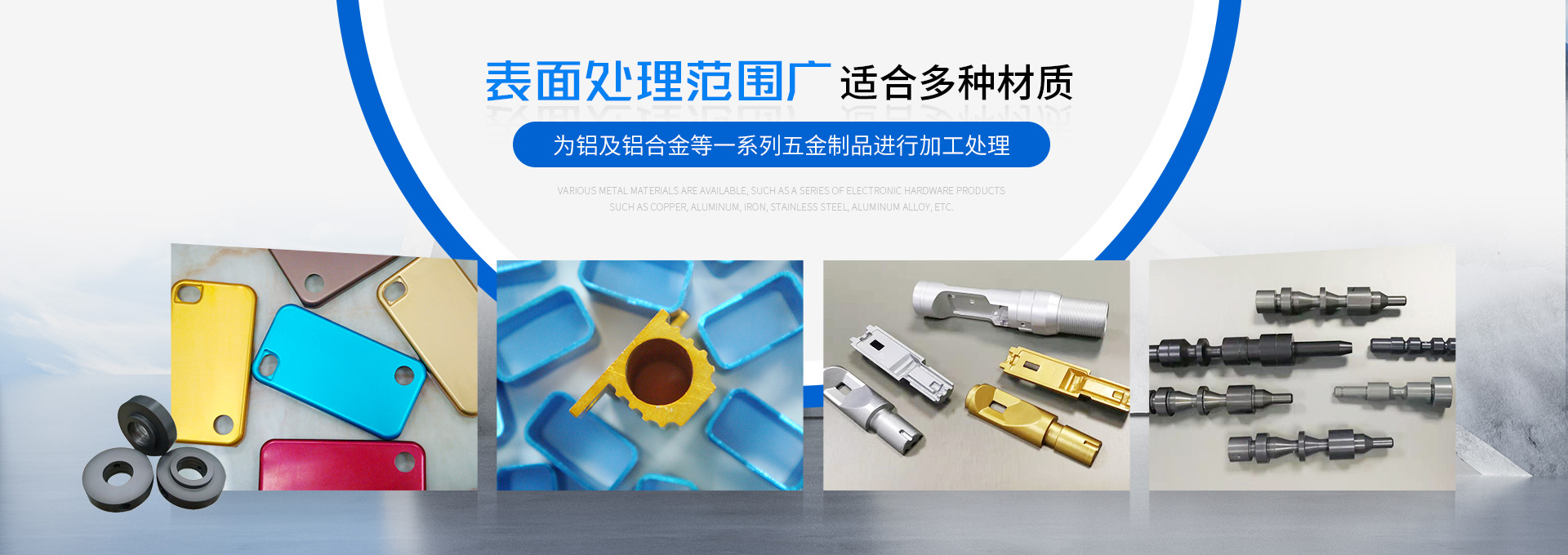
Anodized aluminum and aluminum alloy products, after being chemically or electrochemically polished, can achieve a smooth, bright, and high-transparency oxide film layer. Further dyeing results in a variety of vibrant and dazzling surfaces. Under specific technical conditions, an enamel-like film can form on the surface, providing the aluminum products with unique decorative effects. According to incomplete statistics, China's decorative anodizing technology for aluminum and aluminum alloys has developed into dozens of types, propelling the rapid advancement of the aluminum product processing industry. Therefore: the function of aluminum alloy anodizing is both protective and decorative.
Chemical Oxidation:
The oxide film obtained through chemical oxidation typically ranges in thickness from 0.3 to 4 micrometers, is soft, and has lower wear and corrosion resistance compared to anodized films. Therefore, it is rarely used alone unless for specific applications. However, it possesses good adsorption capabilities, and when painted on its surface, it can effectively enhance the corrosion resistance and decorative properties of aluminum products. The chemical oxidation treatment of aluminum and its alloys can be divided into two types based on the nature of the solution: alkaline and acidic solution oxidation. In terms of the film properties, it can be categorized into oxide films, phosphate films, chromate films, and chrome-phosphate films, among others.
