

Anodizing is a process where, in an appropriate electrolyte solution, metal is used as the anode and is subjected to an external current to form an oxide layer on its surface. By selecting different types and concentrations of electrolytes, and controlling the process conditions during anodizing, oxide layers with varying properties and thicknesses of several to several hundred micrometers (with the natural oxide layer of aluminum being 0.010μm to 0.015μm thick) can be obtained. The following discusses the properties and applications of anodized oxide layers on aluminum and its alloys.
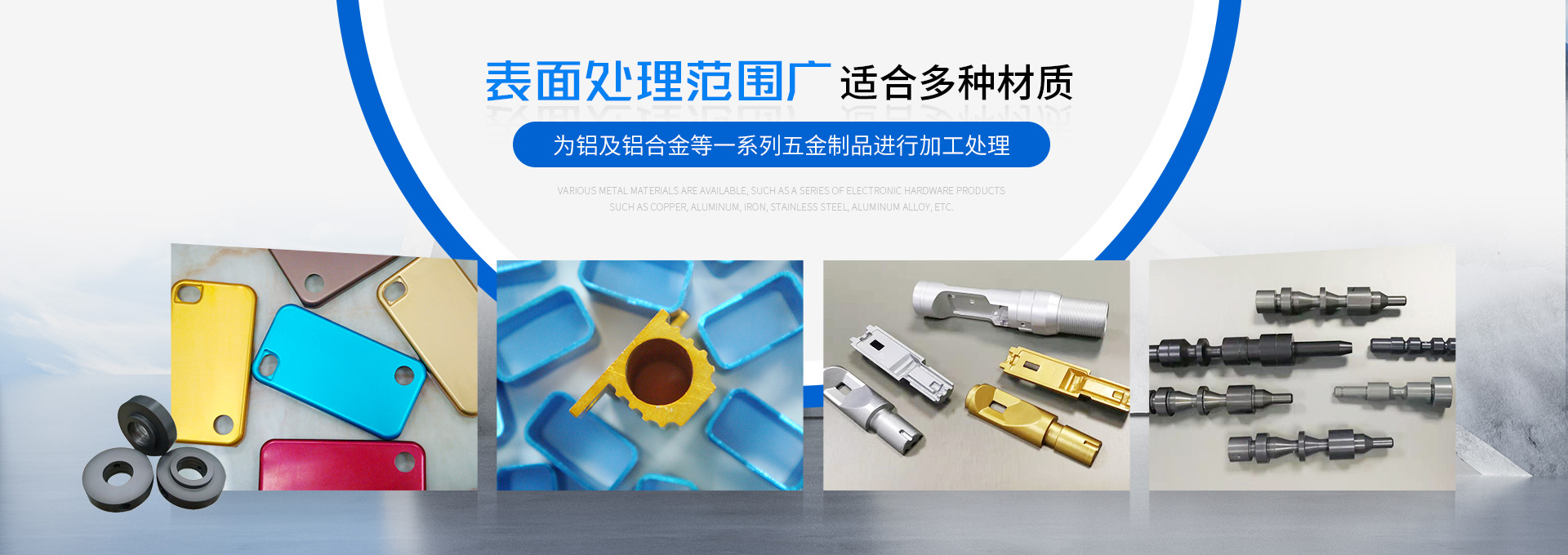
The porosity of anodized film structure. Anodized films feature a porous honeycomb structure, with the porosity of the film layer determining the type of electrolyte and the process conditions for anodizing. The porous structure of the anodized film allows it to exhibit excellent adsorption capabilities for various organic substances, resins, paraffin, inorganic substances, dyes, and paints, etc. It can serve as the base layer for coatings and plating, and can also be dyed into various colors to enhance the decorative effects of the metal.
2. The wear resistance of anodized films. Aluminum anodized films possess high hardness, which enhances the wear resistance of the metal surface. When the film absorbs lubricant, it further improves its wear resistance.
3. Corrosion Resistance of Anodized Films. Aluminum anodized films are highly stable in the atmosphere, thus offering excellent corrosion resistance. This resistance is related to the film thickness, composition, porosity, base material composition, and structural integrity. To enhance the corrosion resistance of the film, it is typically sealed or painted after anodizing treatment.
4. The electrical insulation properties of anodized coatings. Anodized coatings offer high insulation resistance and breakdown voltage, making them suitable for use as the dielectric layer in electrolytic capacitors or as insulation for electrical appliances.
5. The Insulation of Anodized Films. The anodized film of aluminum serves as an excellent insulating layer, with stability up to 1500°C. Therefore, parts operating under high temperatures can prevent the melting of aluminum due to the presence of the anodized film. The thermal conductivity of the anodized film is low, ranging from approximately 0.419 W/(m K) to 1.26 W/(m K).
6. Bonding Strength of the Oxide Film. The bonding between the anodic oxide film and the substrate metal is very strong, making it difficult to separate them by mechanical means. Even as the film bends with the substrate until it ruptures, the film maintains a good bond with the substrate metal.
