

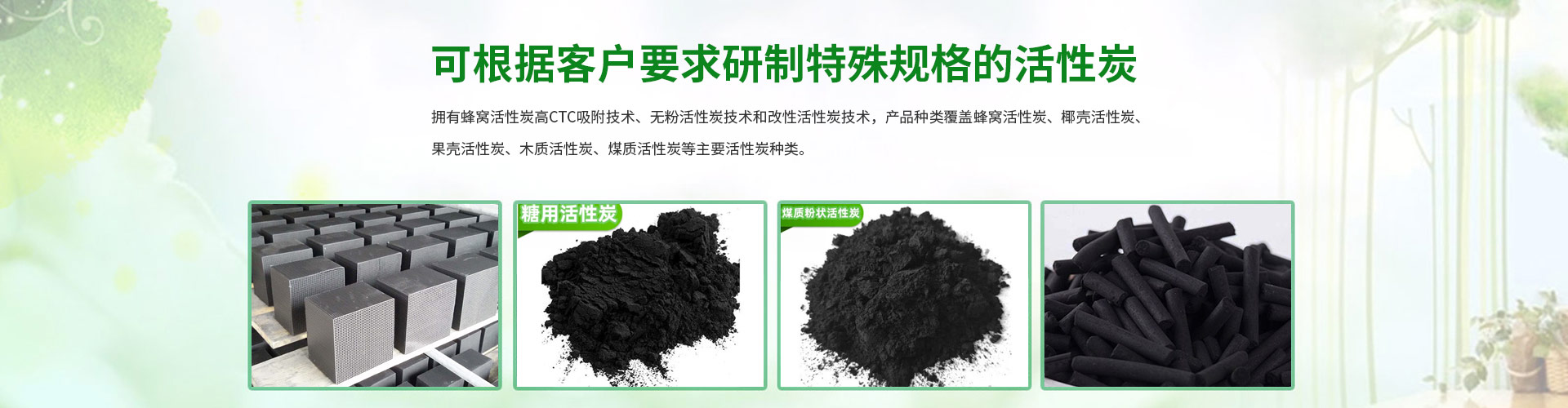

Honeycomb activated carbon boasts features such as a large specific surface area, low pore resistance, well-developed micropores, high adsorption capacity, and a long service life. It is widely used in air pollution control. The honeycomb activated carbon adsorption method involves the contact between waste gas and porous activated carbon with a large surface area, where pollutants in the waste gas are adsorbed, thereby achieving purification.
1. Learn about the classification of honeycomb activated carbon's pore size.
Porous activated carbon honeycombs are generally categorized by the number of pores per square inch, typically ranging from 50 pores/square inch, 100 pores/square inch, to 150 pores/square inch. That is, within a square inch, there are 50, 100, or 150 pores. So, what are the sizes of these honeycomb pore distributions? The 3.0mm pore diameter 50 pores/square inch honeycomb activated carbon is generally around 3-4mm, suitable for high airflow and environments with large exhaust particles. This large-pore honeycomb activated carbon will not affect the purification effect in high airflow and large molecular exhausts, and it will also increase the contact area with the exhaust.
100 pores per square inch is our commonly used standard specification, which is mainly applied in environments with a more focused usage. The 150 pores per square inch specification is primarily used in smaller air volume and smaller molecular exhaust gas environments. The three specifications mentioned above are the three honeycomb pore sizes of the honeycomb activated carbon. Customers can choose according to the environmental conditions of the exhaust gas project, which can both improve the purification effect and address the issue of high wind resistance.
2. Quality Specifications
During the renovation of paint booth exhaust projects, we commonly use honeycomb activated carbon to purify paint exhausts. However, many clients not only select based on quality but also thoroughly research specifications and parameters before making a choice. Sometimes, the exhaust particles from paint exhausts are quite large. If a conventional honeycomb activated carbon with a 1.5mm pore size is used, it significantly affects ventilation resistance and directly impacts the purification effectiveness.
