
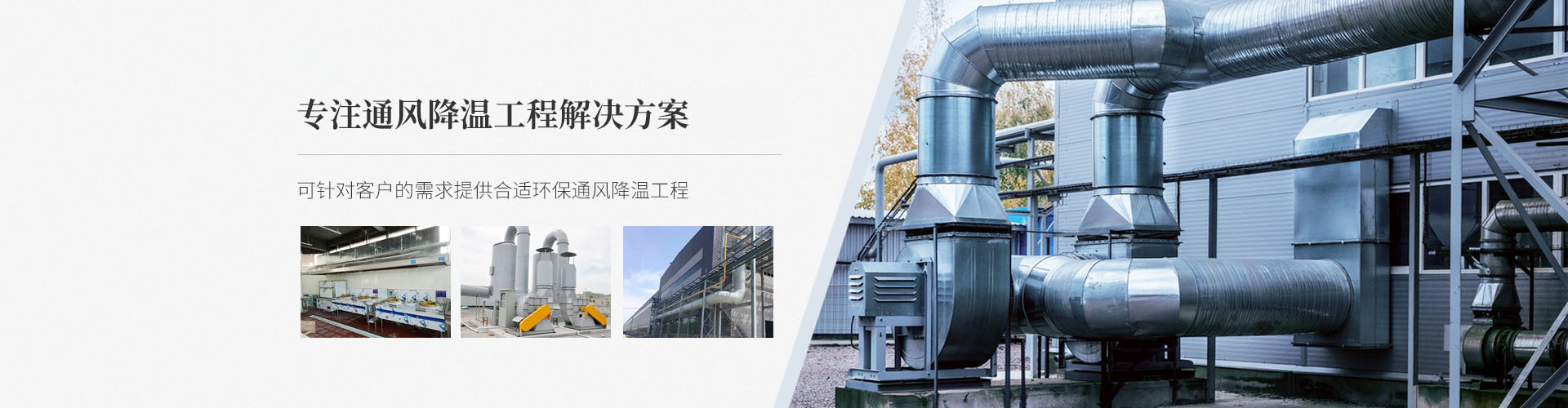
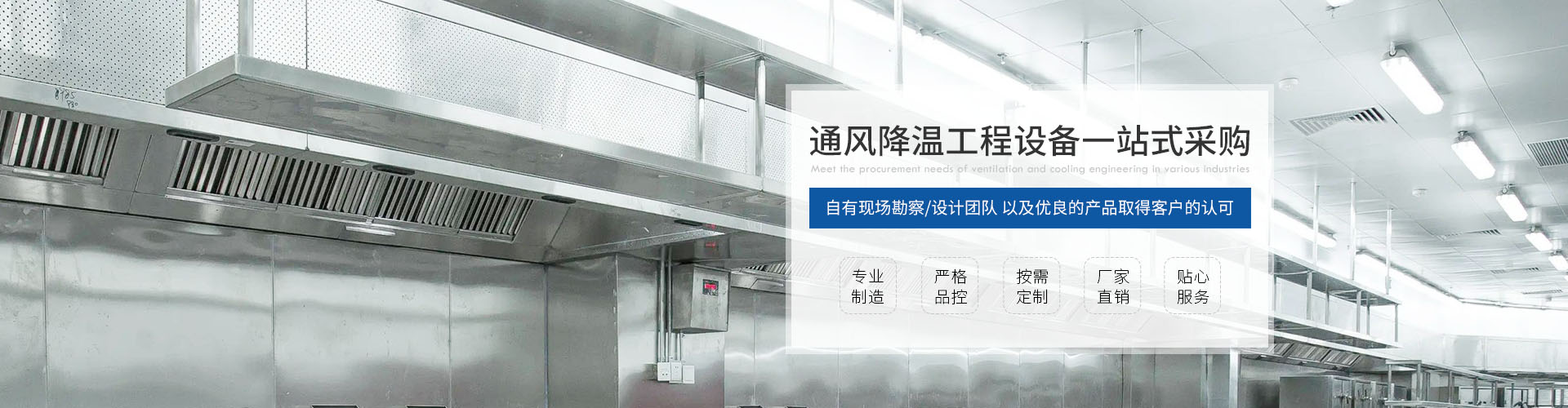
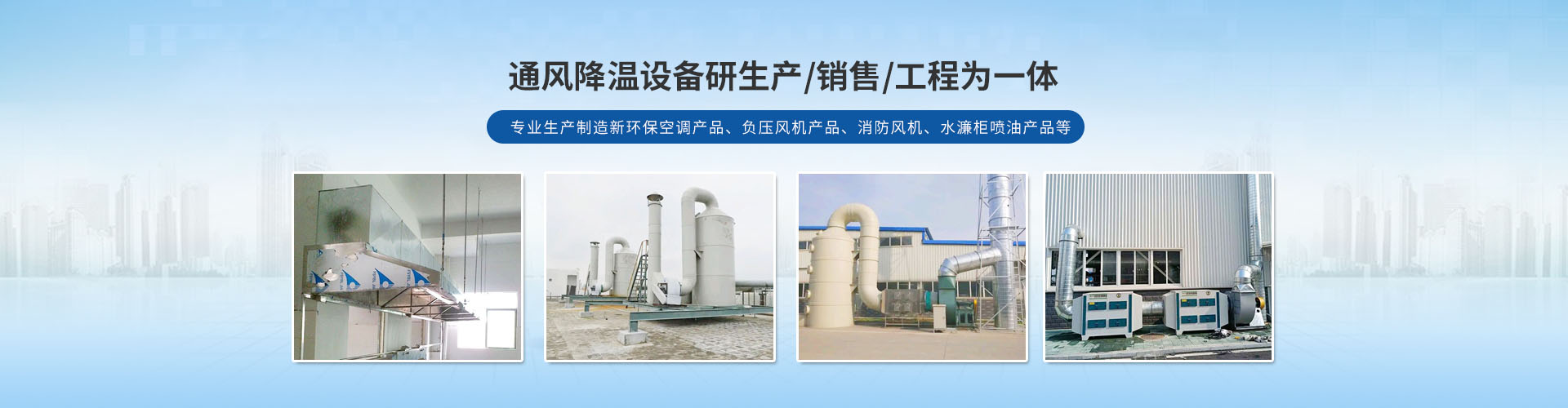

The structural components of a kitchen exhaust system are quite complex, with each part serving a distinct function. So, what exactly makes up a kitchen exhaust system, and what are its purposes?
Recent studies have found that most female lung cancer patients do not smoke, making passive smoking and indoor air pollution, particularly kitchen fumes during cooking, significant risk factors for female lung cancer. Consequently, the exhaust system in residential kitchens has become a crucial issue.
Kitchen Exhaust System Components
The kitchen exhaust system is primarily composed of a smoke hood, exhaust ducts, an oil mist purifier, an exhaust fan (including a silencer), and a complete kitchen air supply unit.
1. The canopy (smoke hood) is typically made as a whole, including equipment for filtration, oil collection, and water collection, commonly produced by specialized kitchen companies. It should be uniform in appearance, aesthetically pleasing, and easy to clean. During kitchen ventilation, a certain amount of fresh air needs to be supplemented.
2. Exhaust duct
The horizontal section of kitchen exhaust pipes should not be too long; generally, the horizontal distance should not exceed 15 meters and should have a slope of more than 2%. A flexible joint should be installed at the end of the horizontal section for easy cleaning of grease. The exhaust speed should not be less than 10 m/s according to regulations to prevent oil from adhering to the exhaust ducts. A volume control valve should be installed on the branch pipe connected to the exhaust hood.
3. Kitchen Exhaust Air Supplementation
Due to the layout of the building and the location of the kitchen within it, conditioned kitchens should be supplied with air in an orderly manner by the building's centralized air conditioning system. However, in most cases encountered, the building lacks a kitchen ventilation system. Many buildings with dining rooms and kitchens are designed with a centralized heating system but not a centralized air conditioning system. When the kitchen is in operation, the exhaust system is activated, putting the kitchen under negative pressure. The source of fresh air includes outdoor air infiltration and a significant inflow of air from the dining room into the kitchen.
4. Exhaust Fan
Three common exhaust fans are axial fans, fan housing units, and centrifugal fans.
